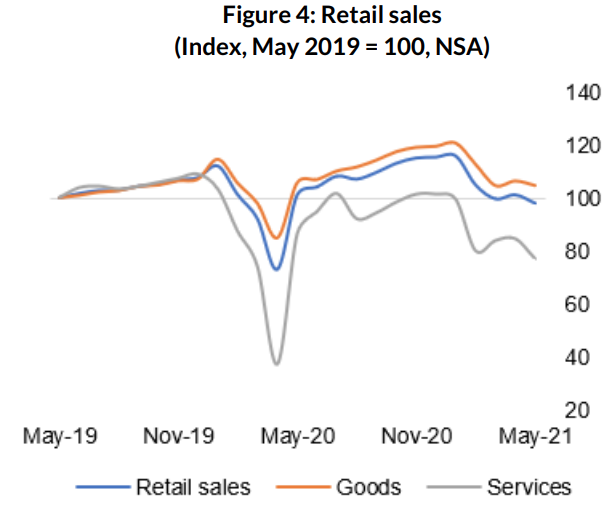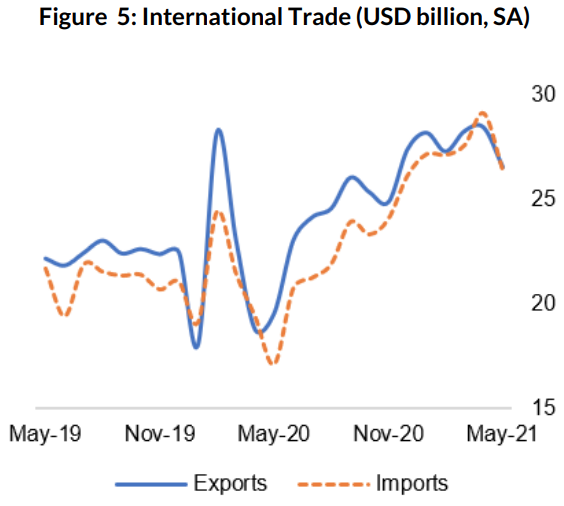
The strength in exports in the period to the end of May has been the result of a sharp recovery in demand for a broad range of goods, from phones (+19.5%), to textiles and garments (+16.1%) and footwear (+27%). Demand from the USA and China has been strong, and demand from ASEAN and the EU has also been recovering.
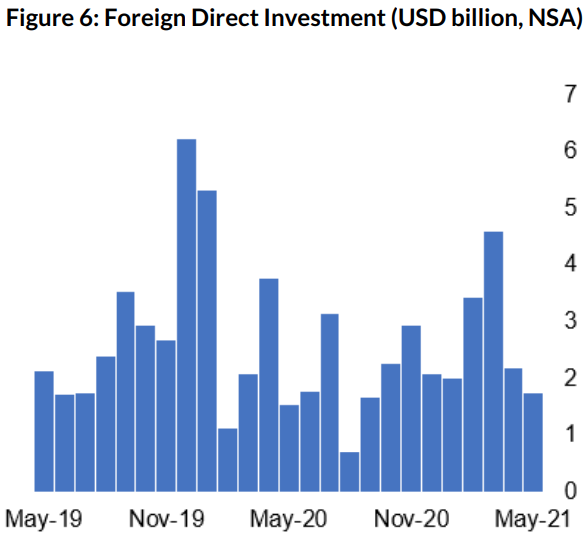
FDI declined in April and May, but remains flat YoY in the first five months
FDI in May fell by 20% MoM to $1.7bn. In the opinion of the World Bank, this may reflect seasonal factors, but it is possible it also reflects hesitancy by foreign investors consequent to the continuing coronavirus pandemic.
For the first five months of 2021, FDI commitments stood at $14bn, a comparable level to the same period in 2020.
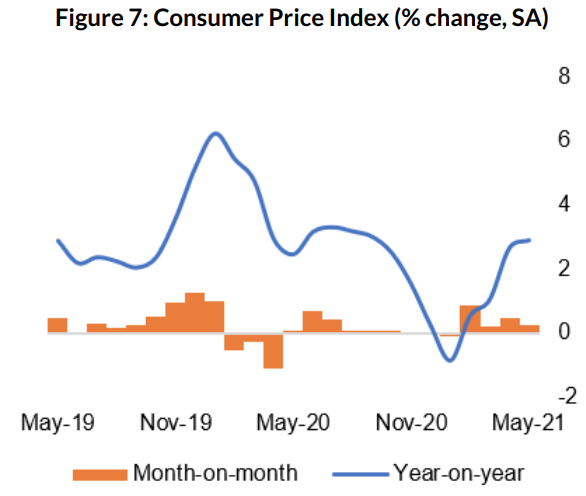
Inflation higher at 2.9% in May. Credit growth +1.1% MoM
The consumer price index (CPI) rose by 0.3% in May. This reflects administered price increases in fuel from the end of April, as well as higher prices for inputs used in metal production and in housing and construction. Nevertheless, the YoY rise in the CPI in May (+2.9%) remains below the level targeted by the National Assembly.
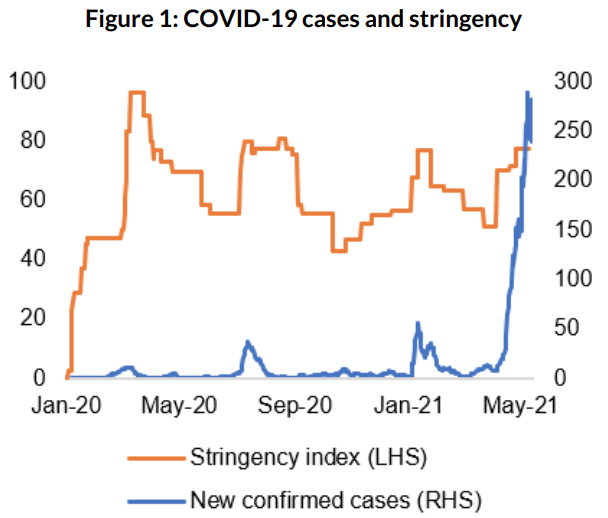
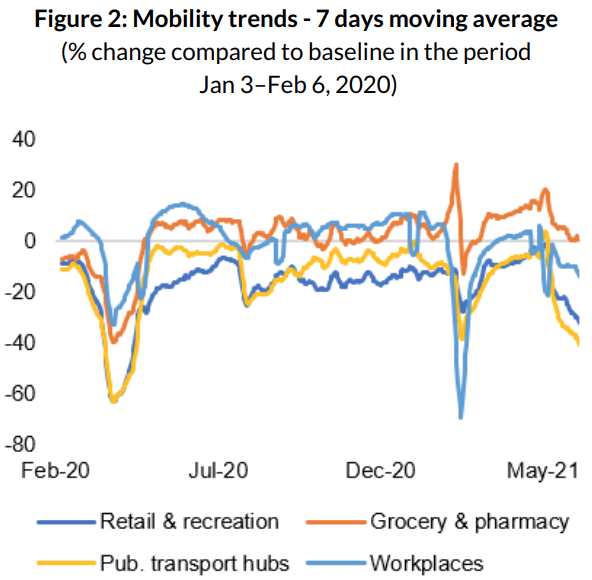
Credit continued to expand in May, but at a slower rate (+1.1% MoM) than in April (+2.0% MoM). The World Bank believes this could reflect the imposition of tighter mobility restrictions and social distancing measures.
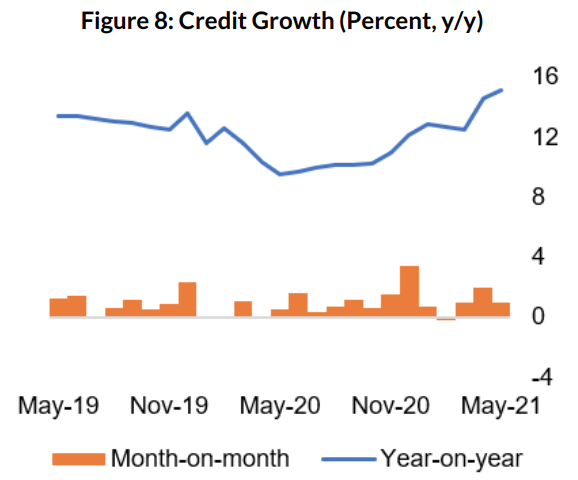
Average one-month interbank interest rates rose from 0.9% in April to 1.5% in May, as the drop in deposit growth in May was sharper than the drop in credit growth. Nonetheless, the stock market index rose by 7.2% in May.
Government budget surplus, as expenditure declines YoY with slower public investment
In the first five months of 2021, the government budget registered a surplus of $3.7bn. Revenue rose by 15.2% YoY, while expenditure fell by 3.7% YoY. Execution of the public investment programme fell 16.5% YoY – a phenomenon that was common at both the central and sub-national government level. According to the World Bank, one of the contributory factors has been a shortage of inputs used in public investment projects.
At the end of May, the yield on 10-year government bonds was 2.27%, 9bps below the level that applied at the end of April. Cumulative government borrowing over the first five months of the year has been $4.7bn, 31% of the target for the full year.
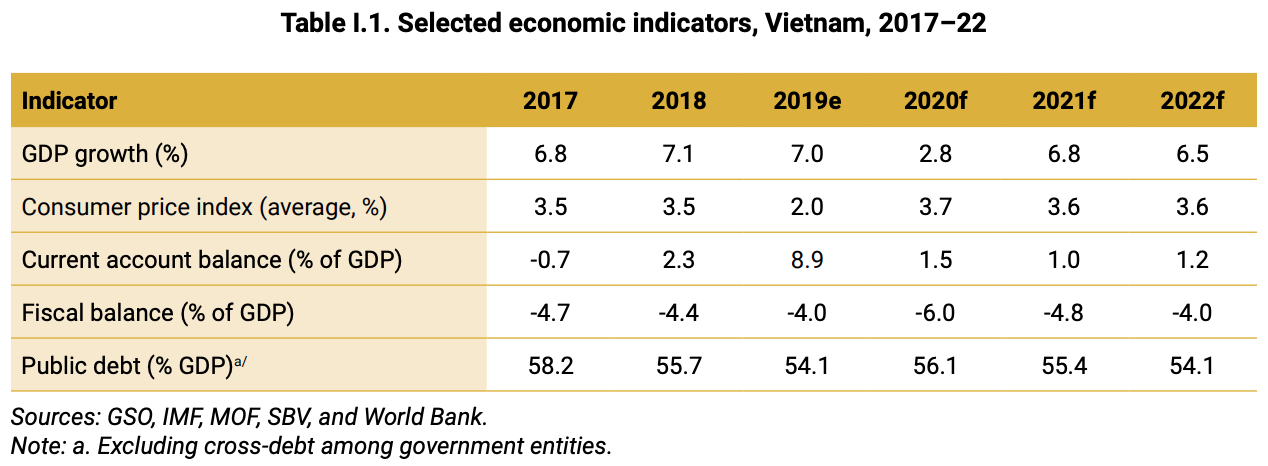
The following is the summary table of select economic indicators published by the World Bank in its “Taking Stock” report in December 2020.
For the full text of the June 2021 edition of the World Bank’s “Vietnam Macro Monitoring” report, please click here.