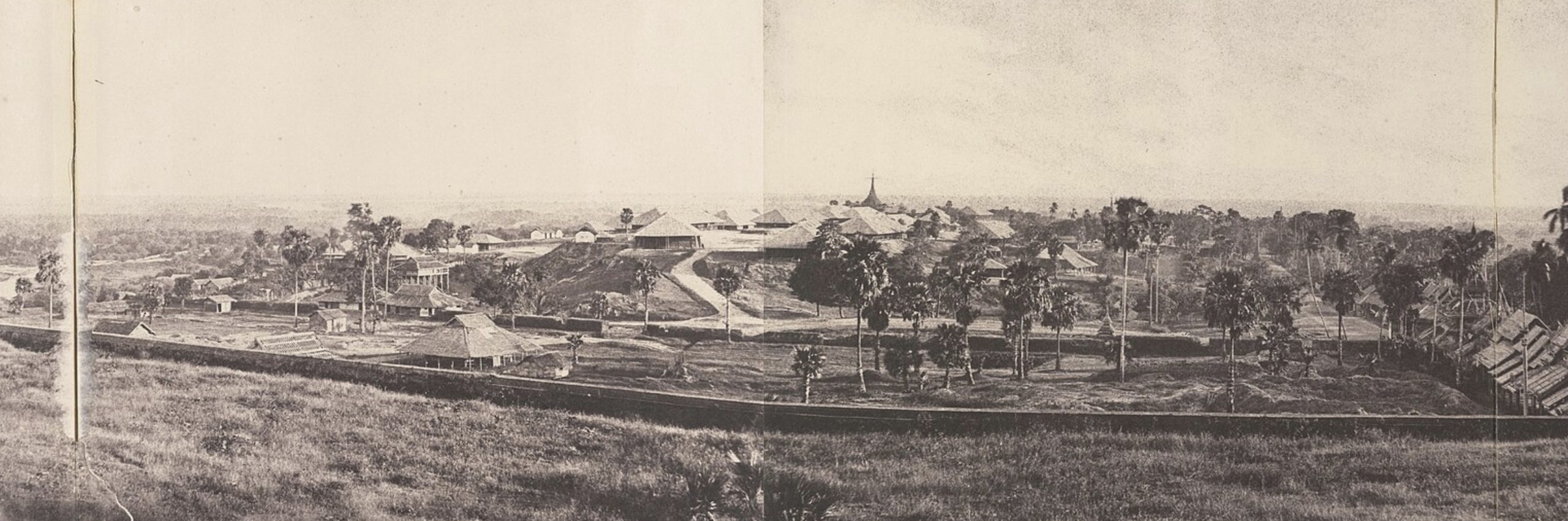
Burma the Purview of Private Traders (1761-1824)
Long before the war began, Burma had ceased to be of interest to the European trading companies. The English withdrew shortly after the last of their establishment on the island of Negrais had been massacred, in October 1759; the French when the British captured their stations in India, during the Seven Years’ War (1757-1763).
In May 1760, the council at Fort St. George sent Captain Walter Alves to Burma, to obtain the release of some prisoners in Rangoon, and the restitution of their property. Yet the new king, Naungdawgyi, understood that the English had been supplying weapons to the Mons, for deployment against his father. When he met Alves near Sagaing, he was dealing with a rebellion of the sort that often accompanied a change of ruler. He was plain-spoken, even brusque. According to Alves,
He was surprised to think how the governor of Madras … could have the face to demand any satisfaction … for that he looked on all that were killed at Negrais, whether guilty or innocent, as born to die there, and in that manner … His soldiers were not obliged to know who were guilty, or who were not, neither did he expect they would enquire, but, in such cases, generally killed men, women or child as they pleased.
The king added that, when they got into Ava, his men had orders ‘to spare nothing that has life, and to burn, kill and destroy everything in it.’ Nonetheless, in a letter, he wrote,
I am far from believing, either the governor of Madras knew of, or consented to, or approved of these actions of the governor of Negrais, and as for the new governor, that arrived the day before Negrais was destroyed, it was his ill fortune to be amongst those who were guilty, and his lot to be killed there; as when you put a piece of wood in the fire, in which is a worm you know not of, it is, for want of being distinguished, burnt in the wood, so it happened to the new governor.
The guilty had received their deserts, and so Naungdawgyi offered a fresh start. The Company might remain in Bassein, where they could be more closely monitored, provided they paid duties and supplied him with arms. He released the prisoners, and placed an order for 1,000 powder sieves, 10,000 muskets, 500,000 flints, and 1,000 viss each of steel and iron. Finally, he wrote, ‘a horse and mare, both four cubits high, and a male and female camel, these I want for breed.’
His letter served no purpose. The Company had orders to quit. In any event, Captain Alves had dispiriting intelligence:
[He wrote] I left at Dagon a Dutch ship, belonging to the governor of Negapatam, which, from the present situation of affairs in that country, I know not whether or no they will be able to get away, for the principal part of their cargo was carried up to Ava, to the Buraghmah king, by the Malabar supercargo, and for what goods he had sold there, he could not get in the money; and at Dagon they took a new cable out of the ship by force, for the use of a ship they have sent to the Nicobars.
The Company withdrew from Bassein, in 1761, and commerce with Burma became the purview of private traders.[1]
Some twenty years later, William Hunter wrote, after a visit to Rangoon,
… the trade of Pegu has never been esteemed a national concern; it has been, always, very limited, and carried on by a few private adventurers; who were, in general, such as had not a capital sufficient to begin any other branch of commerce.
He encountered a desultory trade in tobacco, cloth and nails from the Coromandel coast, coconuts from the Nicobars, and Burmese teak, for shipbuilding. The last was cheaper than its Bengali equivalent, though not quite of its quality.
In 1833, the supervisor of the Catholic mission, Father Sangermano, reported that Rangoon had become the dominant Burmese port, in 1790, when Bassein was given ‘as an apanage to one of the children of the emperor.’ Such were the injustices and vexations caused by his mandarins, ‘no merchant dared to approach the place.’ Still, Rangoon offered teak. And, as a consequence, two or three English and French entrepreneurs had established themselves there, to oversee the business of shipbuilding and ship repair:
One reason for this is the prohibition that exists of carrying specie out of the empire. For, as merchants, after selling their cargo and taking in another of teakwood, generally have some money remaining in their hands, they are obliged to employ it in building a new ship.
Otherwise, Sangermano reported that demand was strongest for sugar and muslins from Bengal, linen from Madras, and ‘particularly the white and coloured handkerchiefs which are here universally used for covering the head.’ In addition, some pottery, looking-glasses, articles of iron and brass, and muskets yielded ‘an exorbitant profit.’
Both Sangermano and Hunter referred to the ‘mortifying’ Burmese practice, common with Japan, of requiring ships to unload their guns and rudder, from the moment they came to anchor until they were permitted to depart. Sangermano added,
It frequently happens that difficulties are thrown in the way by some individual in power, which detain the trader much longer than would be necessary to finish all his commercial transactions; and besides, he is often obliged to bear, with patience, because without any prospect of redress, the most shocking personal indignities. [And] this behaviour has rendered the trade of Pegu much less considerable than it otherwise would have been, and retarded the advancement of the country, both in richness and civilisation …[2]
The challenge of managing the impositions of officials was not unique to Burma, of course. For himself, Hunter remarked that Rangoon’s government had expressed ‘sentiments of the highest respect for the English East India Company.’ He wrote that they accorded to his vessel greater indulgence than to any other foreign ship. He added that he understood the Burmans’ concern at the growth in British power in India, and he sympathised with their desire to keep their independence.
Still, it should not surprise us to be told by Gouger that, shortly before he arrived, in 1822,
… the Burmese Empire might truly be styled terra incognita, for, with the exception of three or four traders in Rangoon, who had rarely penetrated beyond a few miles from the town, [the] vast country was destitute of European inhabitants, and its capacity for commerce almost totally unknown.[3]
The Road to the First Anglo-Burmese War
Indeed, from the 1770s, the character of Anglo-Burmese relations had become steadily less commercial and more and more political. This should not surprise. The nature of both powers had been transformed. With the expulsion of the French from Bengal and the Carnatic, Britain had become a regional force, whose headquarters had moved from Madras to Calcutta. In Burma, the power of the Mons had peaked, in 1752, with their capture of Ava. Too late had they recognised the rise of a new Burmese champion, Alaungpaya, founder of the Konbaung dynasty. Within the compass of a little over twenty years, the Konbaungs destroyed the Mon kingdom (1757), installed a Burmese nominee on the throne of Manipur (1758), reduced Ayudhya to a heap of ashes (1767) and humiliated the Chinese, at Shwenyaungbin (1769). No longer weak and vacillating like the later Toungoos, they regarded themselves as deserving of a place at the top table of regional powers.[4]
In 1784, King Bodawpaya, Alaungpaya’s fourth son, responded to a request from Nga Than De, a dissident member of Arakan’s royal family, and conquered the kingdom. His action brought the Burmese frontier to the River Naaf and the unadministered areas to the south-east of British Chittagong. The victorious Burmese transported to Amarapura the sacred Mahamuni Buddha, reputedly one of only five images created in Siddhartha Gautama’s lifetime. They also deported King Thamada, his family, and twenty thousand of his subjects. Huge numbers of refugees crossed into Bengal. Subsequent campaigns in Siam (1785-1797) and Bodawpaya’s mania for building structures ‘of merit’ – the Mingun pagoda was to have been five hundred feet high – imposed unendurable demands on Arakanese labour. In 1794, a large-scale rebellion arose, in which armed bands of refugees from Chittagong assisted. When the revolt was vigorously suppressed, more refugees crossed into British territory, with a force of five thousand Burmese in pursuit. Sir John Shore, governor-general at Calcutta, responded by sending Captain Michael Symes to Ava.[5]
Initially, he complained, his embassy was treated with ‘insufferable arrogance.’ Yet he returned strangely sanguine. He wrote that the king and his ministers ‘certainly’ intended to carry ‘into complete effect’ the generous concessions he had negotiated. This was to overstate the case. As Symes himself recognised, ‘many obstacles still impeded the way.’
The road was only opened, and success depended on the discretion of those who should first pursue the track that was now pointed out.
Unfortunately, discretion was not the forte of Hiram Cox, who followed for the purpose, in 1796. Denied the kind of recognition he resolutely, but mistakenly, believed he deserved, he unilaterally cut short an unhappy sojourn at Amarapura, and returned to Rangoon. A warrant was issued for his arrest, and he called for rescue by frigate. For a time, the Burmese feared the worst, before wiser heads prevailed, and normal relations were restored.[6]
In defence of his conduct, Cox pointed to the hostility of a party connected to the king, who were meditating a descent on Assam. He also accused Symes of grossly misleading his government, of wandering ‘in a maze of error from the beginning to the end of his negotiation,’ and of suppressing such true insight as he possessed from ‘false shame’. These unjust remarks would have been dismissed by Shore, had he still been in post, but Lord Wellesley had taken his place, and he was less critical. All the same, he decided against sending another resident to Rangoon. He trusted that a policy of inaction would save complications.[7]
In 1798, there was another exodus of refugees from Arakan to Chittagong, among them Nga Than De himself. The fugitive population rose to forty or fifty thousand, and the humanitarian situation became desperate. At the same time, the refugees were responsible for fresh raids across the frontier, and the Burmese demanded their expulsion. The British, however, were preoccupied in India with Tipu Sultan and the Marathas. They responded with platitudes, until 1802, when the Burmese viceroy threatened invasion, if his demands were not met. Symes was sent on a second, grander embassy.[8]
For months, his presence was disregarded, as Bodawpaya contrived to represent the chance appearance of some shipwrecked Frenchmen as the visit of an official embassy. In early October, four months after he had arrived at Rangoon, Symes confided to his journal,
I have to combat the prejudice of a proud and half-mad bigot who, though not ignorant of, yet little regards the laws of nations … To convey reason to the ear of such a despot is almost impossible; no man dare tell him a disagreeable truth. He has avowed his partiality for the French, and animosity to the English, and every voice in his court re-echoes his sentiments … In so unpleasant a predicament, surrounded by such a gang, in the power of a gloomy, capricious tyrant, who debates whether or not he shall violate the most sacred of all public rights, I have nothing left but to temporise.
Finally, on 28 November, after the French sailors had been dispensed with, Symes was received by the king. Meetings with other members of the royal family followed, which Britain’s envoy considered ‘highly becoming and respectful.’ He departed the capital, in January 1803, reporting that the monarch had been ‘displeased at the conduct of Captain Cox … but he is now pleased to be reconciled, declares his disposition to be friendly, and his ports free to us as usual.’
Yet, in every other respect, the king’s official response was an ‘extravagant farrago.’ It took no account of the governor-general’s letter, of his objections to the Burmese viceroy’s threats, or of Calcutta’s proposals. Symes wrote,
It seems [Bodawpaya] will treat no power on earth as an equal, but he graciously receives under his protection China, Ceylon, Assam and the British Empire in India. He will grant a boon but will not make a treaty; and whatever he gives, it must be in the form of a mandate, issued in favour of a suppliant.[9]
In 1803, Lieutenant John Canning was sent to Rangoon, for practical purposes as Resident, officially as Symes’ personal agent. He withdrew after a just few months of tribulation. The British decided to protect peace across the leaky frontier by the simple expedient of stationing a stronger force on it. For a period, the policy seemed to work. Relations improved. Canning was sent on a second mission, in 1809, and was cordially received. He was pleased to report that the Burmese had not been courting relations with French Mauritius, as the British had feared. He noted appalling depopulation and poverty in the countryside, the result of Bodawpaya’s requisitions for the campaigns against Siam. Worryingly, the heir apparent, later King Bagyidaw, warned that his father was ‘strongly bent’ on capturing Chittagong and Dhaka,
… that his private apartment was filled with maps and plans of those provinces, and that his conversation had of late been entirely directed to that object.
However, Canning was assured that the king’s ministers were opposed to the idea, and he decided that the country was too disturbed for Bodawpaya to act, for the time being.
There was just one fly in the ointment. Bodawpaya had too dim an idea of British strength. Canning therefore recommended that Calcutta should occupy Arakan, as a precautionary measure. The force required, he suggested, would probably be small, and the advantages – the exclusion of the French navy from the islands of Ramree and Cheduba (near Kyaukpyu) and the protection of the frontier ‘by the impenetrable barrier of the Arakan mountains’ – were ‘a consideration of some importance.’[10]
In the event, British policy took the opposite course. The strengthened border force was withdrawn. And, in 1811, Chin Pyan (‘Kingbering’), son of Nga Than De, launched the first in a series of large-scale incursions into Burma from British territory. The Burmese were suspicious. How might Chin Pyan have collected a force, of many thousands, without the British being aware? How had he been able to abstract seventeen cannon from under the nose of the British superintendent of the docks? Why was the force sent to fetch him back so small? (It comprised just one hundred sepoys and their officers.) Was it not, in fact, more likely that Chin Pyan had active British support? The government denied it, of course, but Captain William White, who was sent in pursuit, was one who doubted their word.
After Chin Pyan had seized Arakan’s capital, Mrauk-u (‘Myohaung’), and his vengeful army had butchered its population, parading the heads of their victims on bamboo poles, Canning returned to Rangoon. By then, the Burmese had driven the rebels over the border. Canning promised that the British would not permit them to return. Yet, Chin Pyan eluded their grasp for several years. By the time he died, in 1815, the Burmese had good reason to distrust British promises, and, at the least, they confused Calcutta’s ineptitude for weakness.[11]
Meanwhile, the troubles had spread to Manipur and Assam. In 1813, Bodawpaya had introduced Marjit Singh as a tribute-paying prince at Imphal. Additional puppets were installed in Assam, after 1817. In 1819, Bodawpaya was succeeded by his grandson Bagyidaw. The British thought him ‘mild, amiable, good-natured and obliging,’ but he was influenced by his senior queen, Me Nu, and the dashing army commander, Maha Bandula. In 1821 and 1822, he sent substantial armies across the mountains into the Brahmaputra valley. Chandrakanta Singh, the leader of the Assamese resistance, who had received British support, escaped to Goalpara, and the Burmese consolidated their hold around Guwahati.
After these victories, an Englishman, John Laird, encountered Maha Bandula and his officers at Ava. With their heads wreathed in ‘gold-wrought handkerchiefs, part of the plunder of Assam,’ they proclaimed that Bagyidaw’s dominions extended to ‘the northern sea.’ Never, they declared, had there been a king as great. Bandula boasted,
I pursued the fugitives across the Brahmaputra into British territory, but as the English are on terms of friendship with Your Majesty, and you derive a large revenue from their trade to Rangoon, I retired. But if Your Majesty desires to have Bengal, I will conquer it for you, and will only require for this purpose the Kulás, or strangers, and not a single Burman.
Laird reported that the king ‘smiled but gave no reply.’
He was greatly pleased with what he heard during the evening, and was fidgeting about in his seat every now and then, according to his custom, when he is delighted with anything.[12]
By then, Marjit Singh had been dethroned, for failing to attend Bagyidaw’s coronation. The Burmese devastated his country, sending thousands of Manipuris into Cachar, next to British Sylhet. These districts were harder to defend than the jungle hills, and they were closer to more densely settled areas in eastern Bengal. Cachar and its neighbour, Jaintia, were declared British protectorates and a force was sent to halt the Burmese advance. Clashes followed there, as well as on the tiny island of Shahpuri, near Tek Naaf, in Arakan. The British decided that, unless the Burmese quit Assam and properly respected the river frontier south of Chittagong, war would be the consequence.[13]
Introducing Henry Gouger
As these events ground inexorably forward, Henry Gouger was trying, with little success, to earn a living as a merchant of raw silk, at Bauleah in Bengal. For his difficulties, he blamed the Company’s servants, who were using their arbitrary power ‘to crush the spirit of private adventure.’ He was aware of Hiram Cox’s warning that, in Burma, traders faced,
… a tissue of ignorance, insult and caprice, such as would render commercial dealings on a liberal scale utterly impracticable.
But he was desperate. In addition, Bengal’s unhealthy climate was vexatious. Perhaps fresher air in the terra incognita of Burma would do him good. When a merchant friend encouraged him to investigate the Burmese appetite for Indian cottons, Gouger decided to take his chance. He was just twenty-three and he reasoned that, as a private merchant, he might meet with a less haughty reception than the official representative of a foreign power.
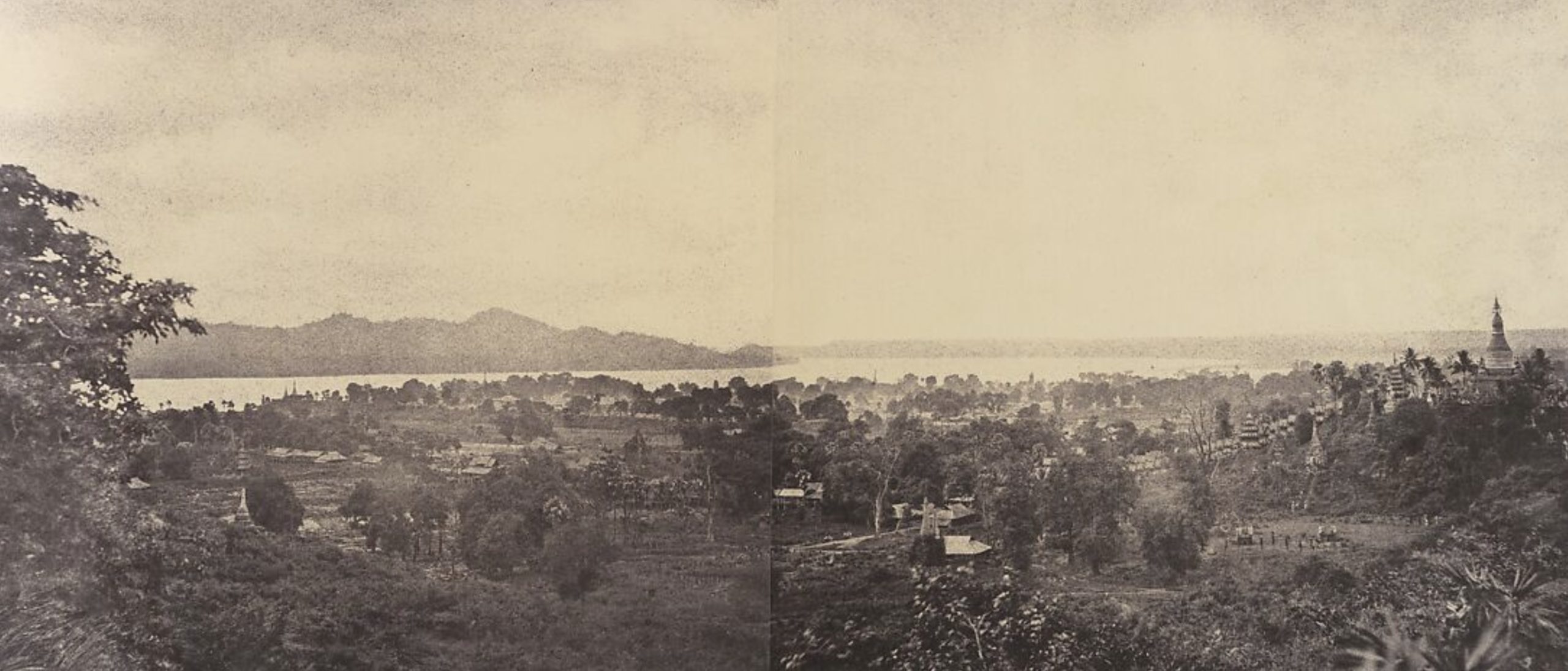
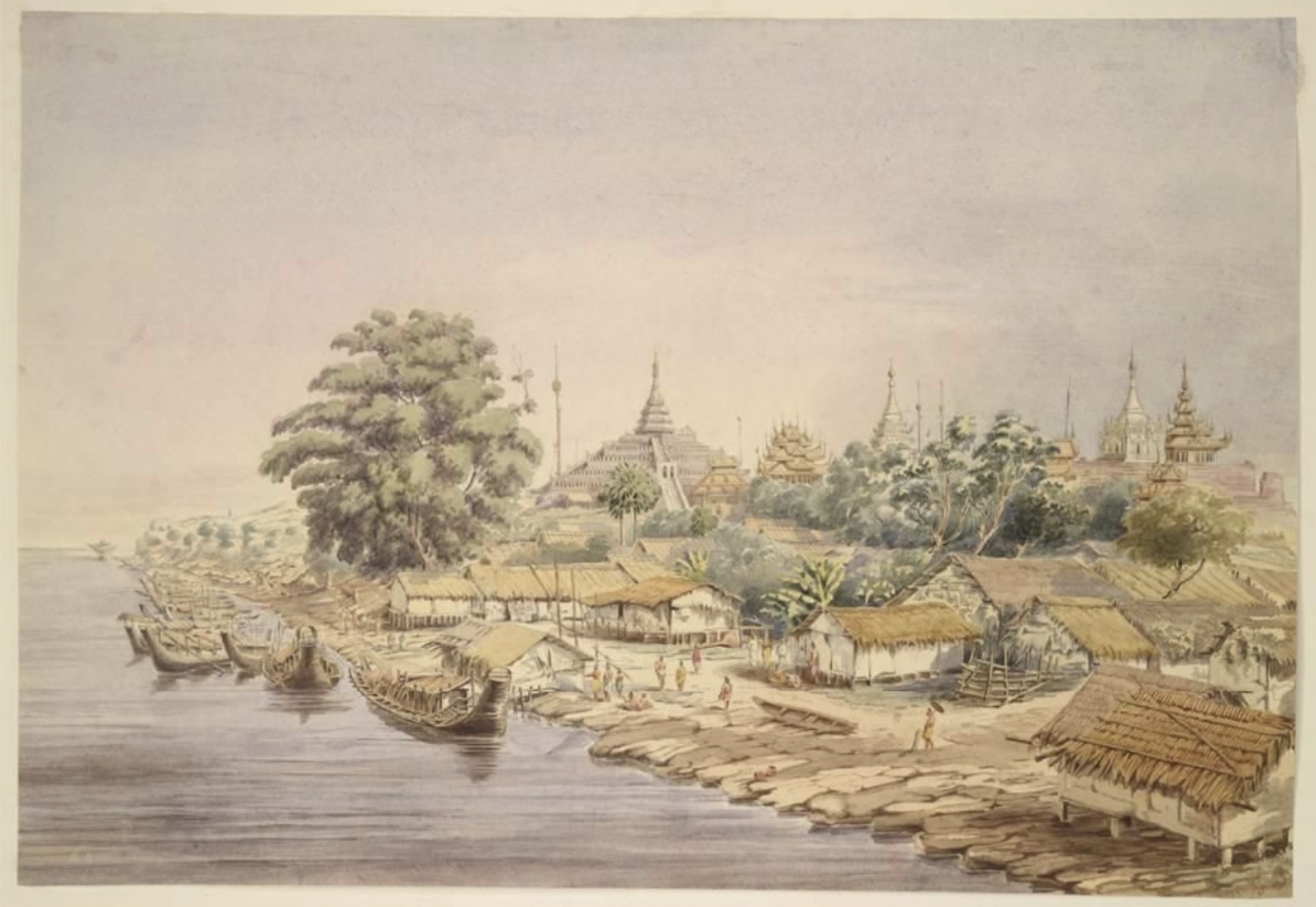
In June 1822, just as Maha Bandula was demanding of Calcutta the surrender Chandrakanta, Gouger armed himself with some presents and a few thousand pounds of goods, and embarked on the Alfred for Rangoon. He found it a ‘miserable, dirty town’ of eight to ten thousand souls living in houses of bamboo and teak intersected by malodorous muddy creeks. Two days beforehand, the Alfred had only narrowly avoided shipwreck on the notorious Preparis shoal. The thick monsoonal deluge had reduced visibility to fifty yards. When, fortuitously, it ceased, the reef was close enough that Gouger might have ‘pitched a biscuit on it.’
After Captain Dolge had unshipped the Alfred’s rudder, Gouger paid his dues to the collector of customs (‘akaukwun’), Mr. Lanciego, a Spaniard ‘of a somewhat irascible, but generous temper,’ who was married to a sister of the favourite queen. He then sought out the viceroy of the province. This gaunt, old man, ‘of dignified bearing’ was first seen emerging from the gloom of his apartment ‘slowly and silently as a ghost … stalking towards me with the aid of his formidable spear.’ Despite his disquieting appearance, however, the myowun proved ‘quite affable.’ He keenly supported Gouger’s plan for travelling to Amarapura, ‘to settle under the protection of the Golden Feet,’ and granted him a special pass. Gouger purchased two boats, and, in August, he set forth on the Irrawaddy, in a positive spirit, encouraged by the ‘free and easy bearing of the natives.’ The absence of the prejudice of caste was very welcome. It took a while to become accustomed to being treated as an equal but, compared with ‘the obsequious cringing and polished insincerity’ of the Indians, the naturalness of the Burmese came as a distinct relief.
Less pleasurable was the steamy, mosquito-infested delta: the boatman informed Gouger that ‘not long since a criminal was put to death by being exposed, during a night, to the attacks of these insects.’ Yet, once they had been left behind, the six-week journey was an enjoyable experience, completed mostly under sail, and enlivened by the occasional race, and visits to monasteries and pagodas. Gouger’s ‘fat, indolent’ teacher of Burmese was ‘a very indifferent instructor,’ but he availed himself of Dr. Judson’s recently published ‘vocabulary’ and claimed that, by the time he reached Amarapura, in late September, he could express himself on common topics ‘with some degree of fluency and correctness.’
News of his arrival spread like wildfire and, almost immediately, Gouger was granted an audience by the king. For ‘astrological reasons,’ he had vacated his palace for a temporary building of bamboo and thatch. Gouger’s expectation of ‘a proud monarch half concealed from the vulgar gaze by a cloud of exclusiveness’ was ‘blown to the winds.’ At best, the Englishman had hoped ‘to gain a momentary glance at a personage dressed up like a heathen doll’, and to address him not at all. ‘Judge my surprise,’ he wrote,
… when on entering a spacious apartment … the floor creaking in a most uncourtly manner at each step, I beheld at the end of it a young man, about thirty years old, with a pleasant, good-humoured countenance, seated cross-legged on a gilded armchair of European make, manifesting no sign or symbol of state other than the chair he sat on.
Bagyidaw addressed a few words to one of others in the room, who, in the clearest of accents, then enquired whether the visitor was English. Gouger was astonished. The man was dressed as a native, but his fair complexion, large nose and blue eyes hinted at his identity: a one-time collector of the Rangoon port (Lanciego’s predecessor), by the name of Rodgers. Thanks to his attendance on the king, the ice had been convincingly broken.
Rodgers, a junior officer on the Indiaman Worcester, had fled from India, in 1782, following a dispute with his chief officer, who had been adulterating the ship’s stores for private profit. Rodgers challenged to him to a duel and, when this was refused, he beat him with a ‘Penang lawyer’ (a stout stick) for ‘severe chastisement’. With each blow, Rodgers’ fury increased, until the officer was knocked senseless. Fearing the worst, Rodgers ran away to Chittagong and thence to Burma where, after forty adventurous years, he had risen from destitution to the rank of ‘Admiral of the River’ – his reward for leading a vigorous, and bloody, campaign against pirates on the Irrawaddy.
Up until this point, opinion about him had been mixed. John Canning, for one, had disapproved. In 1812, he had gone so far as to suggest that, if the Burmese pressed for Chin Pyan’s surrender, the British might make a counterclaim for Rodgers who, in 1803, had proposed ‘the most violent measures’ against him during a contretemps involving the lieutenant-governor (‘yewun’) of Rangoon. For his part, Michael Symes judged him ‘a man of vigorous mind, though from bad habits, probably of loose principles, and not to be trusted but with great caution.’ Even so, like Hiram Cox, he believed that, because of his knowledge of Burmese, ‘in the prosecution of our interests in this country, he may eventually be very serviceable.’ So it was to prove.[14]
Referring to the audience with Bagyidaw, Gouger remarked that,
The king was highly amused at hearing a conversation in the English language for the first time, and encouraged us to continue it, though I fear some of the free remarks his aged servant was imprudent enough to make, would not have gone unpunished if they had been understood.
This was close to the truth. Later, Rodgers warned that the king’s even temper could give way, unexpectedly, to bursts of passion. He mentioned an occasion when Bagyidaw had been irritated by some remarks raised during a council meeting. He left the chamber and returned brandishing a spear. The assembled ministers were sent scattering ‘like a herd of deer before a savage tiger.’ One of them was skewered in the shoulder, though to no lasting effect.[15]
For now, however, Gouger was sufficiently encouraged that he judged Burma’s monarch more ‘affable’ even than Rangoon’s myowun. He was promised his protection, and was invited to come to the palace as often as he liked. He was then presented to the queen, ‘a more powerful person in the state even than His Majesty.’ Gouger wrote,
The chief queen had been raised to the throne from the humble condition of the chief gaoler’s daughter. Although some years older than the king, and far from possessing any personal charms, she had, by the judicious use of her influence, and a certain determination of character, obtained complete control over the mind of her easy husband. By corrupt means she had acquired immense wealth – her intrigues had filled most of the important offices of the kingdom with her creatures, and through the instrumentality of her only brother, a fit agent for the purpose, she was enabled to carry on a large traffic in bribery and extortion. As avarice, backed by unlimited power, naturally leads to cruelty, this venal pair were as unscrupulous and vindictive as they were avaricious. They were equally feared and detested by the people.
Thus are we introduced to Me Nu and her power-hungry brother, Minthagyi, the Prince of Salin. However, these were remarks made with the benefit of hindsight. For now, there were reasons for optimism. The queen was ‘enamoured’ of Gouger’s muslins and prints and she asked him to return with more the next day, for her ladies-in-waiting. As Gouger remarked, she could hardly have made a more alluring proposition. Even when he refused a gift of betel, no offence was taken:
The present of a pawn in its crude state is not much amiss, but the exhibition of it in a different shape quite sickened me. Her Majesty, after some chewing of one of these delicacies, took it from her mouth and handed it over to a pretty girl behind her, who, esteeming herself highly honoured by the gift – horribile dictu – popped the nasty morsel in her mouth, and completed the mastication.[16]
Gouger spent much of the next five months at the palace, sporting, ‘like a mountebank,’ a silken outfit in the royal tartan, which he made into a jacket, waistcoat and trousers. He was impressed by the relaxed atmosphere of the harem, and by the good-humour and cheerfulness of the ladies, though few were quite the beauties he anticipated. (Most were the relatives of government officials, serving as hostages for good behaviour.) He became acquainted with Prince Tharrawaddy, the king’s brother, chosen as successor over the claims of the rightful heir, a fifteen-year-old son by a previous marriage, who was looked upon ‘as an obstacle to be removed when necessary.’ Tharrawaddy, popular because ‘his vices were of a royal kind,’ led one of two powerful factions at Court. Surrounded by a band of ruffians, he had a frank, easy manner, quite unlike Minthagyi, ‘the picture of an unscrupulous miser.’
Tharrawaddy was almost too familiar. How he acquired the taste, or even learned the name, was unclear, but he was partial to a bottle of beer. And so, one afternoon, he proposed a nocturnal ramble through the streets in quest of it, dressed in European disguise. He was dissuaded from taking his excursion only when Gouger’s servant warned that his clothes had been sewn by women: Burmans of rank had ‘a superstitious repugnance’ to garments stitched by the other sex.
A regular visitor, in the succeeding weeks, to the Hluttaw, the Council of State, and the Yondaw, the Court of Justice, Gouger became sufficiently acquainted with the king’s counsellors, the wungyis, to appreciate that ‘horseleech’ was the mainspring of business, indeed of all society. In time, he confesses, he became quite an expert, the more successful for having an ‘unfathomable pocket.’
In the field of food supply, his skill proved particularly useful.
It might be said that the Burmese were not always very discriminating in their tastes. In Rangoon, Lanciego had told Gouger of some of his minions, who had bitten into a bar of soap thinking it was the cheese that he was then enjoying. He said,
They did not discover their mistake nor discontinue their attacks upon it, until their mouths were foaming with the lather, and in utter astonishment at their master’s predilection for such nastiness.
Gouger informs us that the royal specialty – black-headed nut maggots – were ‘repugnant … when brought to table entire in undisguised hideousness.’ However, they tasted like marrow, when fried and spread on toast, and so might be tolerated, on occasion. Ngapi, a kind of preserved fish, was better. It took time to appreciate the scent of it but, once this had been managed, it could be eaten ‘with great relish’.
On the other hand, in Buddhist Burma, the supply of meat for consumption was outlawed. The determined usually had to rely on ‘joints of carrion, ponies, oxen and cows, rats, snakes, and pigs (the scavengers of the streets).’ Yet Gouger was more enterprising than most. With the connivance of the royal shepherd, he secreted away some of the king’s exclusive flock of sheep in an enclosed space beneath his house … until the bleating gave them away. Anticipating the consequences of his summons to the palace, Gouger’s servant suggested that, as an excuse, he profess an intention to domesticate them for his ‘amusement’. Gouger chose to be up-front. No Englishman, he declared, could live in sight of mutton without eating it. To his surprise, Bagyidaw laughed off his transgression and gave him two animals. Gouger writes,
The courtiers were astounded by my escape. The chief shepherd, no doubt, made a good profit by his flock, which die at convenient times, as wanted by His Majesty or by his other customers. My mistake was in buying them alive.
After this, a means was discovered of employing Gouger’s Muslim servants as agents for securing beef in a quarter of the town under Tharrawaddy’s jurisdiction. His being particeps criminis served as insurance against complaints.[17]
By now, the signs were that Gouger was onto a winner. His health had improved, and he had cleared a profit of £5,000 on £3,000-worth of cottons. If he adjusted the mix of his merchandise, he believed his return might rise to six or sevenfold on cost. True, the repatriating of gold, silver, precious stones, marble, silk, even Burma’s spirited little ponies, was prohibited, and the volume of £8,000-worth of teak (the only form of consideration sanctioned for export) was more than he could possibly ship. Still, surplus rice frequently went to waste. Given recourse to bribery, he was confident that he might utilise that.
It was therefore in a positive mood that, in December 1822, Gouger departed Amarapura for Rangoon, under the escort of a war-boat, provided, for his protection, by Prince Tharrawaddy. He promised Bagyidaw that he would be back within the year and, in response to a specific request, he said that he would bring him a dog taller than any in his brother’s kennel.[18]
The Rev. and Mrs. Adoniram Judson
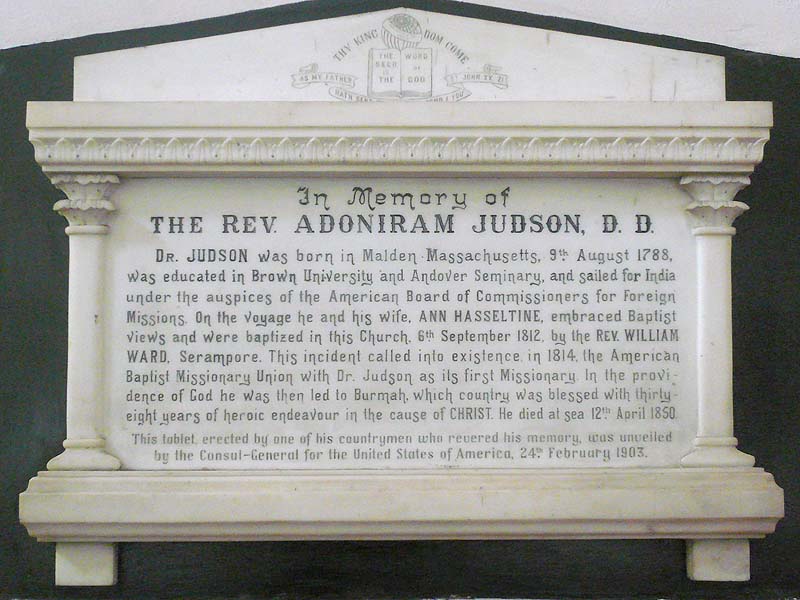
At which juncture, we shall turn to the other principals in this tale, the missionaries Adoniram and Ann Judson. Aged 34 and 32 respectively, they had moved to Rangoon rather earlier than Gouger, in 1813. As Christian evangelisers, they had never been welcomed in Bengal and, when the War of 1812 began, they became even less appreciated, as Americans.
In Rangoon, it was several years before Dr. Judson mustered sufficient confidence in his command of Burmese to preach in public. In April 1819, he officiated at a first service in his zayat on Pagoda Road. The congregation comprised fifteen persons, besides children. ‘Much disorder and inattention prevailed.’
Proselytising the Christian faith was fraught with risk, as Judson admitted to his diary, on 11 May 1819:
Heard much to-day of the danger of introducing a new religion. All agreed in opinion, that the king would cut off those who embraced it, being a king who could not bear that his subjects should differ in sentiment from himself, and who has, for a long time, persecuted the priests of the established religion of the empire, because they would not sanction all his innovations. Those who seemed most favourably disposed, whispered me, that I had better not stay in Rangoon and talk to common people, but go directly to the ‘lord of life and death.’ If he approved of the religion, it would spread rapidly; but in the present state of things, nobody would dare to prosecute their inquiries, with the fear of the king before their eyes … I encouraged them to trust in the care of the Almighty Saviour; but they speak low, and look around fearfully, when they mention the name of the ‘owner of the sword.’[19]
It was therefore with mixed emotions that Judson and his ‘excellent and zealous’ associate, James Colman, departed for Ava, on 22 December 1819. With them they took, as a gift for His Majesty, a copy of the Bible in six volumes, covered with gold leaf ‘in the Burman style.’ As they passed Bagan, they ‘looked back on the centuries of darkness that are past’ and comforted themselves with the thought that their churches would soon supplant its temples, and that ‘the chanting of the devotees of Boodh [would] die away before the Christian hymn of praise.’
It was not to be. When they presented their petition to King Bagyidaw, at a celebration of Burma’s victories over the Manipuris (‘Cassays’), he gave it short shrift:
He held the tract long enough to read the two first sentences, which assert that there is one eternal God, who is independent of the incidents of mortality, and that, besides Him, there is no God; and then, with an air of indifference, perhaps disdain, he dashed it to the ground! … He then rose from his seat, strided (sic) on to the end of the hall, and there, having dashed to the ground the first intelligence that he had ever received of the eternal God, his Maker, his Preserver, his Judge, he threw himself down on a cushion, and lay listening to the music, and gazing at the parade spread out before him.
At this juncture, the ‘late collector’ at Rangoon, (‘Mr.G’ for ‘Gibson’, not ‘Gouger’) did his best to intervene on the missionaries’ behalf. He took them to a minister of the interior (‘atwinwun’), Moung Zah, and tried to persuade him that, if they were given royal favour, ‘other foreigners would come and settle in the empire, and trade would be greatly benefited.’
Moung Zah was uninterested. It is not hard to see why. Rodgers reported that, fifteen years before, the most senior of his colleagues had tortured his own uncle almost to death ‘under the iron mall (maul),’ for embracing Catholicism. Initially, Maung Zah suggested that, if Judson was prepared to wait, he would speak to the king. Later, more bluntly, he declared he was wasting his time. At the cost of thirty dollars, the missionaries obtained a royal order on a palm leaf which protected them from molestation. Immediately, they returned to Rangoon.[20]
From there, Colman moved to Cox’s Bazaar where, in the words of Judson’s biographer, ‘he was surrounded by poverty, ignorance and delusion, and … fell a martyr to his zeal, July 4, 1822.’ The Judsons too were minded for abandonment, until they were persuaded by their three ‘disciples’ to stay and plough their furrow. They remained in Rangoon, until August 1821, when Ann temporarily departed for a healthier clime. When, a year later, Judson and Dr. Jonathan Price (who had joined him, in February 1822) were summoned to the capital, their congregation comprised just eighteen converts.[21]
According to Gouger,
Price was a very different character, a tall, gaunt, raw-boned, sallow-complexioned Yankee, singularly uncouth in appearance, his light hair bristling towards all points of the compass, and his nose of the kind termed, by those who have classified this feature, ‘celestial’.
‘Utterly careless of dress and cleanliness,’ Price was well-fitted to bear hardship. Later, he took to prison life ‘as though it were not altogether uncongenial to his habits and feelings.’ For the present, the king was interested in his medical skill, particularly with diseases of the eye. Judson’s function was to act as interpreter, and he was received civilly enough by Bagyidaw, Prince Tharrawaddy, even by Minthagyi, on condition that he didn’t press his Christian suit aggressively.
About Price’s ophthalmic accomplishments, Gouger is less than flattering. Remarking on the ‘plainness’ of his Siamese wife (he says it was ‘repulsive’), he suggests that Price can only have married her from a sense of guilt:
[She] had a little sight left when she submitted to an operation by the doctor, and he, through want of skill having deprived her of that little, married her by way of compensation …
Nor was Price’s quackery limited to ophthalmology. Gouger explains,
I once had the little wit to place myself in his hands to get rid of a headache with fever. I very soon found my head shaven, several snake-like leaches pendant from its bald surface, bleeding at the arm, and a dose of opium which sent me to sleep for a night and a day – from which I awoke just in time to save my skull from being trepanned.
Yet, for all his faults, Price was a ‘very simple-hearted, good fellow.’ Gouger says that no one could bring themselves to quarrel with him, ‘even though he put their lives in jeopardy.’[22]
Negotiations for land for a house-cum-meeting hall moved slowly, until Judson identified a small place beside the Irrawaddy, just outside the city walls, about a mile from the palace. A deal was done, and he returned to Rangoon, promising to the king that, when Ann rejoined him, they would come back to make their home.
When Mrs. Judson returned to Burma, in December 1823, war clouds were building. In Calcutta, ‘serious difficulties’ had caused sailings to Rangoon to be much reduced. Yet, afterwards, the couple had no hesitation about moving to the capital. Its extreme remoteness was a concern, but Judson had given his promise. In any event, he had explained to the Burmese that Americans were not the subjects of Great Britain.
Leaving Mr. and Mrs. Jonathan Wade to care for the mission, almost immediately they departed Rangoon. On 10 February 1824, Ann Judson wrote to her parents from her new home, optimistically proclaiming that ‘no being was ever under greater obligations to make sacrifices for the promotion of God’s glory, than I am at this moment.’[23]
Taken to the Let-ma-yoon Death Prison
Despite his hopes for a fortune, Gouger had greater doubts about the wisdom of returning to Burma. Beside the international situation, he was concerned that committing himself to ‘a few years’ banishment from civilised life’ would be a heavy price to pay, should his calculations prove false. Looking back, he blamed his disasters on Lord Amherst’s administration, which disgraced itself by issuing ‘no timely warning, no merciful hints of danger … to deter the unwary merchant or traveller.’
The trap was open, and the incautious bird flew into it.[24]
On 15 May 1824, Jonathan Wade wrote to an overseas friend from the mission in Rangoon:
You would not think it strange, if by this time, we should express some regret for our imprudence in having left Bengal, contrary to the advice of our friends … We did not apprehend, until last Monday, that war was declared against the Burmans. The most credible information which we could obtain assured us that all grievances were amicably settled. But on Monday last, information came that a number of ships were at the mouth of the river. [The] government immediately ordered every person in Rangoon who wears a hat to be taken prisoner, which was accordingly done. In the course of the succeeding night, Mr. Hough and myself were chained, and put into close confinement, under armed keepers. In the morning the fleet was in sight of the town, and our keepers were ordered to massacre us the moment the first shot was fired upon the town …
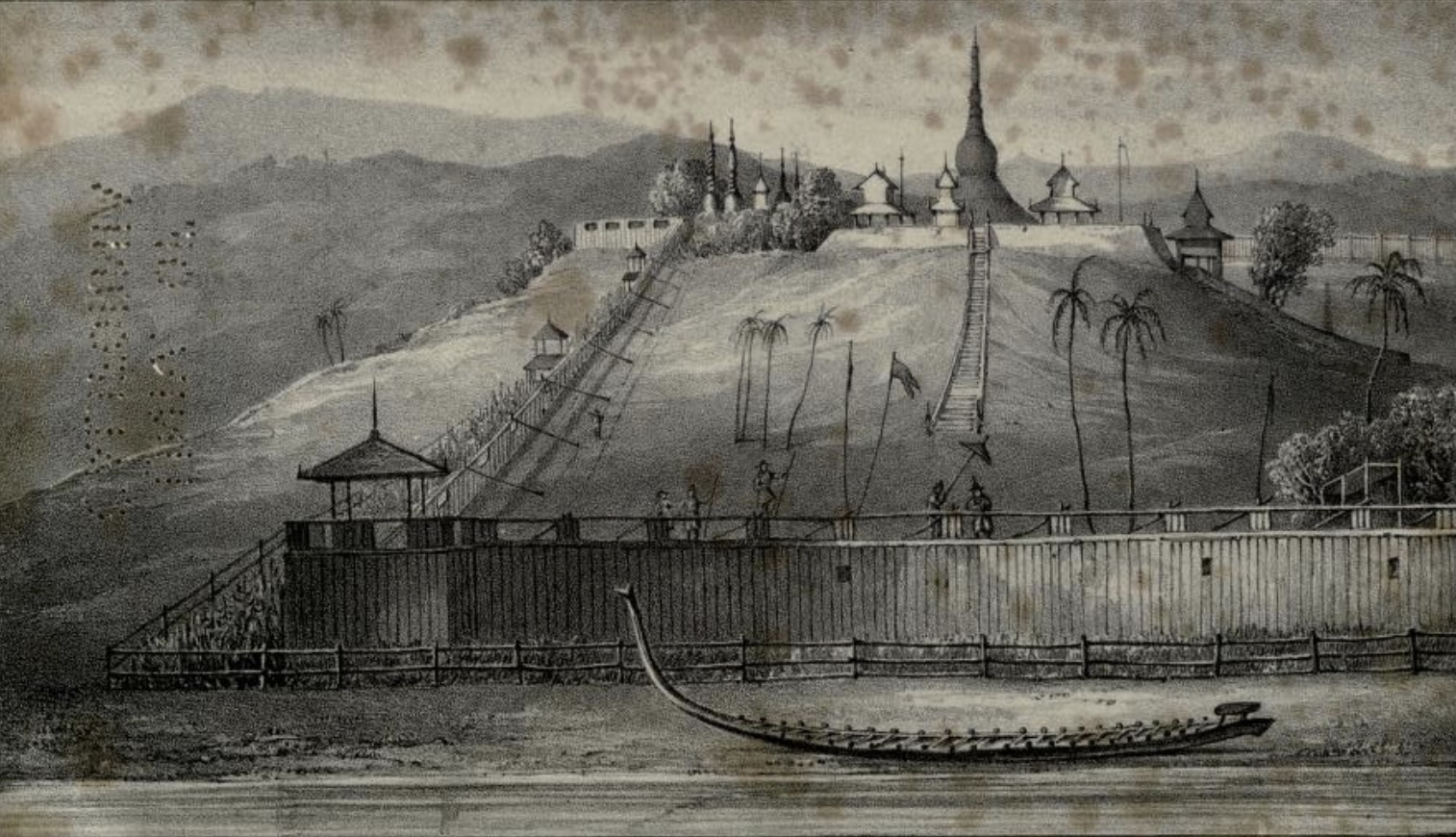
Fortunately, when the town started to tremble and shake, the guards forgot their orders. They broke down the prison door and fled. Others arrived on the scene. The foreigners were corralled – at spearpoint – into a tribunal, for execution, but they were saved when a salvo from HMS Liffey sent their judges scattering. Finally, they were locked away in a vault beneath the Shwedagon Pagoda, until the shelling stopped. Relieved, the next day, by English troops, they at least were safe. But what of the people in the capital, where there was every reason to fear the worst?[25]
Gouger was living in a house run up for him on an allotment belonging to Lanciego. This was fortunate as, to mark the shift to a new reign (and perhaps to escape Amarapura’s feverish waters), Bagyidaw had reversed the decision taken by his father, in 1783, and had returned his court to Ava. The new city was a construction site, and housing was in short supply. In the fading former capital, several thousand Chinese were still clinging to their homes. Had they the patience of twenty years, they might have received their reward. Gouger explains that, in 1842, after Tharrawaddy had deposed his brother,
… a similar freak possessed the brain of the usurper, who, in his turn, gave up his brother’s newly-built city and palace at Ava to the owls and the bats, for the whim of again restoring the seat of government to this now half-demolished town.[26]
Gouger had not found a dog to compete with Tharrawaddy’s giant mastiff ‘in inches’, but he brought Dart, a greyhound which, despite his uncourtly habit of yawning in the king’s company, became ‘a prime favourite’. Clothed in scarlet like himself, Dart died shortly afterwards, ‘from the effects of inactivity and high living’. Gouger also brought an assistant, Richardson, and merchandise sufficient for three boats on the journey upriver. It sold in just a few days.
The king and queen he found as cordial as before. Prince Tharrawaddy too, ‘in spite of the eclipse given to his kennel.’ Gouger mentions an occasion when he joined the human train which pulled Bagyidaw about the new city in a richly ornamented buggy, ‘the present of one of our former embassies.’ Then the atmosphere worsened. In January 1824, the Judsons reported increased suspicion of foreigners: Price had fallen from favour and, shortly after the celebratory opening of the new palace ‘amid the acclamations of millions,’ an order was issued excluding all foreigners but Lanciego.[27]
Gouger found himself at the centre of a dispute over the estate of Stockdale, a European who had accompanied him on his return, and died. Me Nu seized his assets and demanded that Gouger repay a loan which she, falsely, claimed Stockdale had extended to him. The problem was resolved with a ‘considerable’ bribe. A second portent of trouble was a noticeable change in the attitude of Prince Tharrawaddy:
‘You know nothing,’ he would say, ‘of the bravery of our people in war. We have never yet found any nation to withstand us. They say your soldiers, when they fight, march up exposing their whole bodies. They use music, to let us know when they are coming. They do not know our skill and cunning. They will all be killed if they attack us in this way. Besides you have taken our territory. When we conquered Arakan, we acquired a right to Bengal as far as Murshidabad, which formerly belonged to Arakan. You will have to give it up again. We shall go to Calcutta and take it. There is plenty of gold and silver there. The English are rich, but they are not so brave as we are. They pay sepoys to fight for them. They are now frightened, lest we should make war upon them.’[28]
The new year had been commemorated with a splendid pageant, in which six thousand troops under Maha Bandula crossed the river to Sagaing in a fleet of magnificent war boats. Gouger had questioned the general, hoping to learn his destination. Bandula gave nothing away, which was hardly surprising, and certainly not, as Gouger complained, the result of the general’s uncommunicative disposition or excessive pride. Shortly afterwards, the returning Judsons encountered the same army marshalled beside the Irrawaddy, readying for Arakan and Bengal. As Ann explained in a letter to her brother-in-law, Elnathan Judson, from Rangoon, in May 1826,
The first certain intelligence we received of the declaration of war by the Burmese, was on our arrival at Tsen-pyoo-kywon (Sin Hpyu Kyun), about a hundred miles this side of Ava, where part of the troops, under the command of the celebrated Bandula, had encamped. As we proceeded on our journey, we met Bandula himself, with the remainder of his troops, gaily equipped, seated on his golden barge, and surrounded by a fleet of gold war boats, one of which was instantly despatched the other side of the river to hail us, and make all necessary inquiries. We were allowed to proceed quietly on, when we had informed the messenger that we were Americans, not English, and were going to Ava in obedience to the command of His Majesty.[29]
Gouger enjoyed the company of the king on just one remaining occasion. Bagyidaw spotted him at a wrestling contest which followed the entrapment and taming of an elephant, and summoned him to the royal pavilion, for a better view. Even then, Gouger thought ‘it was easy to see, from the bearing of the nobles, that his favour alone protected me from insult.’[30]
News of the capture of Rangoon, which reached Ava, on 23 May, was the straw that broke the camel’s back. The foreigners had convened at Dr. Price’s for Sunday worship when the news irrupted on them. (Richardson had slipped away to Rangoon, under the pretext of fetching goods.) There was an anxious debate. The Americans saw that Gouger ‘had much more reason to fear than the rest of us.’ They considered that they would be safer if they disassociated themselves from ‘the rebel Englishman’. Gouger didn’t disagree, and they parted on good terms. Rodgers kept to himself. He trusted in ‘his complete naturalisation as a Burman subject, and hoped to save himself from shipwreck by steering with the art and skill acquired by his long experience.’ Lanciego relied on his relationships at Court, but said he was nervous of having Gouger as a neighbour. In short, Gouger was ‘strictly tabooed as if [he] had been a leper.’ He shut himself away.
There were no immediate recriminations. Within a few days, war boats fit for army of ten or twelve thousand departed down the Irrawaddy, ‘the soldiers singing and dancing, and exhibiting gestures of the most joyous kind.’
No doubt was entertained of the defeat of the English; the only fear of the king was that the foreigners, hearing of the advance of the Burmese troops, would be so alarmed, as to flee on board their ships and depart, before there would be time to secure them as slaves.
Judson was introduced to Tharrawaddy’s notions about Burmese military superiority. ‘The English,’ the prince declared,
… contrive to conquer and govern the black strangers (Hindus) with ease, who have puny frames and no courage. They have never yet fought with so strong and brave a people as the Burmans, skilled in the use of the sword and spear. If they once fight with us, and we have an opportunity of manifesting our bravery, it will be an example to the black nations, who are now slaves to the English, and encourage them to throw off their yoke.
Tharrawaddy believed that, although the British were strong at sea, on land it was different. The Burmese were ‘skilled in making trenches and abbatis, which the English do not understand.’ He could afford to be magnanimous. On 24 May, he sent a message to Gouger:
The Prince of Tharrawaddy presents his compliments to Mr. Gouger and, having formed a partiality for him, would be sorry to see his throat cut, and recommends him to come quickly to his palace, where the prince would like to see the man who dares to touch him. — P.S. Mr. Gouger had better bring his wine and beer, gold and silver, for safety.
Gouger was tempted to accept the offer. He wondered whether his plight could get much worse. Yet he had his doubts, and when Kewet-nee warned that the prince was seeking to get him into his power, he chose to tell Tharrawaddy simply that he trusted in the protection of the king.
Later, he decided, the number killed during Tharrawaddy’s seizure of power, in 1837, was the measure of Kewet-nee’s wisdom. [31]
On 28 May, Gouger was arrested for spying. The Scotsman, Laird, Tharrawaddy’s agent in teak, had been brought (under compulsion) from Rangoon to Ava, where he had shown the prince a British newspaper, which he had also shared with Gouger, outlining hostile plans for Burma. Gouger was blamed for not mentioning the report himself. There were other charges:
I was accused of having made maps of the country, by means of instruments, and of having forwarded them to the enemy; of having sent away my emissary, Mr. Richardson, with intelligence, and of furnishing him with money for the journey; of retaining the missionaries in my pay; giving them constantly money for their subsistence; of having written to Bengal about affairs of state; of being lavish in my gifts and expenses, and of keeping a retinue of servants inconsistent with a private station, and only such as a man in office could support.
Gouger adds,
The worst of it was that these accusations were more or less true, while the explanations of them, though simple, were not understood or, if understood, were not credited; but had they been both understood and believed, they would not have saved me from the consequences.[32]
He was examined and then detained, at their barracks in the palace yard, by some of the king’s personal guard. When the news reached him, Kewet-nee was smart enough to send supplies, including beer and brandy. With these, Gouger engineered a relaxation in the watch, to the extent that, on the third night, he was allowed to creep home to bed, on condition that he return to the palace by sunrise. Unfortunately, the chief magistrate chose the hours of darkness to make a surprise examination, and he discovered Gouger missing. Gouger was recaptured, interrogated until dawn and then placed, for tighter confinement, in the stocks.
In the succeeding week, with further gifts of grog, he obtained a measure of freedom. Then on 8 June, he was bound with cords and carted off to the Let-ma-yoon prison.
I was now delivered over to the wretches, seven or eight in number, who guarded this gaol. They were all condemned malefactors, whose lives had been spared on condition of their becoming common executioners; the more hideous the crime for which he had to suffer, the more hardened the criminal, the fitter instrument he was presumed to be for the profession he was henceforward doomed to follow … To render escape without detection impossible, the shape of a ring was indelibly tattooed on each cheek, which gave rise to the name they were commonly known by, ‘pah-quet’, or ‘ring-cheeked’, a term detested even by themselves as one of reproach.[33]
Gouger’s ankles were shackled using a maul, ‘a false blow of which would have maimed me for ever.’ Then, as his eyes adjusted to the light, he inspected the room that, for a year, was to become his dwelling-place. Forty feet long and thirty feet wide, it had a raised teak floor and a tiled roof. But for a hole in this, and the cracks in the walls, there was no window and no means of ventilation. The only furniture was a tripod bearing a cup of oil, for lighting at night, a row of stocks which, ‘like a huge Alligator, opened and shut its jaws with a loud snap on its prey,’ and a long bamboo suspended on pulleys from the ceiling.
Inside were forty to fifty largely naked wretches, most of them in chains, some in the stocks. The prison had not once been washed or swept since it had been built:
Putrid remains of cast-away animal and vegetable stuff, which needed no broom to make it move on – the stale fumes from thousands of tobacco-pipes – the scattered ejections of the pulp and liquid from their everlasting betel, and other nameless abominations, still more disgusting, which strewed the floor – and if to this be added the exudation from the bodies of a crowd of never-washed convicts, encouraged by the thermometer at 100 Degrees, in a den almost without ventilation – is it possible to say what it smelt like? [34]
After a while, Gouger spotted Laird ‘weltering in the filthy state allotted to him.’ Rodgers soon joined him. Both had seen the report of the British plans. Both were deemed spies. Likewise, Kewet-nee and Shwai-nee, guilty by association, but later released. Two other foreigners, Constantine, an ancient Greek showing worrying symptoms of leprosy, and Mr. Arrakeel, an Armenian merchant, spoke no English and little Burmese, and so with them there was little communication. Next to arrive were Judson and Price. They had been questioned about informing outsiders of the state of the kingdom. They admitted to communications, but not with the British. Their answer ceased to be satisfactory when it emerged that they had received money from Gouger, ‘by orders on Bengal.’
Mrs. Judson’s account of husband’s arrest appears in her letter to Elnathan Judson, of May 1826:
On 8 June, just as we were preparing for dinner, in rushed an officer holding a black book, with a dozen Burmans, accompanied by one, who, from his spotted face, we knew to be an executioner, and ‘a son of the prison.’ ‘Where is the teacher?’ was the first inquiry. Mr. Judson presented himself. ‘ You are called by the king,’ said the officer; a form of speech always used when about to arrest a criminal. The spotted man instantly seized Mr. Judson, threw him on the floor, and produced the small cord, the instrument of torture …
The scene was now shocking beyond description. The whole neighbourhood had collected – the masons at work on the brick house threw down their tools, and ran – the little Burman children were screaming and crying – the Bengali servants stood in amazement at the indignities offered their master – and the hardened executioner, with a kind of hellish joy, drew tight the cords, bound Mr. Judson fast, and dragged him off I knew not whither.
Ann was left behind, ‘committing my case to God, and imploring fortitude and strength to suffer whatever awaited me.’ She burned those letters that might reveal correspondents in England and, with no little difficulty and at some expense, secured the release of two servants who had been placed in the stocks. After a sleepless night, she despatched a helper for news. He returned declaring that Judson was confined in the death prison with the others, ‘with three pairs of iron fetters each, and fastened to a long pole, to prevent them from moving.’ This explains the bamboo which Gouger had seen suspended from the ceiling:
When night came on … it was passed through the legs of each individual, and when it had threaded our number, seven in all, a man at each end hoisted it up by the blocks to a height which allowed our shoulders to rest on the ground while our feet depended from the iron rings of the fetters. The adjustment of the height was left to the judgment of our kind-hearted parent, who stood by to see that it was not high enough to endanger life, nor low enough to exempt from pain.[35]
At dawn, the cane was lowered, but only to within a foot of the floor. The sole relief was that the thick tobacco smoke drove the mosquitoes away, sparing prisoners’ unprotected feet. As they meditated on their prospects, Gouger was given a preview of the chief magistrate’s likely manner of proceeding:
Seated on the ground opposite to the judge was a young man, accused of being concerned in the robbery of the house of a person of rank. … He was made to sit on a low stool, his legs were bound together by a cord above the knees, and two poles inserted between them by the executioners, one of whom took the command of each pole, the ground forming the fulcrum. With these the legs were forced upwards and downwards and asunder, and underwent a peculiar kind of grinding, inflicting more or less pain as the judge gave direction. Every moment I expected to hear the thigh-bone snap.
The prisoner’s misfortune was that he was up to the treatment. He confessed nothing before he fainted. The next day, his wrists were tied behind his back, and he was hoisted on a pulley to a height that permitted his toes just to touch the ground. In this position, he was left ‘to become more reasonable.’ Eventually – inevitably – he did, incriminating two respectable persons as accomplices. Wise fellow! Time was set aside for the fleecing of them, and he was released.[36]
Happily, the foreigners were spared such treatment. Even so, when on 11 June, Ann Judson obtained, at the cost of a bribe, permission to visit her husband, she found his ‘wretched, horrid situation’ beyond her powers to describe. Gouger explains that Adoniram was ‘fastidiously neat’ by nature, ‘just the man to depict the metamorphosis he had undergone in its strongest contrast.’ His haggard, death-like expression was truly shocking. Ann hid her face in her hands, to conceal her consternation. ‘For very shame’s sake,’ Gouger acknowledged her as speedily as courtesy permitted, and shuffled back to his den.
Yet all was not lost. At some additional cost, Ann obtained relief for all. For three days, the prisoners were removed from the corner they had occupied to an open shed in the prison enclosure. Provided with water and spared the filth, the vermin and the bamboo, they dared to imagine they might not be destined for execution.[37]
Mrs. Judson sent some food and some sleeping mats but then, for ten days, she kept away. She devoted her time to petitioning the queen to intercede, and to protecting her assets. The most she obtained from Her Majesty (at considerable cost) was an instruction that the missionaries should remain as they were. The Judsons’ financial peril became manifest when fifty thousand rupees of Gouger’s property were carried off by officers of the palace. They told Ann to expect a visit the next day, which was good of them, for it allowed her to bury some of her silver, along with the unpublished manuscript of Judson’s translation of the New Testament. (This was later retrieved and smuggled into the prison, inside a pillow specially selected for its mean appearance and discomfort.)
Ann wrote that the king’s officers ‘conducted their business of confiscation with more regard to my feelings than I should have thought it possible for Burmese officers to exhibit.’
‘Where is your silver, gold and jewels?’ said the royal treasurer. ‘I have no gold or jewels; but here is the key of a trunk which contains the silver – do with it what you please.’ The trunk was produced, and the silver weighed. ‘This money,’ said I, ‘was collected in America, by the disciples of Christ, and sent here for the purposes of building a kyoung (‘monastery’) … and for our support, while teaching the religion of Christ. Is it suitable that you should take it?’ (The Burmans are averse to taking what is offered in a religious point of view, which was the cause of my making the inquiry.)
‘We will state this circumstance to the king,’ said one of them, ‘and perhaps he will restore it. But is this all the silver you have?’ I could not tell a falsehood: ‘The house is in your possession,’ I replied, ‘search for yourselves.’ ‘Have you deposited silver with some person of your acquaintance?’ ‘My acquaintances are all in prison, with whom should I deposit silver?’
In the end, they took much, saving only the Judsons’ clothes, books and medicines. The king put everything to one side, to be restored if Judson was found innocent.[38]
For seven months, Ann’s efforts continued unceasing. Usually, her victories were small, despite the expense. Her greatest success was winning the sympathy of the city myowun and his wife. And, once they had been relieved of their possessions, the prisoners were spared the bamboo. Although they were returned to the inner prison when Ann’s gifts to the myowun became known, the sense of immediate danger eased. And, since the Burmese spent several weeks marshalling their forces before hazarding an attack in the war, there were no defeats to cause an adverse reaction in the compound.
The foreigners became better acquainted with their fellow inmates. One had been incarcerated for three years without being informed of his offence. Another was punished for making an image of the king and walking over it. (He was despatched by having his spine broken.) The one who caused the superintendent of the gaol the greatest concern was the fellow who claimed he could fly. How was he to be prevented from escaping?
The man was first put in three pairs of irons, – the jaws of the central Alligator then snapped upon his ankles, holding them tight, – his wrists were bound together with a long rope tied to one of the rafters of the roof of the building, – his long hair was twisted into braids, and each braid fastened separately to the floor, – another rope was tied around his waist and confined it to the floor also.
Still the gaoler feared he might get away. So, he passed strings through the holes pierced in the prisoner’s ears and tied these to the floor also. That must have made the difference. For, the next day, when the door was opened, the magician was still there …[39]
For a period, as a result of Ann’s intercessions, the prisoners were moved from the main gaol into individual cells in the compound. Occasionally, the Judsons kept each other company for part of the day. Despite the solitude and the cramped conditions, Gouger was grateful for the respite from ‘the suffocating choke’ of the inner prison. From the pretty sixteen-year-old daughter of one of the gaolers, he exchanged water for washing, for rats which he caught, for her kitchen, using her father’s spear. Otherwise, he was dependent on his baker, for the Burmese provided neither food nor clothing. They even charged a fee for items brought from outside. Until the money he had secreted away was consumed, Gouger paid for himself and two others, according to Laird. Thereafter, the baker supplied him almost daily from the profits of his business. Judson thought him ‘beyond all praise.’
There was a scare when another servant set light to Gouger’s house whilst boiling rice. The king was almost persuaded that this represented a plot to destroy the capital. Fortunately, Lanciego appeared at the palace at an opportune moment. His explanation saved Gouger’s skin (and that of his servant).[40]
The relatively comfortable interlude ended, in mid-July, with news that a disaster had befallen the Burmese forces. The British had forced the line of stockades at Kemmendine and Kamayut, by which they had been hemmed inside Rangoon, and from which the Burmese intended to drive them into the river. Judson later reported,
This mode of attack was totally contrary to all that the Burmans knew of war, and struck them with consternation. They stated that, when one of the assailants was killed, another immediately took his place, and that they were not to be discouraged from advancing even by wounds, so that it was in vain to contend with such an enemy. Their imaginations were so wrought upon, that to these particulars, they added many fabulous ones, such as that the Europeans continued to advance after their hands had been chopped off in scrambling over the stockades, that the arms and legs of the wounded were carefully picked up, and replaced by the English surgeons, who were represented to be as skilful as the warriors were bold.[41]
For a period, the foreigners were hustled out of their cells back into the inner gaol. Maha Bandula was summoned from Assam to Ava, to take command of the Burmese forces. Ann Judson described him, at this time, as ‘the acting king.’ She used the opportunity to present to him, in person, a petition prepared by her husband for the release of the missionaries:
After hearing it, he spake to me in an obliging manner – asked several questions relative to the teachers – said he would think of the subject – and bade me come again. … In a day or two, however, I went again, and took a present of considerable value. Bandula was not at home; but his lady, after ordering the present be taken into another room, modestly informed me that she was ordered by her husband to make the following communication – that he was now very busily employed in making preparations for Rangoon; but that when he had retaken that place and expelled the English, he would return and release all the prisoners.[42]
In October, Gouger observed, through the interstices of the prison wall, the reinforcements who departed with Bandula for the front. They were, he wrote, fine athletic fellows, but they were
… ill-armed, and without discipline, marching with exulting confidence to certain destruction. Spears, swords, with shields, and muskets, were intermixed in admirable confusion.
This ‘melancholy’ sight offered scant grounds for optimism, for the severity of the prisoners’ treatment was likely to reflect the flow of news from the front.
Mostly, their routine was invariable. It is in periods when Gouger shared a room with others that he has most to tell: of the incarceration of a woman covered with the pustules of smallpox and, how, by a miracle he puts down to the fug of tobacco, no one else was infected; of the occasion when the hapless Dr. Price persuaded one of the guards to let him operate on a troublesome swelling on his eyelid:
Never did I see such a hacking! Such a mopping! I could not have wished my worst enemy in more ruthless hands. After many ejaculations and contortions on the part of the patient, the operator succeeded in whittling out a something which very much resembled in appearance two or three inches of a large dew-worm … After some days, when the wound healed, it was found that although the inconvenient swelling had been removed, the muscular power had by some means been destroyed, and the lid fell helplessly over the eye like a curtain, leaving the sight uninjured. The doctor cared little for this and tried to console his patient by telling him how much better off he was than before … ‘Never mind,’ said he, ‘the eye will keep all the better. When you want it, all you have to do is lift the lid, and when you have done with it let it drop again – it will always be at hand, you know.’[43]
Before long, the prisoners were joined by a new category of inmate: native soldiers who had been caught deserting. By now, the British were being compared to balu, a class of demon that fed on human flesh. One of the Burmese was convinced that they used cannon balls equipped with a homing instinct. These identified Burmese army officers, and singled them out for destruction:
He was standing, he said, near his Tsekkai, an officer of rank, when a huge ball of iron came singing ’tsek, tsek’, which he distinctly heard in its flight, when, true to its mission, it burst upon the very man it was calling out for, the unfortunate Tsek-kai!
The next prisoners to appear were Indian sepoys captured at Ramu, in Arakan, in the early stages of the war. Briefly, because of their numbers, the prison fetters had to be shared. Gouger was chained to Constantine, whose leprosy was showing every sign of spreading:
The chain was kept at its full length all night, as may be supposed, and sundry nervous jerkings from time to time, on my part, to assure myself that it was so, indicated the nature of my alarm to the poor man, who was not unconscious of his malady, though he would not openly admit it. … With what joy did I submit myself the next day to the hands of my worthy parent, while he again invested me with my wonted complement of irons! With what anxiety, too, did I watch for weeks, searching diligently my ankles for the first symptoms of the contagion.[44]
The sepoys left the next day, but their officers remained. In short order, seven died of starvation, the result, Gouger thought, of neglect by the government, rather than deliberate intent. The one survivor, a brahmin, refused to eat rice cooked by the Burmese. He subsisted on a diet of uncooked grain, but lost his sight, probably as a result of vitamin deficiency.[45]
Months now passed without great incident, but with health deteriorating and the war steadily moving against the Burmese. In March 1825, there was an unwelcome change, when the prisoners were brought out of their cells to a large granite block in the compound. Two extra pairs of fetters were attached to their heavily-laden limbs. No explanation was given, but whisperings suggested imminent executions. Gouger listened to the sound of the whetting of knives and comforted himself with the thought that he might at least avoid strangulation. Judson informed Ann, and she went straight to the myowun:
The old man’s hard heart was melted, for he wept like a child. ‘I pity you [he said] … but you must believe me when I say, I do not wish to increase the sufferings of the prisoners … I will now tell you what I have never told you before, that three times I have received intimations from the queen’s brother to assassinate all the white prisoners privately; but I would not do it. And now I repeat it, though I execute all the others, I will never execute your husband.’
This was discouraging intelligence. Gouger later came to believe that the myowun spared all, for Minthagyi was a brutal character. Already, he had seen the execution of one of the prince’s slaves for ‘criminal intercourse’ with a female in his household:
The lamp was burning dimly, giving just enough light to show the form of a grim pahquet striding towards his victim. Without a word, he stamped several times on the mouth of the youth with his heavy wooden shoes, with a force which must have broken his teeth and jaws into fragments. From my hiding place, where I stood trembling with terror, I heard the bones crack and crash. Still, the cries were not altogether silenced, when the monster seized the club of ‘the Savage’, and with repeated blows on the body and head, pounded the poor sufferer to death.[46]
All of this followed news of Bandula’s retreat from Kokine to Danubyu, and the British advance towards Pyay (‘Prome’). The croaks of a prison chicken, ‘a frightfully disgusting piece of poultry,’ were a sign of growing pressure on the regime. Each croak was believed to signal the imminent arrival of a prisoner of eminence, worth the bleeding. The first of these notables was a man-mountain, known as the ‘King’s Horse’, whose role at Court was to accompany Bagyidaw on his perambulations, and carry him on his shoulders when he grew tired. He had been granted a concession over the revenues of a district in the line of the British advance, and he paid the price of its fall to them. (Almost immediately, he was released, as the king decided he was indispensable.) [47]
The second notable was of much greater consequence. The Pakhan-Wun had been Bandula’s lieutenant in the conquest of Assam. That he was accused of treasonable practices was the strongest possible signal that the campaign was going badly.
On 1 April, the British launched a major attack, firing their revolutionary Congreve rockets against Bandula’s position at Danubyu. In mid-March, the Court had been placed into ‘a state of ecstacy’ when he had repelled an initial assault but,
… these transports were short-lived, and served to deepen the despair which followed. Another fortnight, and Bandula was no more. He was killed by the explosion of a shell in his fortress of Danubyu, the missile having, of course, been charmed beforehand, which sought his life. On hearing the disaster, his troops hastened to evacuate the stronghold, and dispersed, leaving no army to oppose the progress of the invaders. The panic was complete. The entire population was distracted between terror and fury. Bandula’s brother, who came to the court with dispatches, fell a victim – his head was instantly taken.
The Pakhan-Wun seized his opportunity. From within prison, he persuaded the king that he could raise a fresh army, by paying the troops a hundred ticals apiece in advance (he kept ten per cent for himself). To the prisoners, his appointment as Bandula’s successor was as unwelcome as it was a surprise for, as Gouger explains,
His intense hatred of the English was equalled only by the murderous prince (Minthagyi) under whose sentence we now lay. This dislike would not be concealed even while he was imprisoned with us, anticipating the same fate as we did ourselves. His scornful countenance, when his glance turned our way, clearly indicated his feelings, and was so disturbing that our apprehensions at his appointment were in some degree modified by our satisfaction at being rid of such undesirable company.[48]
Almost immediately, Lanciego, who had been protected by his connections at Court, was cast in with the captives. The charge, implausibly, was that he had sold the island of Negrais to the British. To extract a confession, his wrists were bound together with cord, and tightened with a lever:
The condition of the poor sufferer’s hands, when he was ushered in among us, quivering from the effect of the pain inflicted, was terrible to behold. Every finger was as black as pitch, and the points of them swollen to bursting with the extravasated blood. The wrists were cut through and mangled with the cord. The agony he endured must have been excruciating, though this was generally looked upon as one of the mildest ways of questioning a culprit.[49]
Transfer to Oung-ben-lai
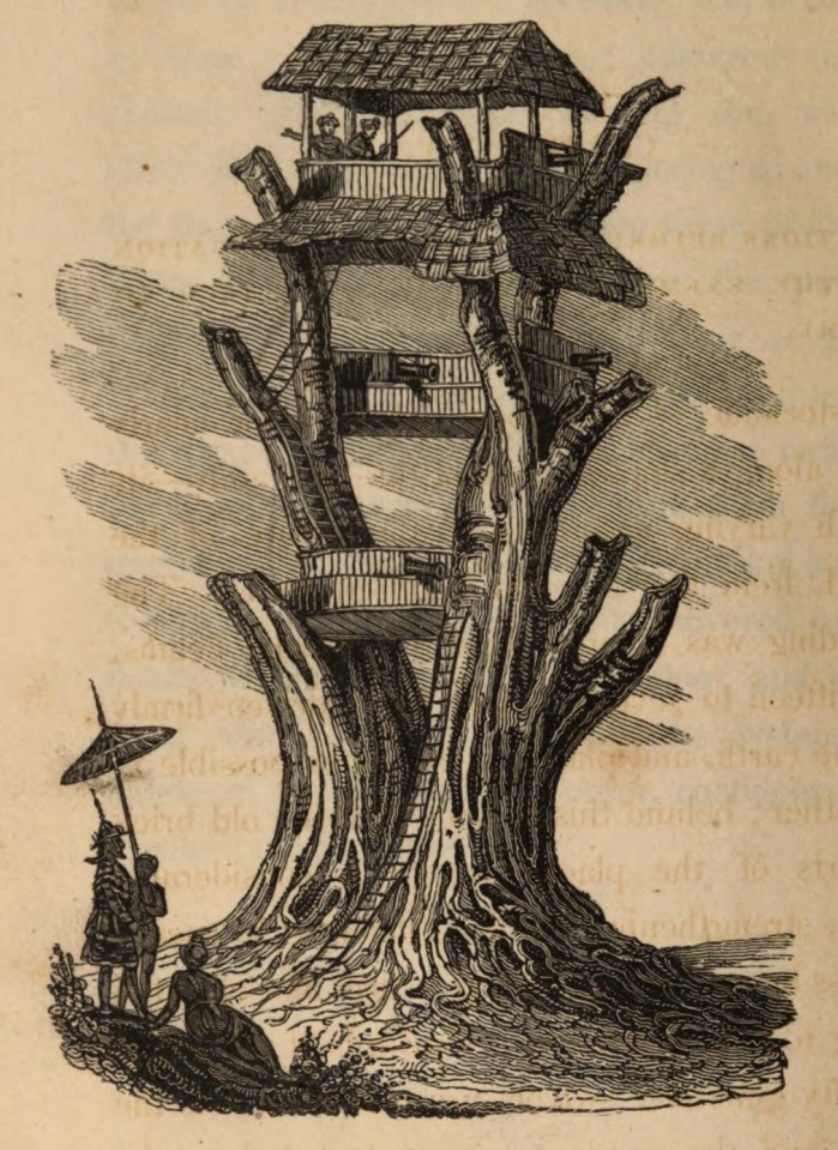
Contrary to expectation, however, the elevation of the Pakhan-Wun brought a measure of relief. On 2 May 1825, the prisoners’ fetters were removed at the granite block in the yard. They were stripped of their shoes and most of their clothing, tied in pairs at the waist and marched, crocodile-fashion, at the point of a spear, to what they assumed would be their execution. But the execution post came and went. They continued to Amarapura. The heat in May is at its most intense and the sand was roasting like hot iron. Judson, whose feet quickly degenerated into a mess of blood and raw flesh, considered ending his suffering by jumping into a rapidly flowing river, until the sin attached to the act, and his attachment to Laird, convinced him otherwise. One of Gouger’s servants wrapped the shreds of his turban around Judson’s feet, to spare them. The leprous Constantine, collapsed after just one mile. He was dragged along the road for a while, then heaved into a cart, but he did not last the day.
Finally, the pahquets surrendered their charges to other, more reasonable, guards and returned to ‘their Elysium at Ava’. The next day, all were given use of the cart which, after a journey of nine miles, delivered them at a dilapidated building with a collapsed roof of decaying thatch. Prominent within was a range of stocks, but what really caught the eye was a mass of faggots packed into the space beneath the floor. They might have been used as fuel for a mass extermination but, in fact, they were intended simply to stop the captives from escaping. The unprepossessing shed was the foreigners’ new prison at Oung-ben-lai.
The gaoler, Koh Bai, though ‘morose and surly’, was more forgiving than the pahquets. A fetter shortage meant that, for a period, the prisoners were chained in pairs but, once the perimeter fence had been restored, they were permitted to enjoy light and air outside. Gouger was tracked down by his faithful baker and, once Mrs. Judson had found her husband, she was granted the use of a grain store belonging to one of the gaolers. ‘In that little filthy place,’ she wrote, ‘I spent the next six months of wretchedness.’
By now, she was nursing an infant daughter, Maria. However, Mary, one of two other children in her care, was showing symptoms of smallpox:
As she was in the same little room with myself, I knew Maria would take it; I therefore inoculated her from another child, before Mary’s had arrived at such a state as to be infectious. At the same time, I inoculated Abby, and the jailer’s children, who all had it so lightly as hardly to interrupt their play. But the inoculation in the arm of my poor little Maria did not take – she caught it of Mary and had it in the natural way. She was then only three months and a half old and had been a most healthy child; but it was above three months before she perfectly recovered from the effects of this dreadful disorder.[50]
Ann’s skills were quickly recognised. In addition to the gaoler’s family, she treated many children in the village before succumbing herself. No doubt, ‘the watchings and fatigue, the miserable food and the more miserable lodgings’ contributed to this. In her sick condition, she once managed the eighteen-mile round-trip to Ava, to collect medicines and laudanum. When she returned, she collapsed onto the mat in her shed and hardly stirred for two months. She only properly recovered after the war had ended.
The prisoners appreciated the improved conditions at Oung-ben-lai, though Gouger credits this ‘more to the causes of misery having been left behind, than from any wish or intention on the part of the government to alleviate it.’ The fear that they had been sent there for some diabolical purpose did not go away. Soon, a Catholic priest of Portuguese extraction, Ignatius Brito, appeared, showing that the Pakhun-Wun’s zeal for tracking down foreigners had not abated. Gouger wrote that his companionship would have been agreeable if he had launched fewer ‘tirades against my country and countrymen.’
There were other visitors. In the rainy season, the prison’s elevated position protected it from watery inundation, but it exposed it to others of a different kind. When the sluices in the paddy fields were raised, large numbers of rats and serpents, ‘many of the latter possessing very disreputable characters’ sought it out, for refuge. On one occasion, Gouger – in his fetters – disposed of a four-foot cobra by raining blows on its head with his tobacco pipe.
Considering the confined space we occupied [he wrote], it is surprising we did not fall victims to these unwelcome guests. A tally was kept of the number killed. Of the cobra capello alone, I think it was thirteen. … My enemies were not of this gigantic sort; but were equally dangerous. The largest was one I killed myself, a very beautiful snake, about seven feet long, having alternate rings of black and bright yellow from the throat to the tail. The Burmese called it Nandau-mwai (‘throne snake’), and said it was harmless; though I confess I distrust the whole tribe. Besides he was found in bad company, and we were too much terrified to make nice distinctions.[51]
Visitors to Burma know that reptiles of this sort go with the furniture, and that lions do not. And so, even Koh Bai was put at a loss when, one dark night, a lioness was deposited on his doorstep. He chose to leave her well alone. For a fortnight, she became hungrier and angrier until, just before she expired, a pye-dog was offered up to her through the bars of her cage. With bared teeth, the cur retreated into a corner, but the famished lioness (a gift to Bagyidaw from the Imam of Muscat) lacked the strength even to seize her dinner.
Afterwards, the vacated cage caught the eye of Judson. It was large and airy, and had a solid floor and roof. He moved in and was not persuaded to leave for several months.[52]
On 28 May, Gouger’s baker arrived with the welcome news that the Pakhan-Wun was no more. Oung-ben-lai, he explained, had been the generalissimo’s birthplace: he had intended to use it to celebrate the completion of his campaign preparations. The highlight of the festivities was to have been the spectacle of the lioness feeding on the captives, but the idea had been dropped in favour of burying them alive in front of the army. The revelries had been scheduled for 31 May but, before then, an accumulation of sins had brought the wrath of the monarch onto the wun’s head. Pressing Bagyidaw to make offerings at the Mingun pagoda for his success in the war had been impolitic; recommending that the Shan levies and the royal bodyguard should be placed under his personal command, only more so. The gleeful baker had witnessed the general being dragged through the streets and trodden to death by elephants. Thus, by fortuitous timing, the prisoners been spared. Ann Judson wrote that the wun’s execution was greeted with ‘universal rejoicings’ and that, ever afterward, mention of his name was made with ‘an epithet of reproach or hatred.’[53]
The End of the War
By early October 1825, the British had reached Pyay. They responded to a suggestion from the Burmese and acceded to an armistice, whilst their opponents prepared to attack their position. During negotiations, the prisoners were called upon to translate some documents from English. That they might be needed again gave Gouger comfort they would not be executed. Yet he felt that the Burmese interpreted British willingness to negotiate as weakness.
Judson agreed. He later told John Crawfurd that General Campbell’s tractability had been ‘utterly unaccountable to them’:
They endeavoured to explain it in various ways. Sometimes they imagined that he was induced to treat from the prevalence of great sickness in the army ; at other times they imagined that the King of England had disapproved of the war ; then that the Sikhs had risen against the English in upper India ; but the most prevalent opinion was that the King of Cochin China had sent a fleet of fifty ships to assist the Burmans. The king went the length of sending a dispatch boat to the mouth of the Rangoon River, to ascertain whether the Cochin Chinese fleet had actually arrived …
Judson explained that Bagyidaw’s diplomacy with Cochin China had been directed at Siam. As to the Sikhs, he recalled that Bandula had been courting Indian support and that a group of them had arrived at Court, in 1823, claiming to be ambassadors. (Their boat had been wrecked crossing a river, which explained their lack of credentials.) Another witness, Agha Mohammed, supposed that they might have come from Ranjit Singh of Lahore, though he added that he personally thought them imposters. For a long time, they were honourably received but then the Burmese grew impatient. The Sikhs were briefly imprisoned and sent on their way.[54]
In November, the Burmese launched their attack. At length, they were beaten off. The British, with the support of the steamship, Diana, advanced upriver. At Malun, five miles below Magway, the Burmese commenced negotiations in earnest. Judson, though wracked with fever, left Oung-ben-lai, to serve as interpreter. At his departure, Ann was allowed home, after an argument and at the cost of leaving her provisions behind. Then she succumbed to the fever herself:
My hair was shaved, my head and feet covered with blisters, and Dr. Price ordered the Bengali servant who took care of me, to endeavour to persuade me to take a little nourishment, which I had obstinately refused for several days. One of the first things I recollect was seeing this faithful servant standing by me, trying to induce me to take a little wine and water. I was in fact so far gone, that the Burmese neighbours who had come in to see me expire, said, ‘She is dead; and if the king of angels should come in, he could not recover her.’ [55]
During the negotiations, the British thought that the Burmese were sincere. Gouger was not convinced. He doubted that they believed the terms offered: Burmese non-interference in Cachar, Manipur and Assam, the ceding of four provinces in Arakan west of the Yoma mountains, and the payment of ten million rupees (about £1,000,000) to cover the expenses of the war. Why, the Burmese wondered, would the British be willing to return the territory they had conquered, once the indemnity had been paid?
This is what staggered the Burmans; they could neither believe the promise, nor understand the motive. Such an unheard-of thing as conquering a country and then restoring it was incredible! Measuring British faith and honour by their own standard, they concluded their intention was first to impoverish them, and then to march on the capital.
As evidence of the Burmese negotiators’ insincerity, Gouger mentioned that they never sent the final draft of the treaty to Ava, as they had promised. (It was discovered in Malun after the fort’s capture.) On this, the British commissioners disagreed: the negotiators had rather exceeded their powers, so they sent a copy of the document, rather than the original which they had signed. Certainly, the terms were unpalatable. For two weeks, the factions at Court argued over how to respond. Finally, the terms were declined. The British stormed the post at Malun and advanced towards Yenangyaung.[56]
With the collapse in the negotiations, Judson was sent away to Ava, but no one was advised to expect him. He was on the point of being returned to Oung-ben-lai, when Ann intervened. She persuaded the myowun to take him in. Together, they witnessed the preparations being made for Ava’s defence:
Men and beasts were at work night and day, making new stockades and strengthening old ones, and whatever buildings were in their way were immediately torn down. Our house, with all that surrounded it, was levelled to the ground, and our beautiful little compound turned into a road and a place for the erection of cannon. All articles of value were conveyed out of town and safely deposited in some other place.[57]
In this blackening situation, Judson, Price, and two English officers captured at Pyay were daily summoned to Court, for consultations. At the end of January 1826, as items of gold and silver were being melted down in the palace, for currency, Dr. Price and Dr. Sandford (admired for having saved a royal infant from cholera), were sent to negotiate an easing in the financial penalty proposed by the British. With them went four captives, released ‘as a peace offering.’ When they reached Yenangyaung, they made quite an impression. Thomas Trant, a lieutenant on the staff of the British quartermaster-general, wrote,
… we were agreeably surprised by the arrival of a boat form Ava, containing Dr. Stanford of the Royals, on his parole; three European soldiers, who had been captured at the commencement of the war; and the master of a little gunboat which had sailed into Martaban by mistake, and was seized by the enemy. They were accompanied by Dr. Price, an American missionary, Lameinzerai (the governor of Lamein), and two other Burmans. When stepping out of the boat, our unfortunate countrymen had a very grotesque appearance; their hair was long and hanging over their ears; they all had long beards, and their clothes were made out of Tartan cloth, fabricated into shirts and trousers. Dr. Sanford could scarcely be recognized, and it was some time before we guessed the meaning of this strange apparition …
In the negotiations, the British were firm, the Burmese equally so. Then, on 9 February, a final force, the ‘Retrievers of the King’s Glory,’ were ‘utterly annihilated’ among the pagodas of Bagan. Afterwards, their commander had the temerity to demand more troops from the king, but he was instantly executed, outwardly for ‘disobeying his commands not to fight the English.’ The British advanced to Yandabo where, on 26 February, a treaty was signed.
There remained one final twist to the peace process. Price informed the British that, despite its defeat, the Court ‘would consider itself dealt with in a haughty and imperious way if the oriental custom of offering presents were neglected.’ His remark caused some puzzlement, but a small delegation was sent to Ava. On 1 March, they were received by the king, and the termination of hostilities was marked by an exchange of gifts.[58]
Between the battle at Bagan and the conclusion of the war, Gouger found ‘every day was an age.’ As the British approached, he persuaded Koh-bai to connive at his escape, if he chose to make a dash for their lines. It was a risky strategy. Already, a sepoy had been recaptured making the attempt and one of his feet had been amputated. Gouger continues,
The delay was well-nigh unsupportable … Still, I was left unmolested, and intently dwelling on my plan for escape, when on that happy, glorious day;
16 FEBRUARY 1826,
my good genius the baker appeared, in company with a band of liberating officers, who suddenly broke into the prison. They were ruffians of the first water, and performed their pleasing office with such churlish ill-feeling, that it was some time before I could persuade myself of the happy nature of their mission …The irons, which had so long galled our limbs, were now struck off … and we were abruptly told to follow our liberators to Ava.
Follow them to Ava! … Our stiffened limbs refused to carry us this short distance, even when life and liberty were its reward. It was now evident, on a trial, what an absurd resolution I had formed, how grievously I had miscalculated my strength, when I contemplated a nocturnal flight to the army. How fortunate that I was not put to the test, for inevitable destruction would have been the consequence.
Lanciego and Father Brito remained at Oung-ben-lai, being considered Burmese subjects. Laird paid the price of having been raised in rank to Tharrawaddy’s nobleman agent. He begged Gouger to represent his suit to General Campbell. Rodgers ‘was a difficult and deplorable case,’ being still unsure whether he could safely return to his native country. Gouger offered to help, but Rodgers declined him, and he ‘ended his days in Burma not long after.’
In Ava, Gouger encountered the city myowun, now elevated to the post of wungyi. The minister impressed upon him the debt of gratitude he owed to the king for saving his life, which Gouger had ‘forfeited by treason and rebellion.’ Not wishing to put at risk his release, Gouger says he followed Burmese practice, ‘and descended to dissimulation’:
When I went away, he was certainly impressed with the idea that I was grateful to His Majesty for all my sufferings, and that I intended to trumpet aloud the praise of his clemency when I got among his countrymen.
Judson’s view was that Koh-bai had refused to enforce the order for the prisoners’ execution ‘without the express consent of the king.’ He said, ‘He hinted it to myself in prison, and told Mrs. Judson and the wife of Mr. Rodgers so, more explicitly.’ Just conceivably, Gouger was being a little harsh, though it is difficult not to sympathise with his cynicism.[59]
With Mr. Arrakeel, he boarded a Burmese war boat and sped towards Yandabo. Its crew were in awe of the steamship, Diana, and only with difficulty were they induced to moor alongside her. (The boldest were shown her engine, which they deemed a sorcerer’s invention). The next day, Gouger was received by Sir Archibald Campbell. He was dressed in the spare clothes of the general’s aide-de-camp son and attached to his quarters.
The timing proved opportune. The treaty negotiations, then still underway, were being stymied because, although the general’s interpreter could speak Burmese, he could neither read nor write it. Gouger and Judson were asked to prepare a translation of the document, which they did independently, as an insurance against anti-Burmese bias. Sheltered by the awning of the general’s rowboat, Gouger then sped down the Irrawaddy ‘to the habitations of the civilized life, where happiness is more surely to be found than in the dark parts of the earth, submerged in ignorance and cruelty.’[60]
Unfortunately, he found that the prospects for his business were ‘completely overthrown’ by a crowd of entrepreneurs who, enticed by Burma’s raised profile, had rushed to occupy the field he hoped to make his own. Campbell offered him a role as a police magistrate in Rangoon, which was retained by the British until the Burmese paid their indemnity. On 10 December 1826, he moved to Kyaikkhami (‘Amherst’), which was chosen by John Crawfurd to be the chief British station in Tenasserim. For a year, he served as commissioner there, but the establishment did not prosper and, when the British moved to Mawlamyine (‘Moulmein’), Gouger resigned his post, to follow his mercantile inclinations ‘in a wider field than could be found in these depopulated and worthless possessions.’
He died at Blackwater, near Sandhurst in Hampshire, in 1861, shortly after the account of his captivity had been published. He was sixty-two.
The Judsons waited a fortnight before returning to Rangoon. They said that they would have remained at Ava, but for the fact that the Burmese had ceded territory to the British. Afterwards, Ann wrote,
… we felt it would be unnecessary exposure, besides the missionary field being much more limited, in consequence of intoleration. We now consider our present missionary prospects as bright indeed; and our only anxiety is to be once more in that situation, where our time will be exclusively devoted to the instruction of the heathen.
Yet Ann had little time remaining. In October 1826, she succumbed, at Amherst, to the smallpox with which she had had to deal at Oung-ben-lai. Dr. Judson married again, in 1835, and returned to America, in 1845. He died, in 1850, at the age of sixty-one. [61]
Victory in the war was secured by the British at the cost of £13,000,000 (£12,000,000 net) and exceptionally heavy casualties. Fifteen thousand of a force of forty thousand died, only four per cent of them in battle. Lord Amherst, the governor-general in Calcutta, was heavily criticised.
At its termination, General Campbell had been in favour of asserting the independence of the Mons, either by re-creating Pegu as a separate kingdom, or by incorporating it within Britain’s dominions.
His feelings [Gouger wrote] revolted at the idea of sacrificing a people who had risen in his favour, and rendered his army such signal favours, to the tyranny of their exasperated masters.
Lord Amherst was opposed, however. The Company disliked extensions of territory, and he feared making Burma more resentful, or weaker and so vulnerable to displacement by Siam. He was persuaded to change his mind, but his revised instructions arrived too late. So the Mons had to rely on the general amnesty contained in the Yandabo treaty. As Gouger came to appreciate as magistrate in Rangoon, the protection they received was not as it should have been. Moreover, he considered that ‘the excision of a few sea-board excrescences of the [Burmese] kingdom did not deprive it of much power, and left it quite competent to engage in future aggression.’
The consequence was, that when the freshness of the impression caused by their defeat wore away, the old spirit revived; they again became troublesome, and it was found necessary some years after, by a renewal of the war, to adopt the very measure our government had so pertinaciously refused – the permanent occupation of Pegu.
So perhaps, it is fitting to end with the words of the official Burmese account of the war:
In the years 1186 and 1187, white strangers from the west fastened a quarrel on the Lord of the Golden Palace. They landed at Rangoon, took that place and Prome, and were permitted to advance as far as Yandabo; for the king, from motives of piety and regard for life, made no preparations whatever to oppose them. The strangers had spent vast sums of money in their enterprise, so that by the time they reached Yandabo their resources were exhausted, and they were in great distress. They then petitioned the king, who, in his clemency and generosity, sent them large sums of money to pay their expenses back, and ordered them out of the country.[62]


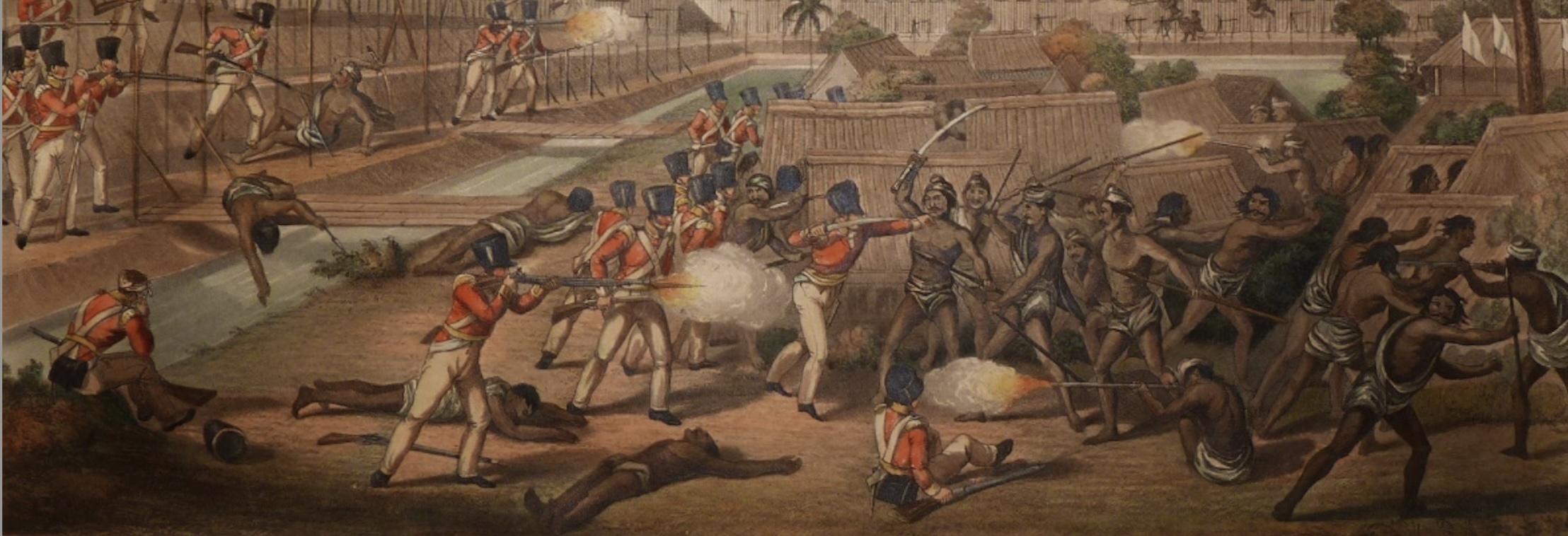
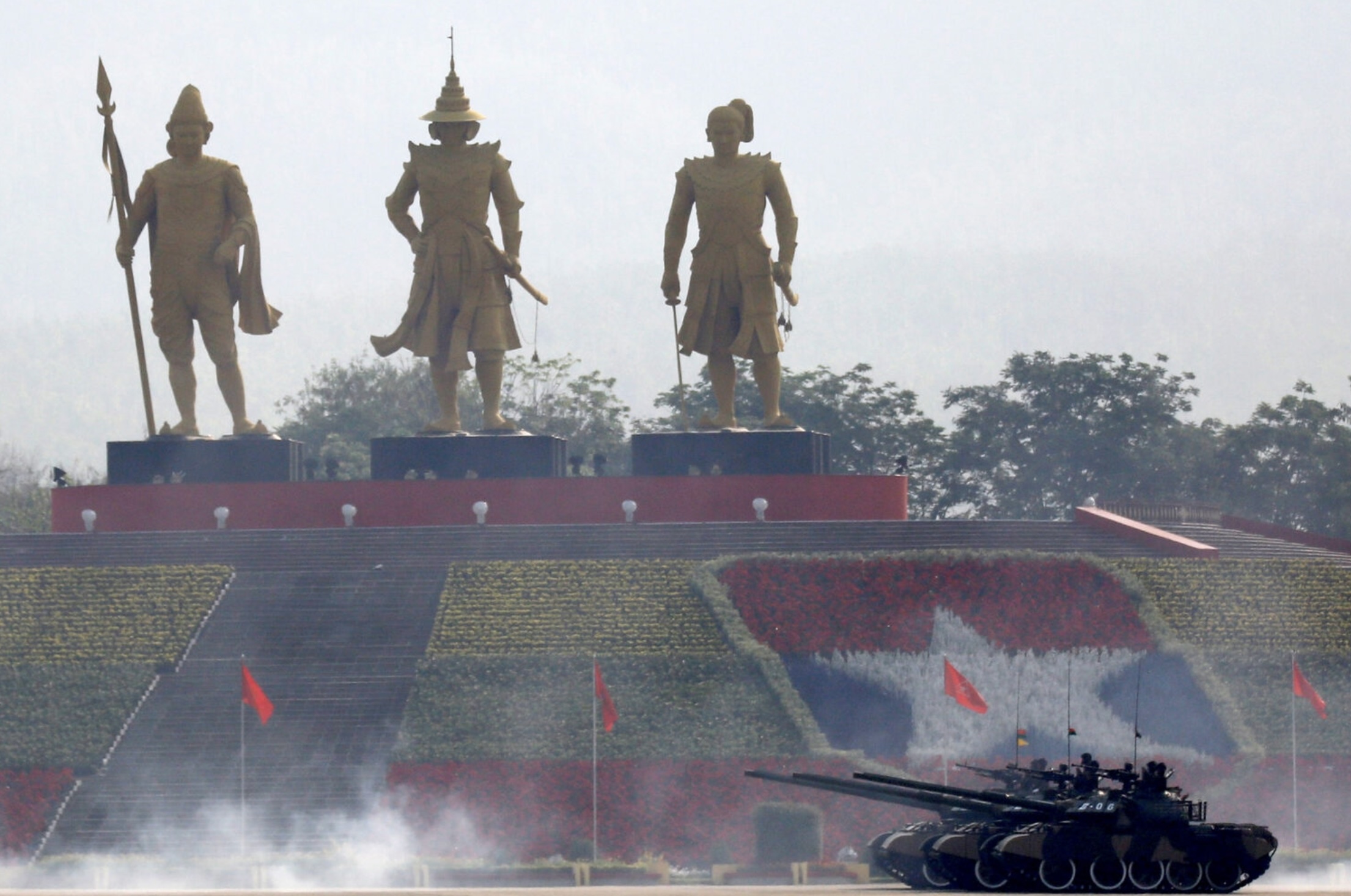
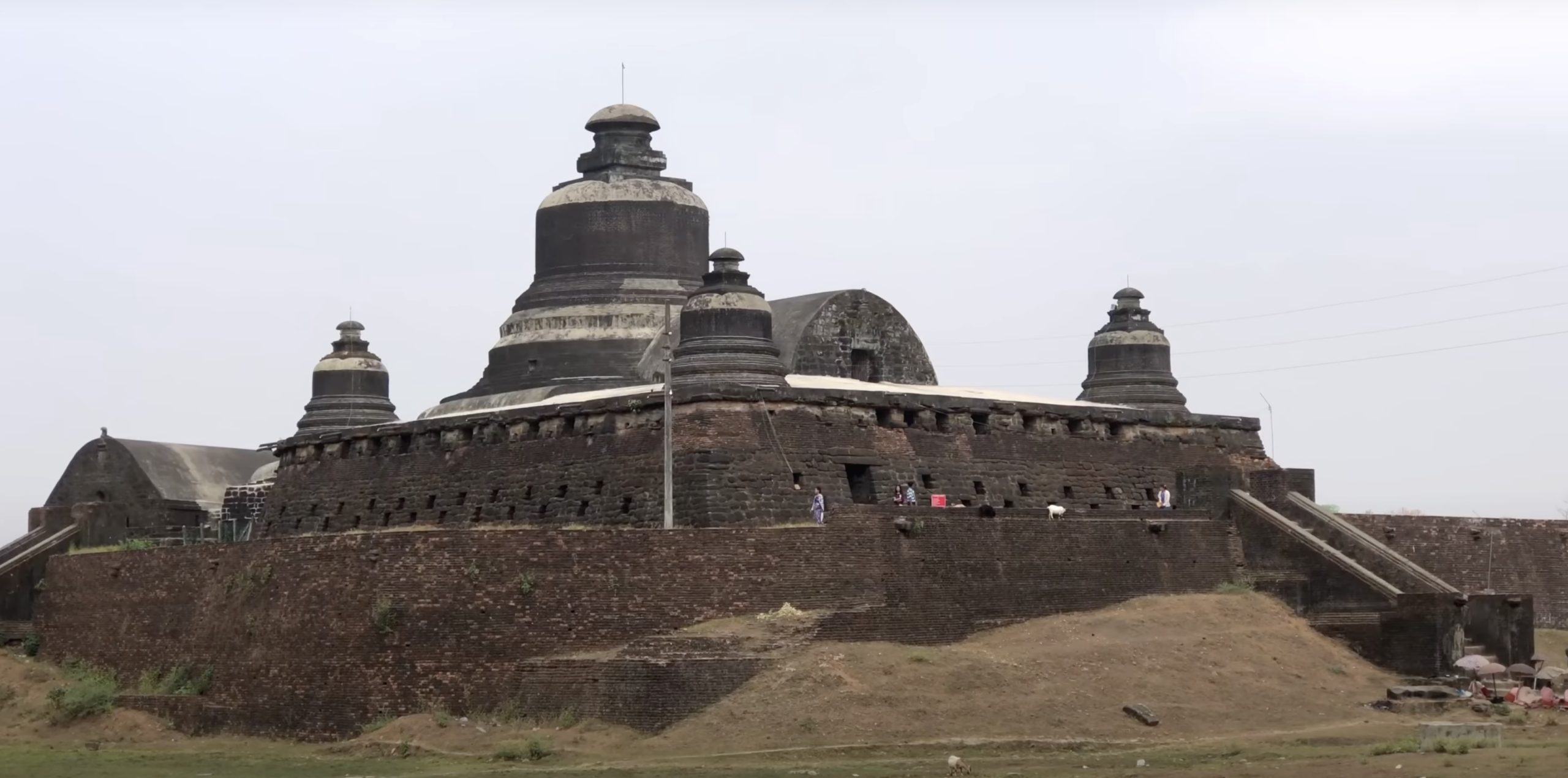
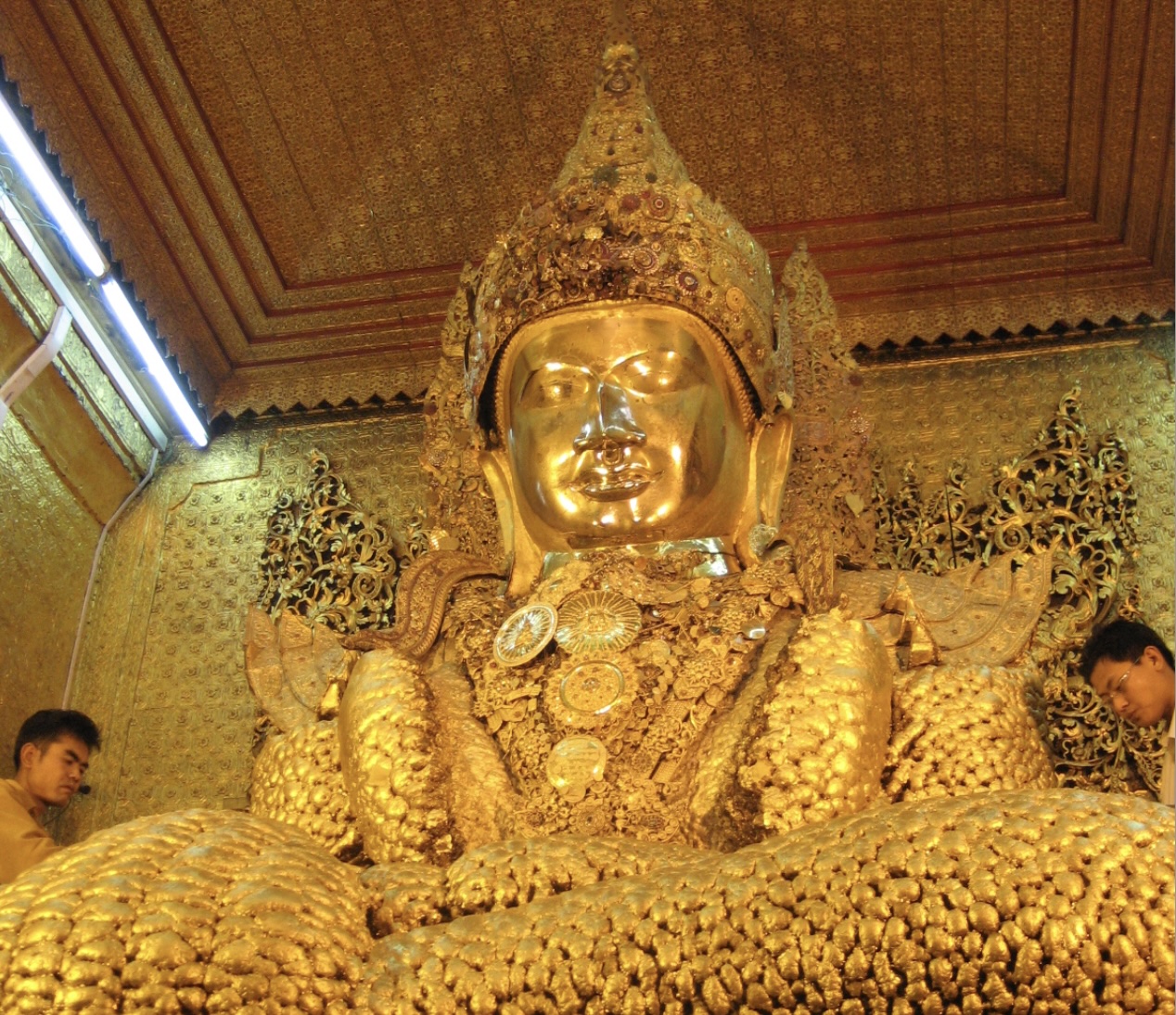
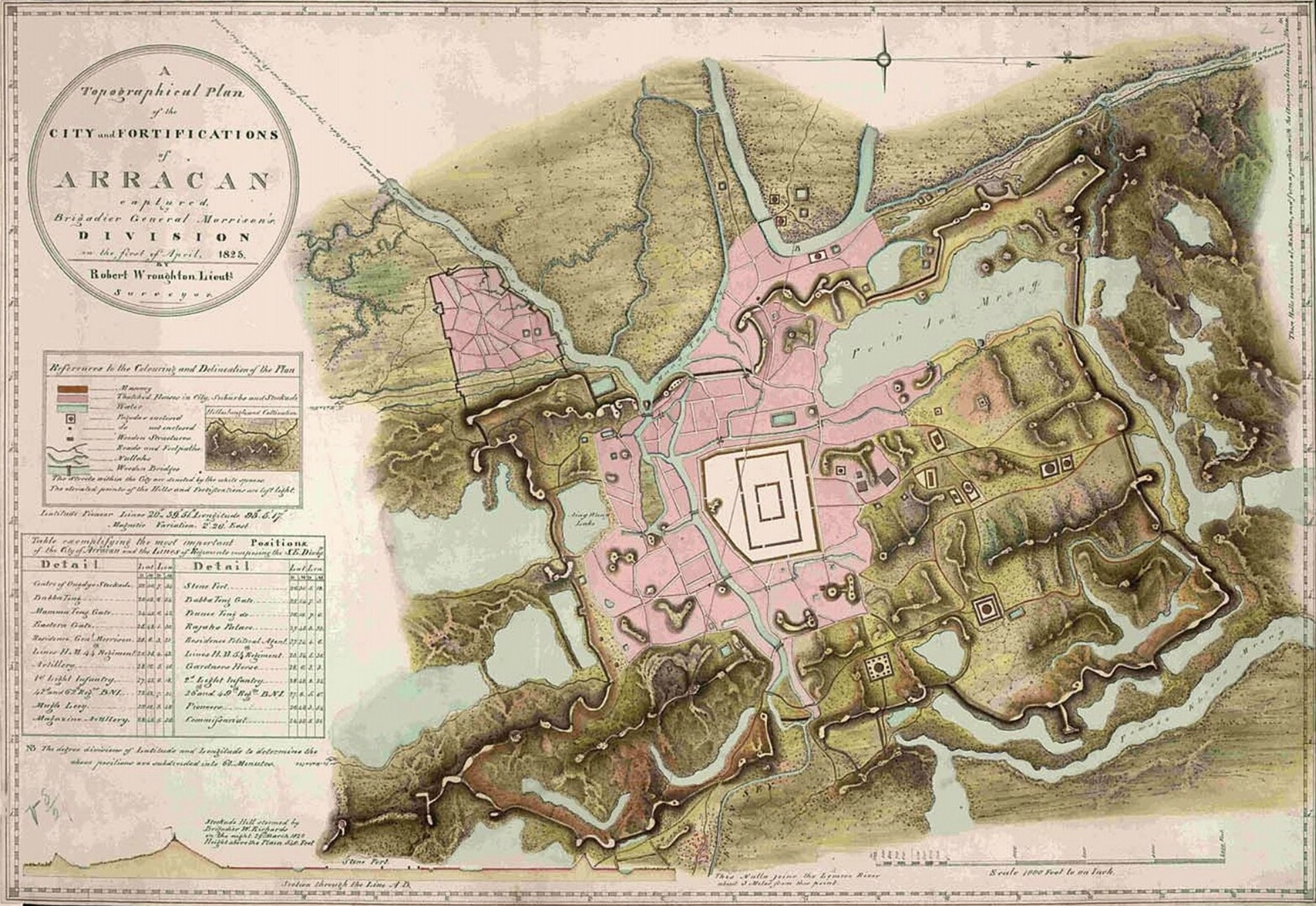
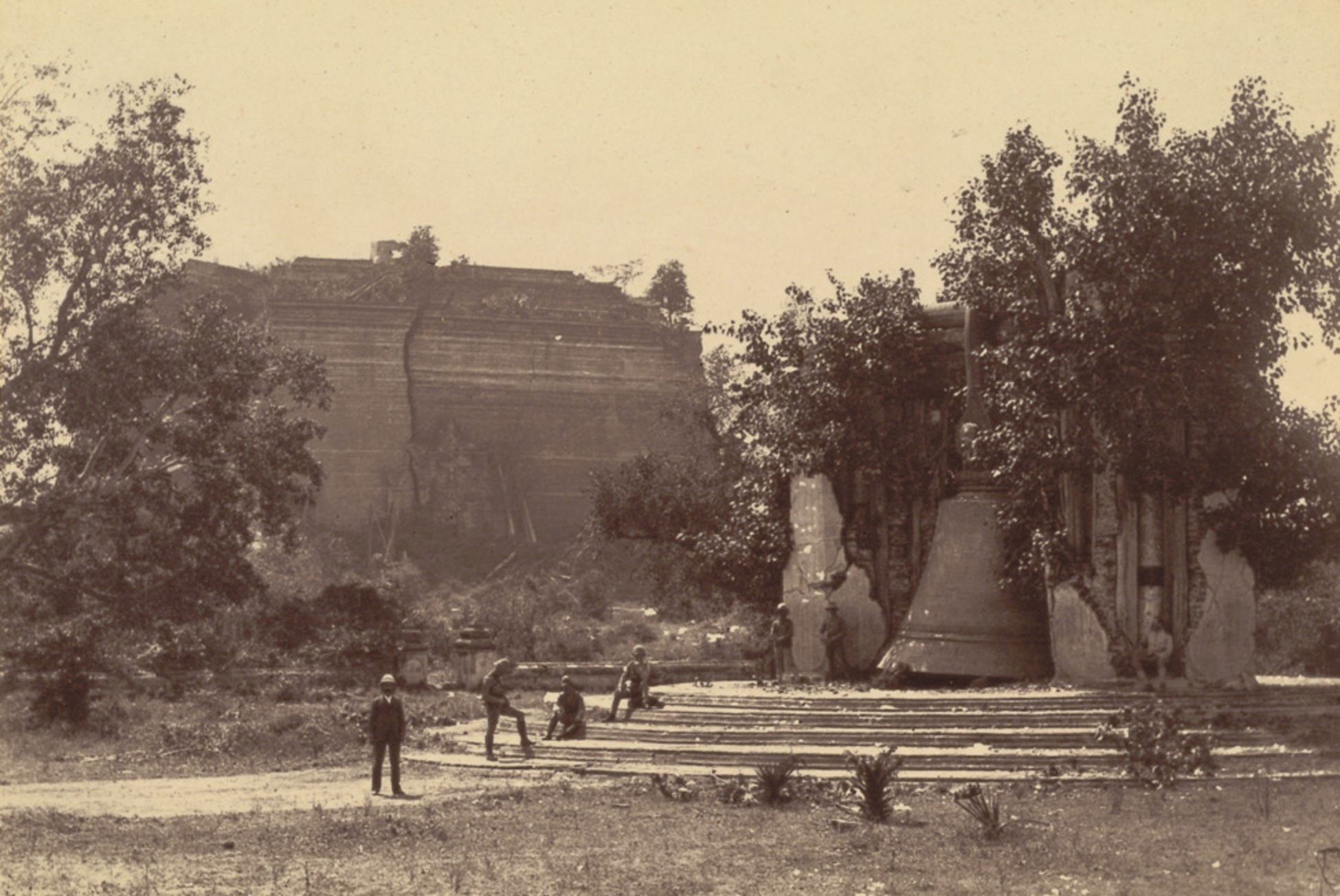
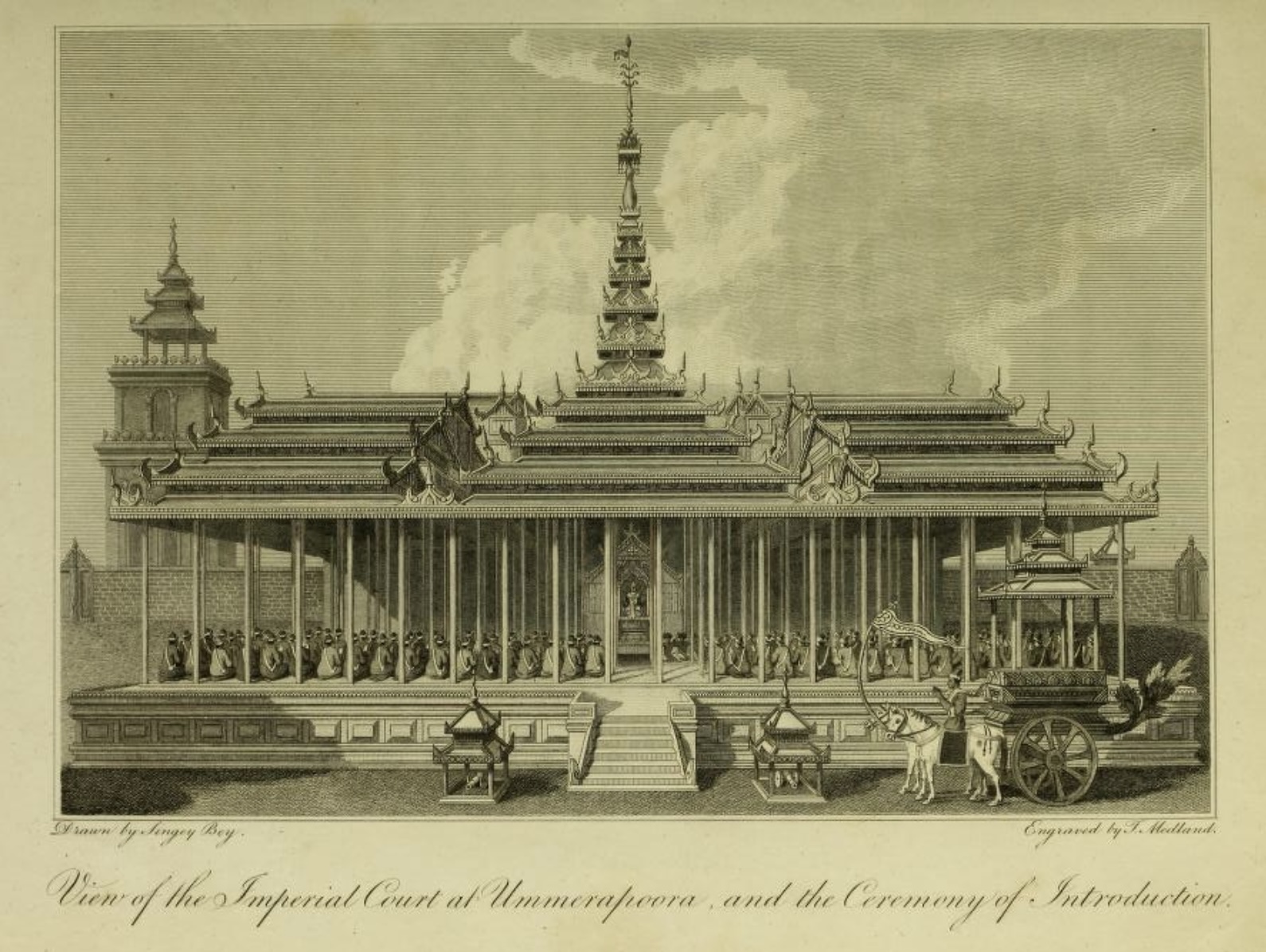
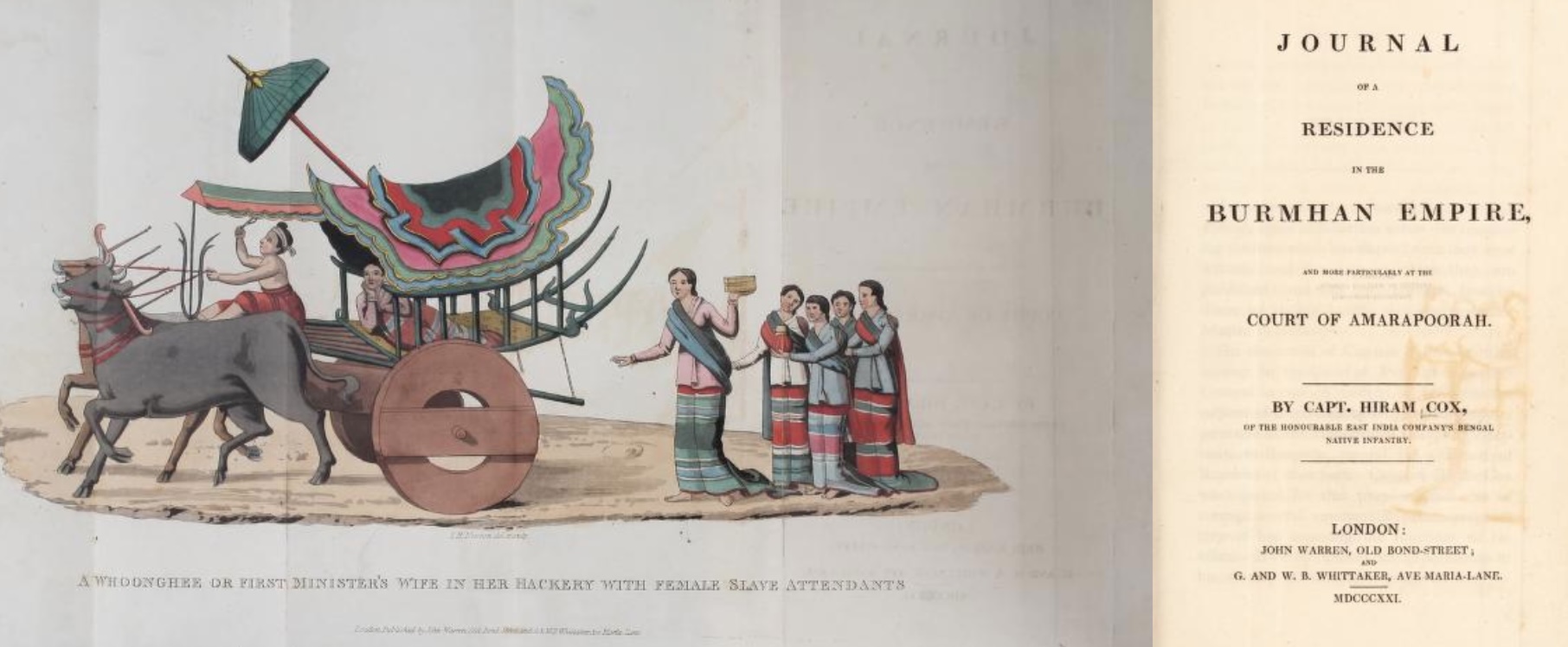
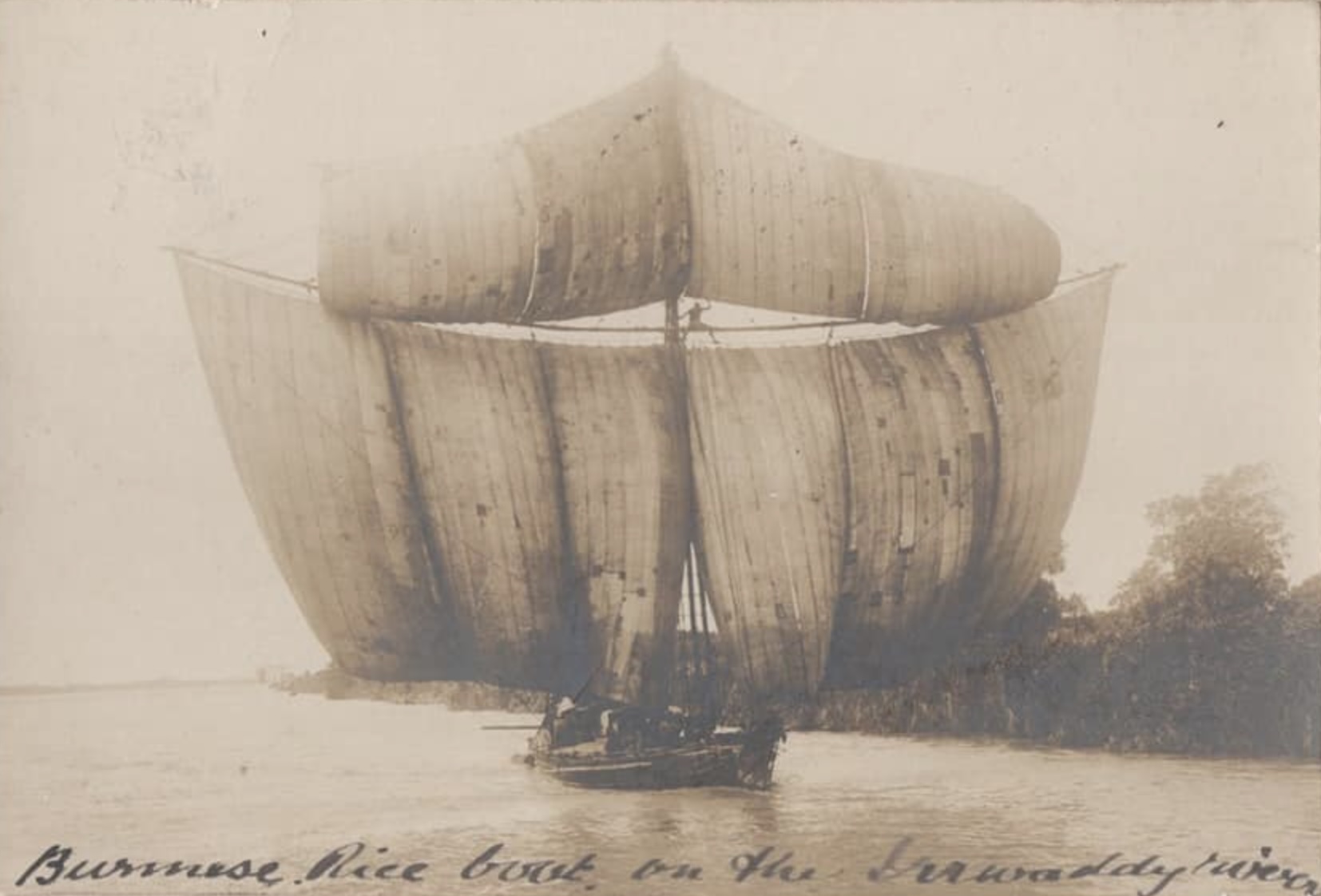
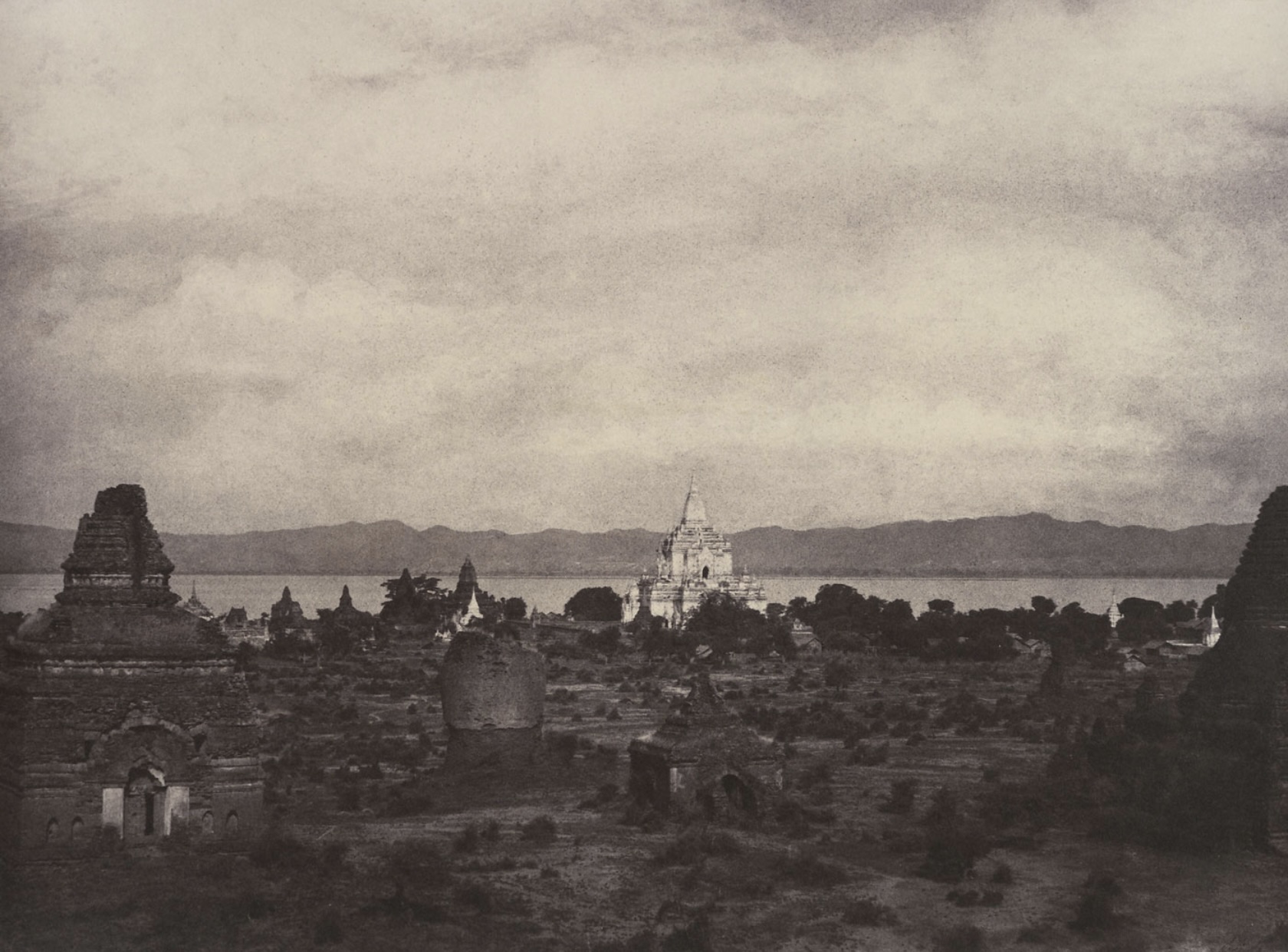
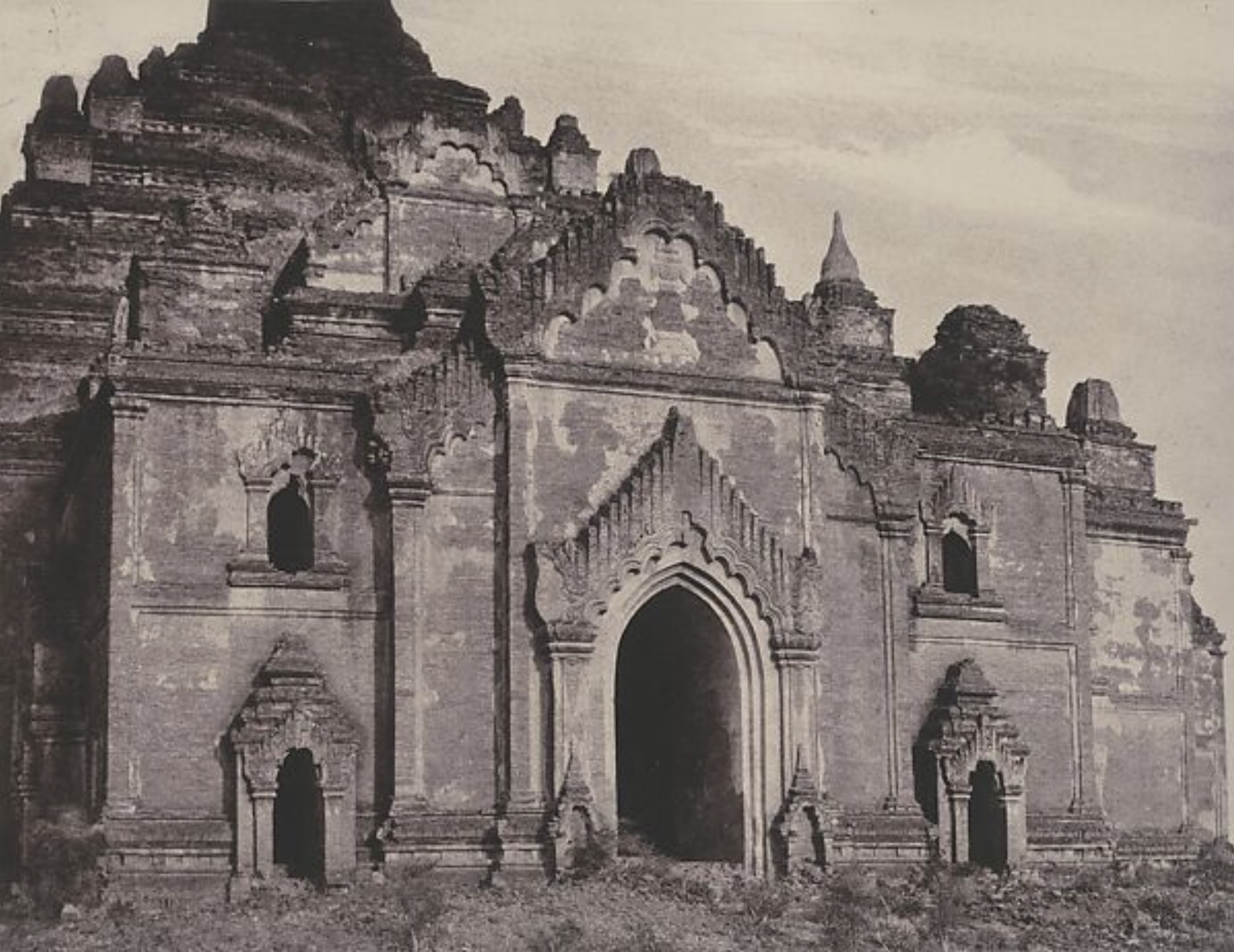
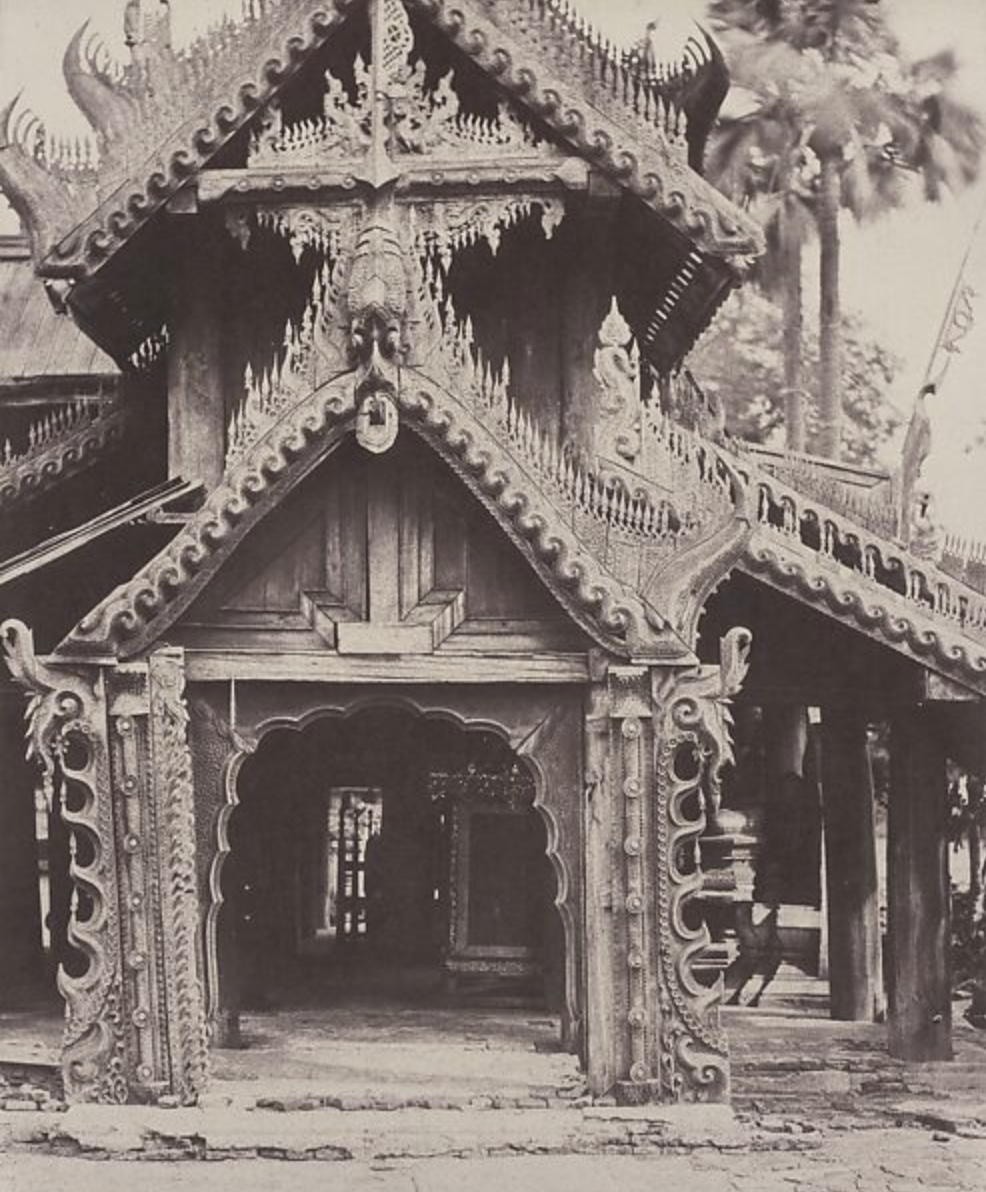
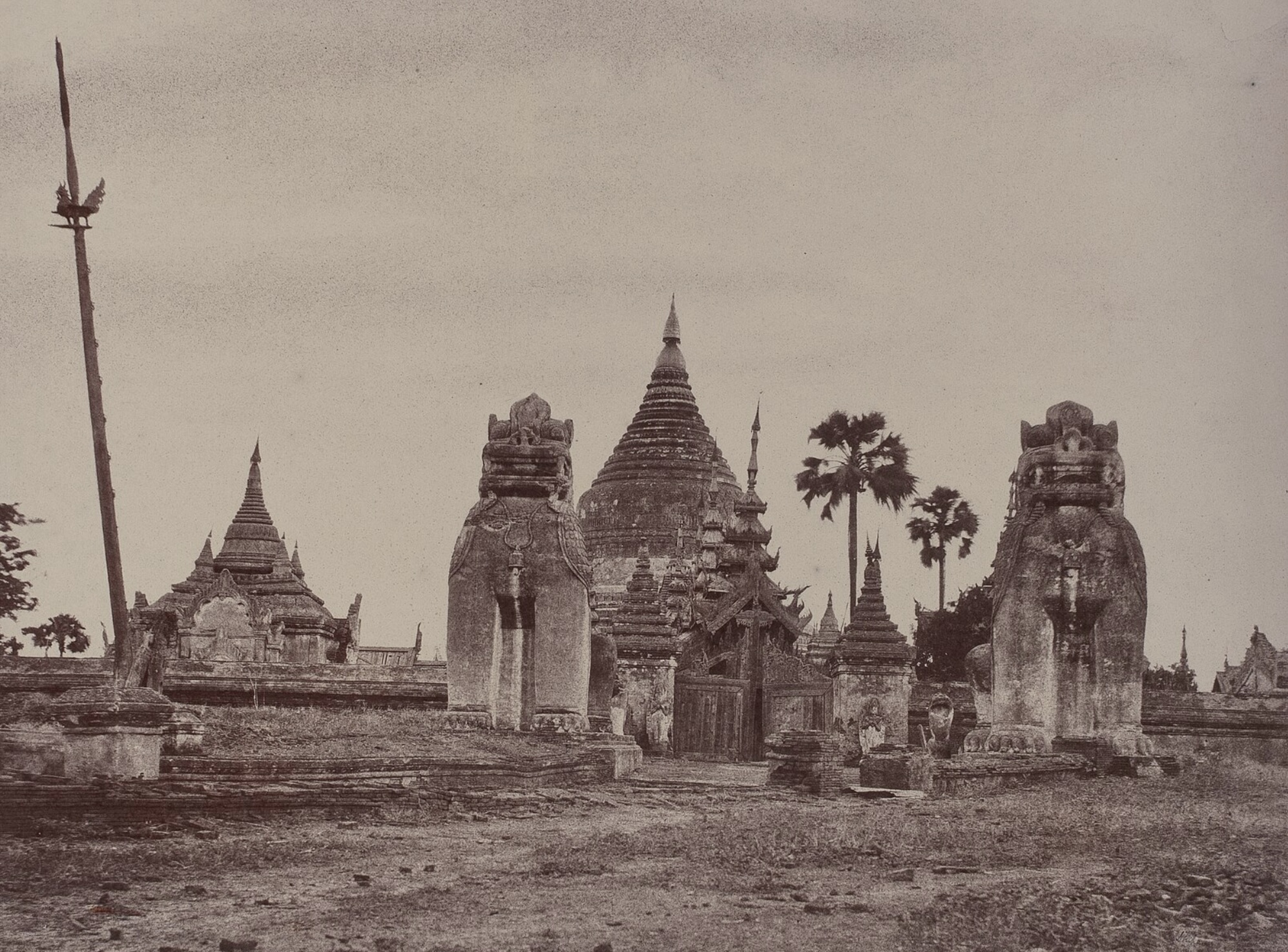
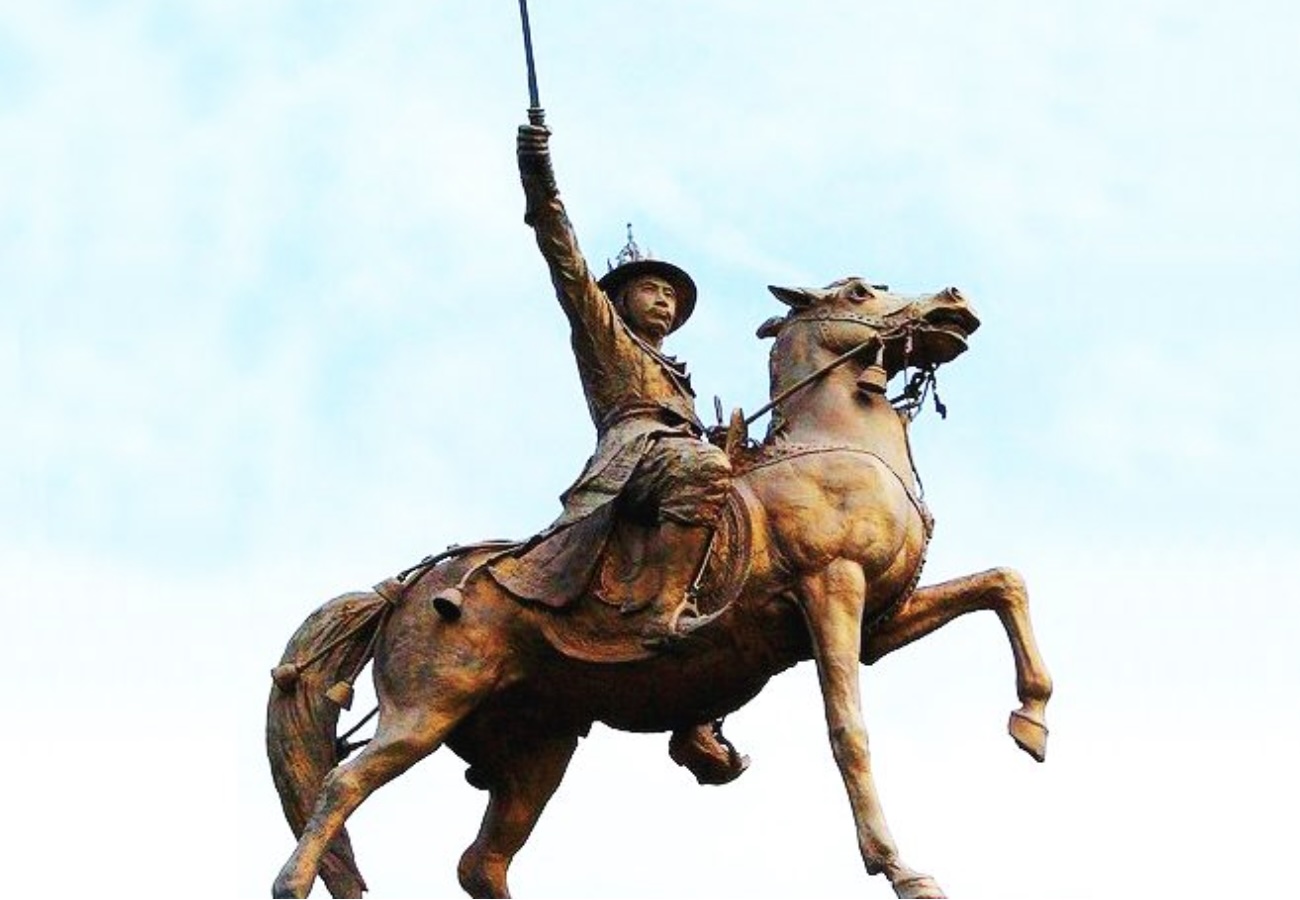
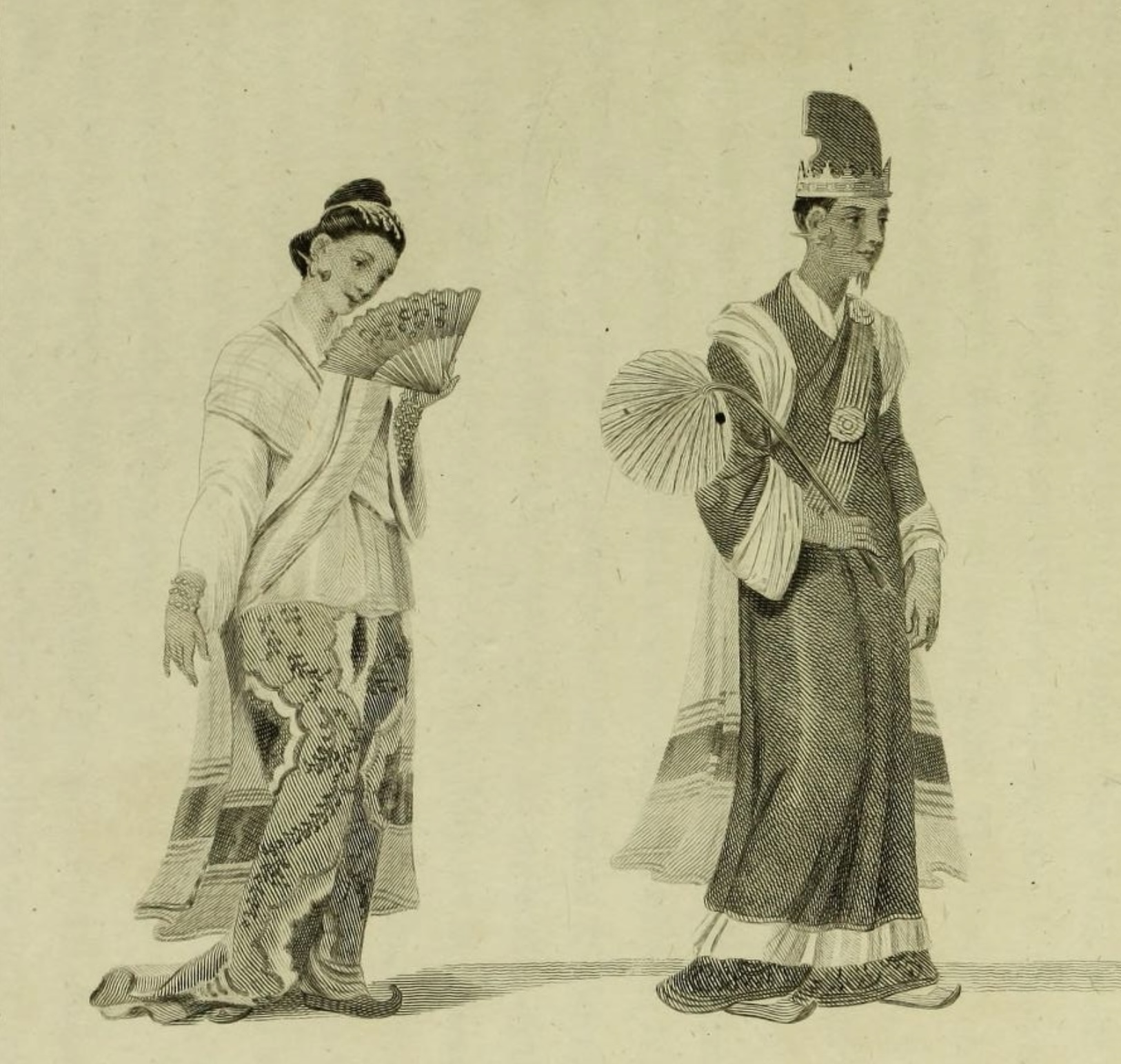
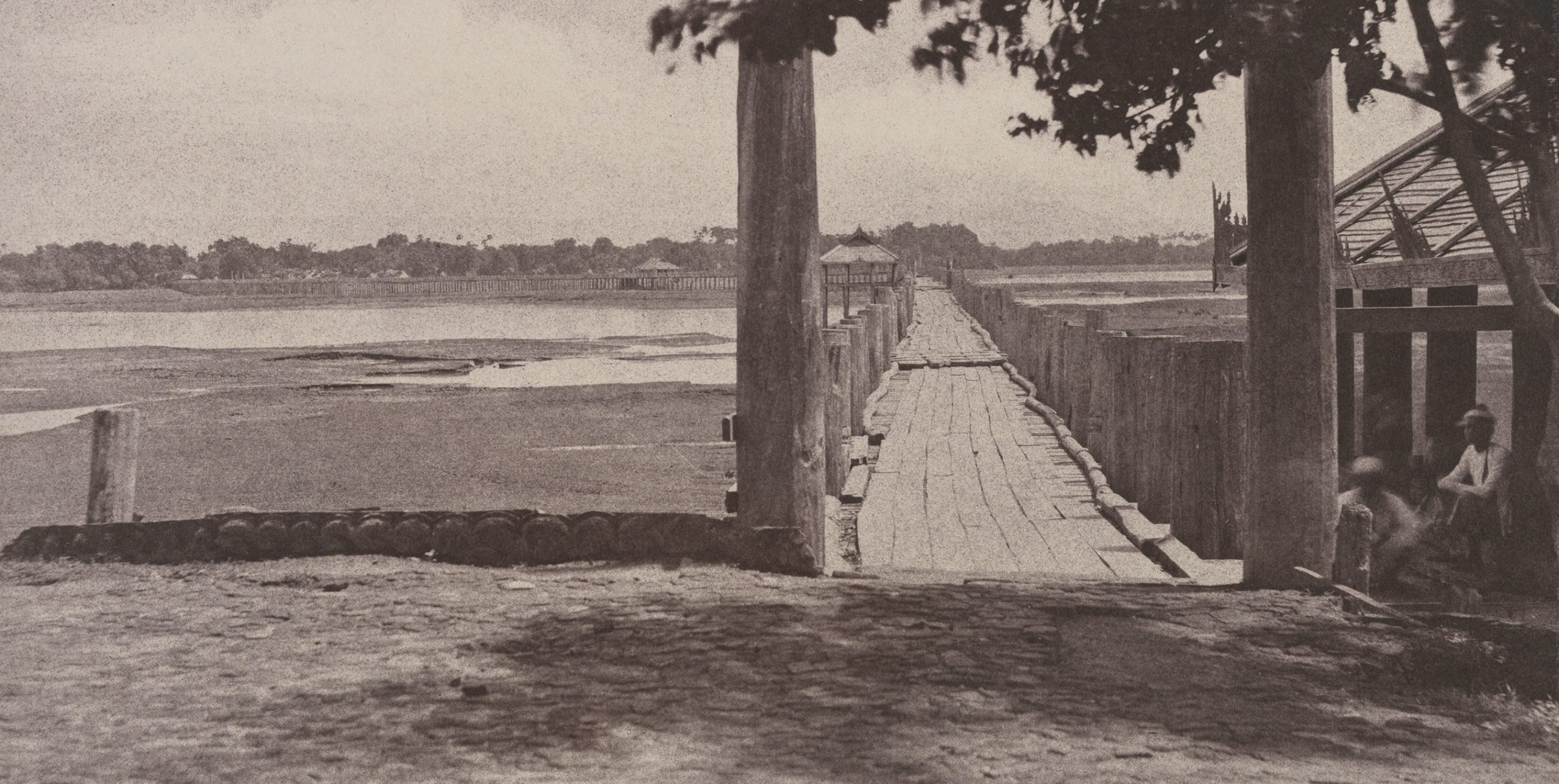
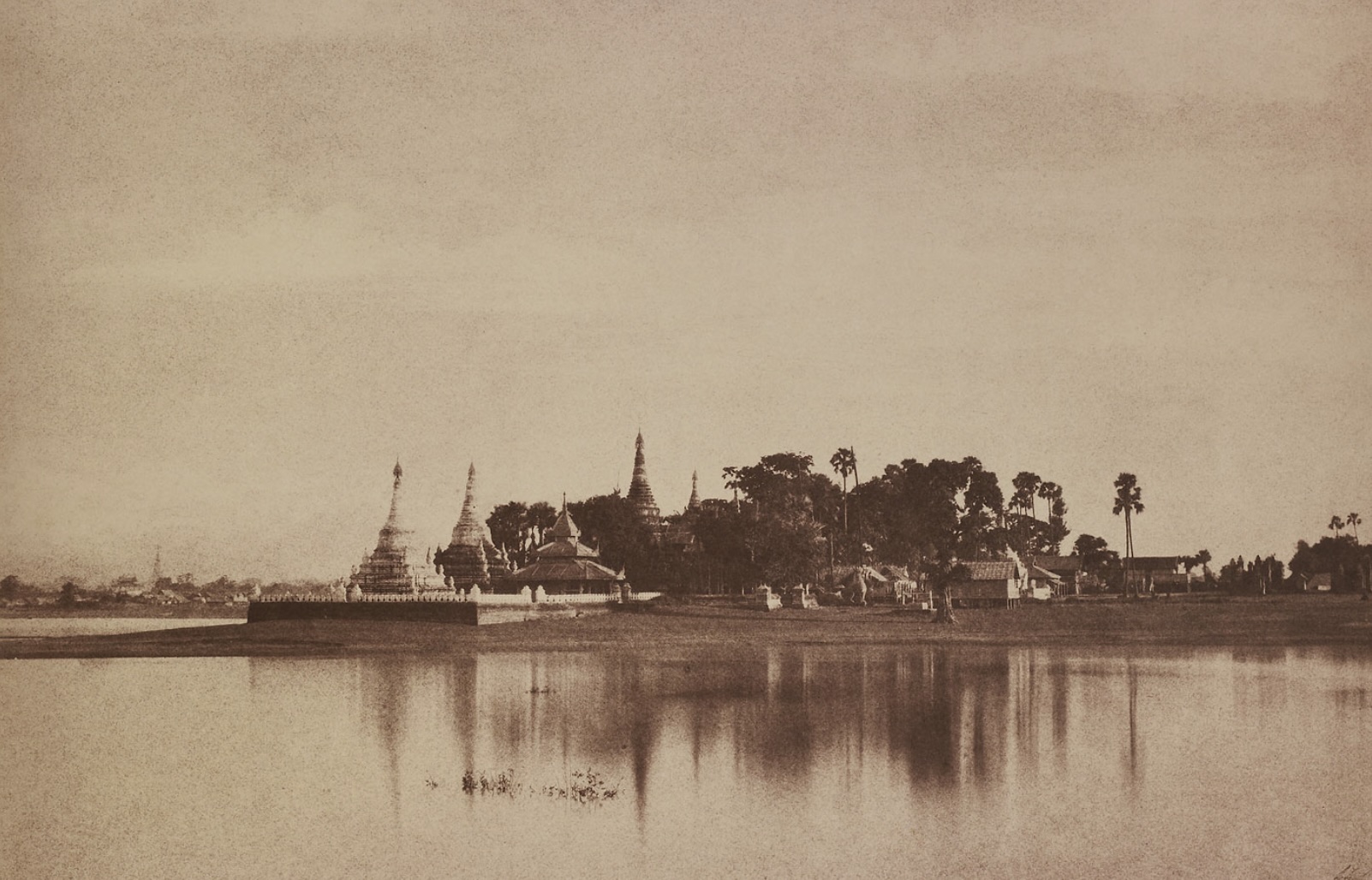

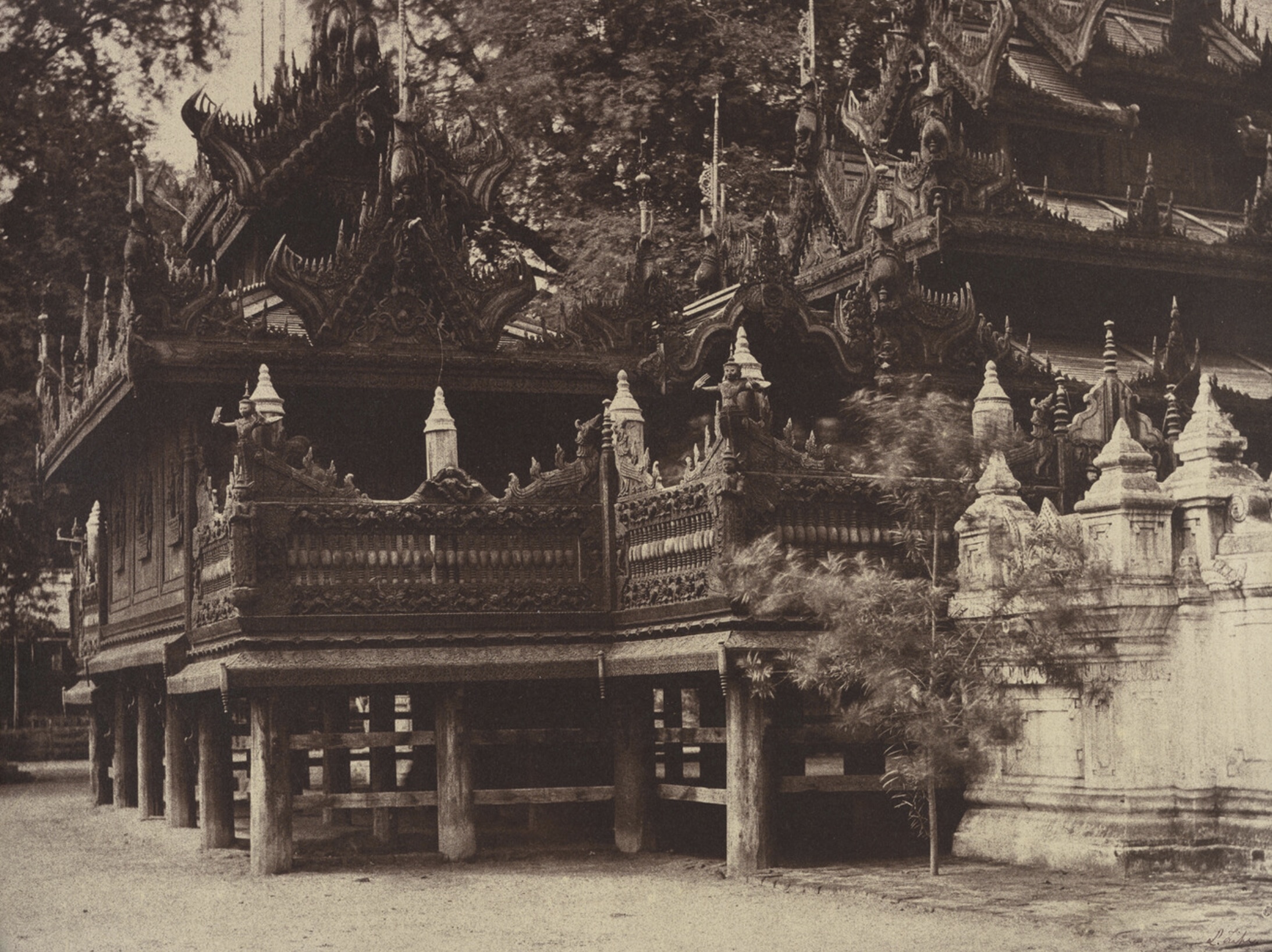


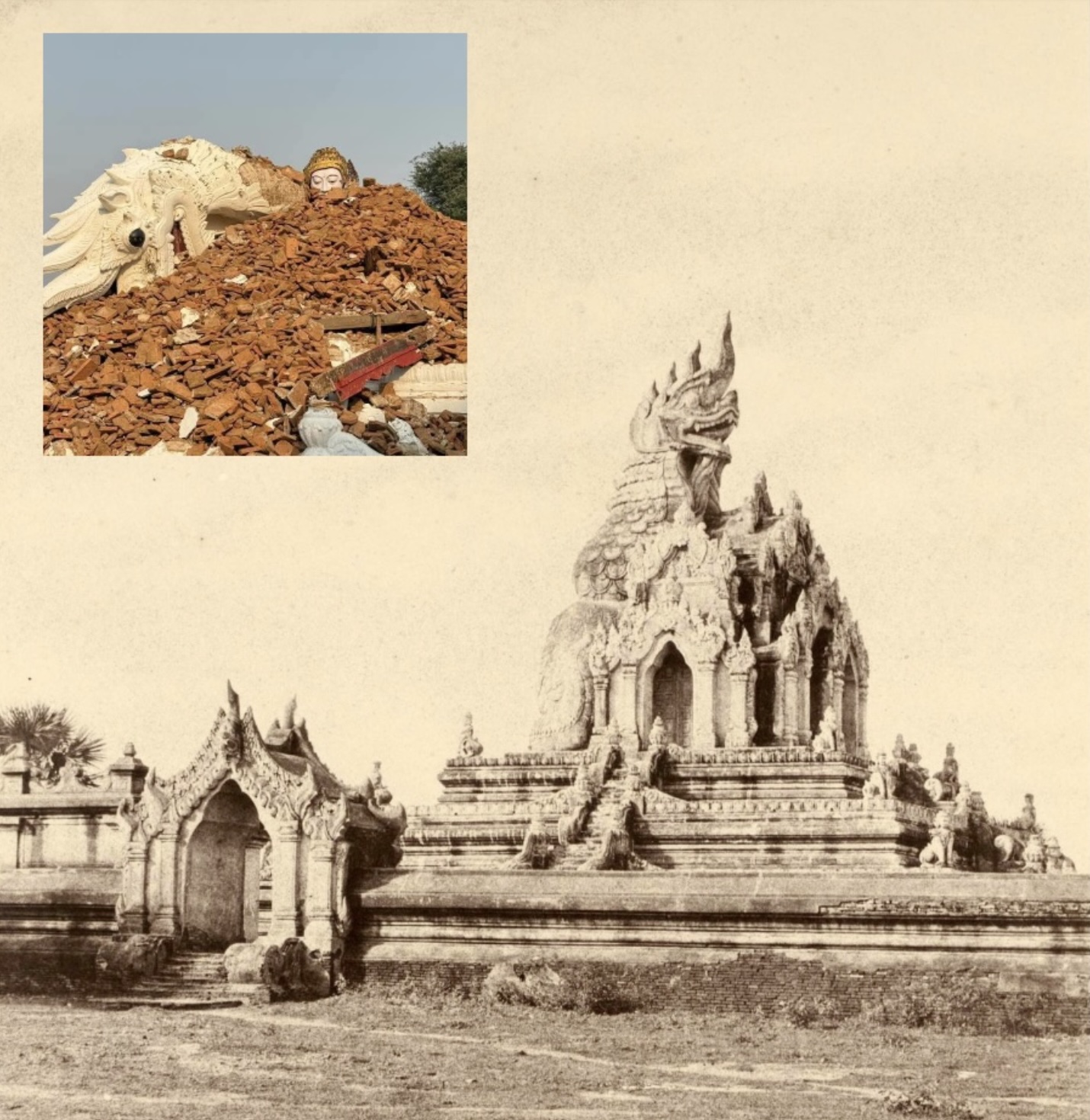
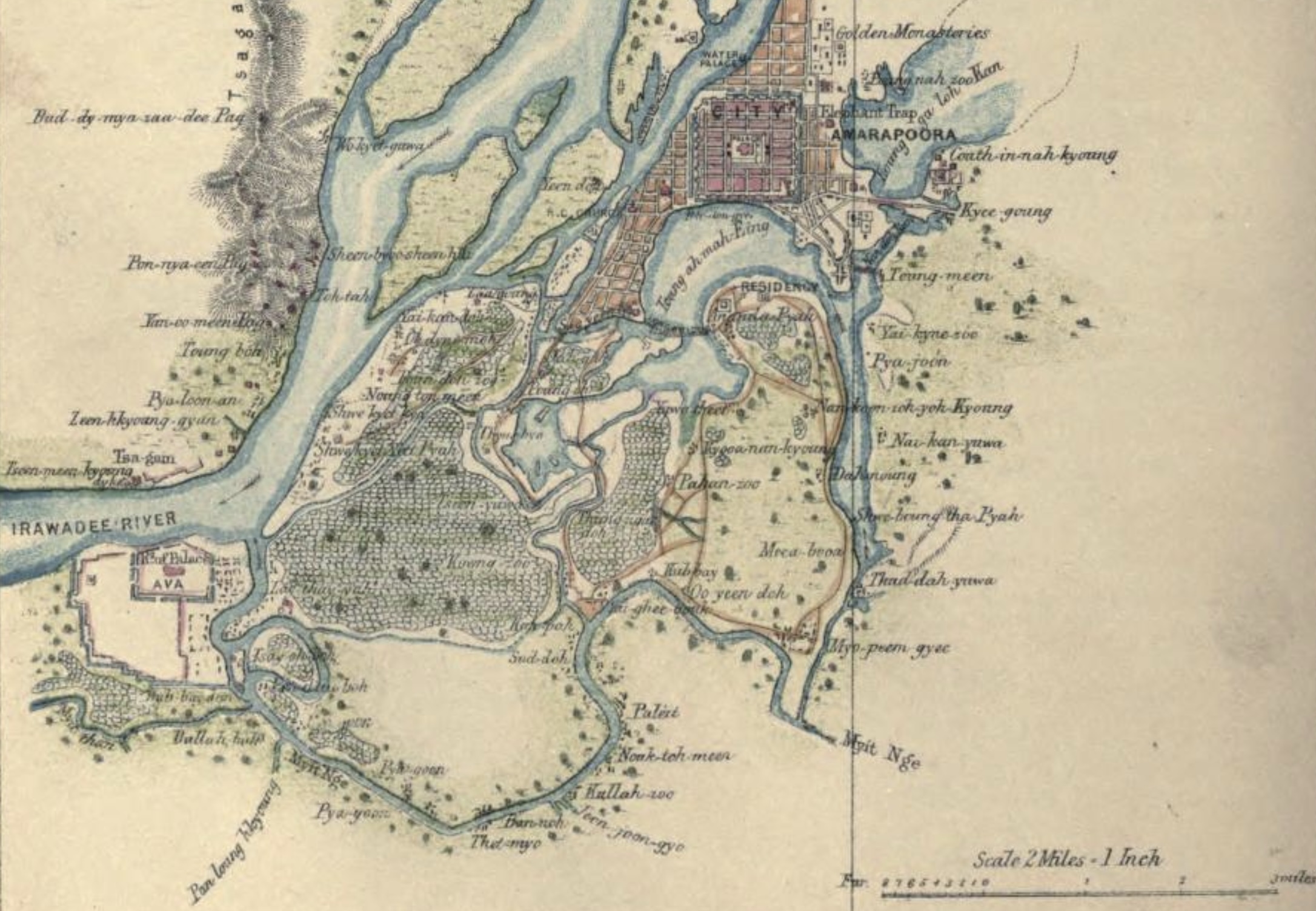
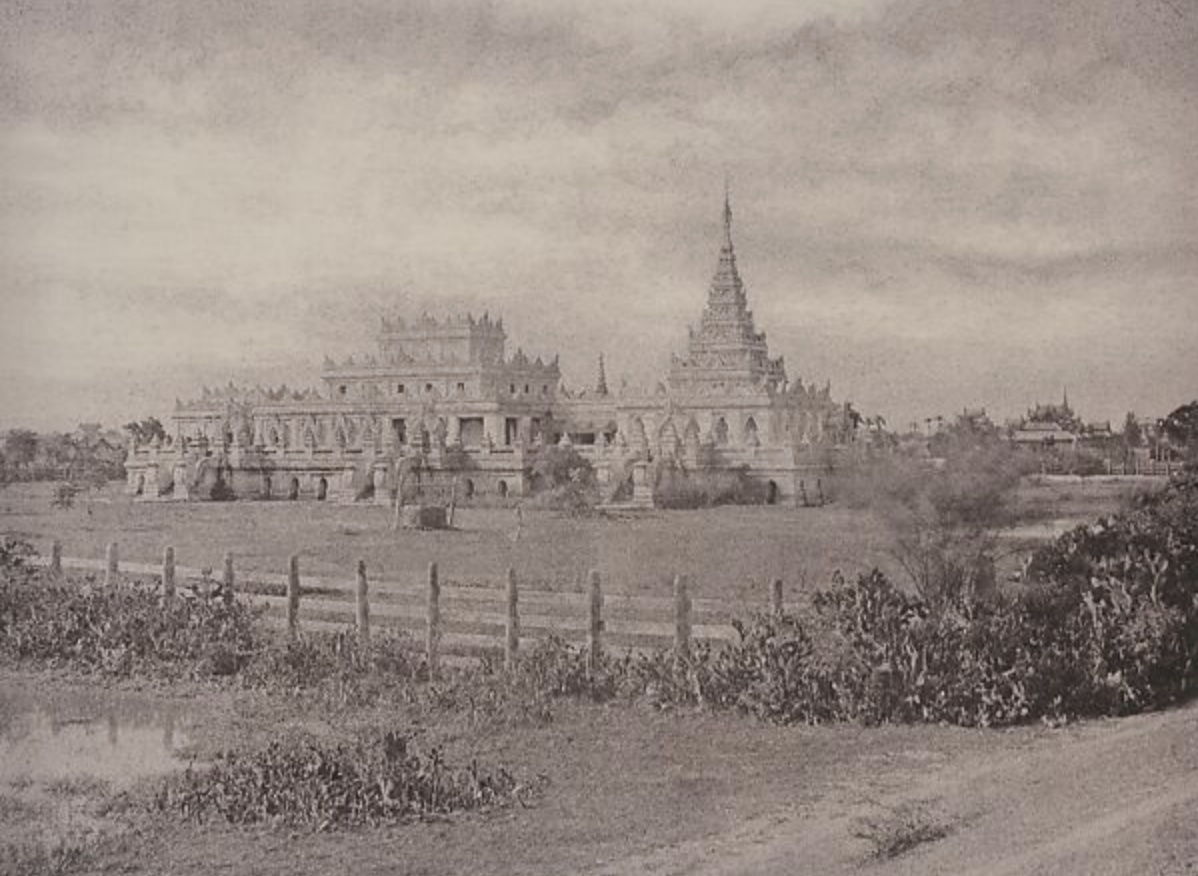
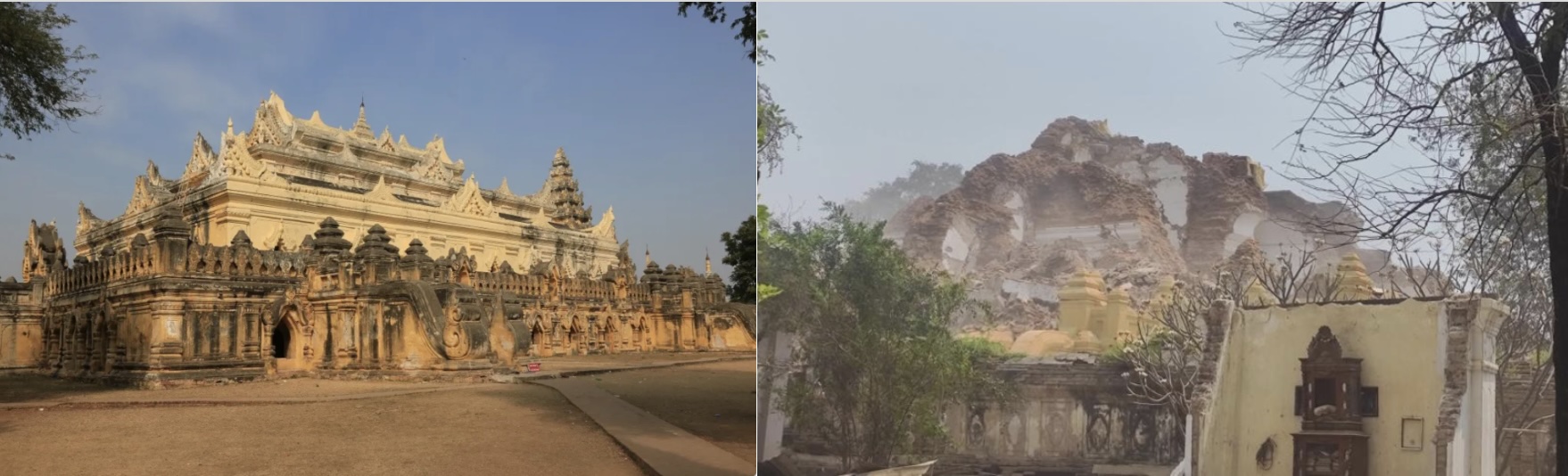
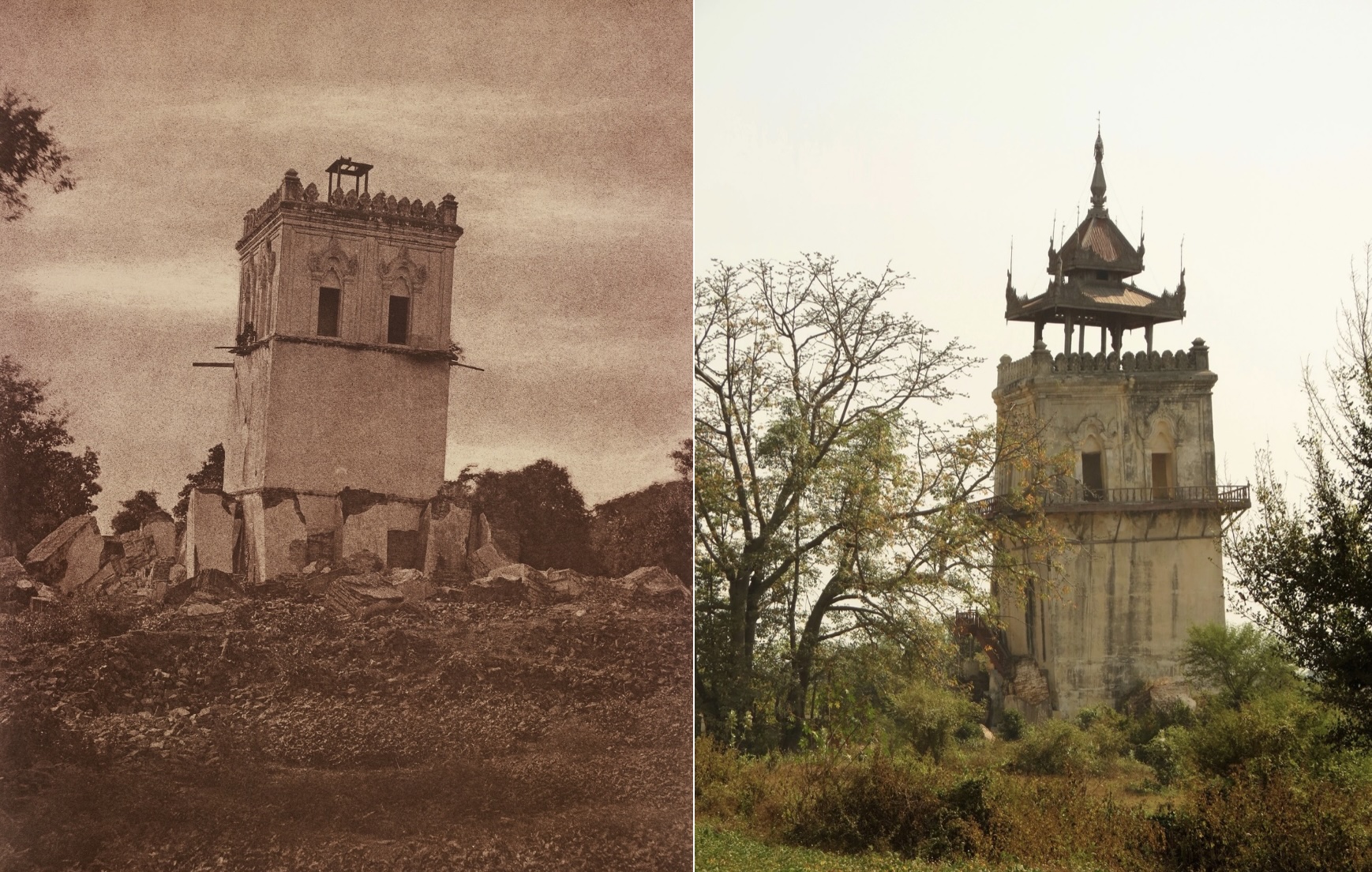
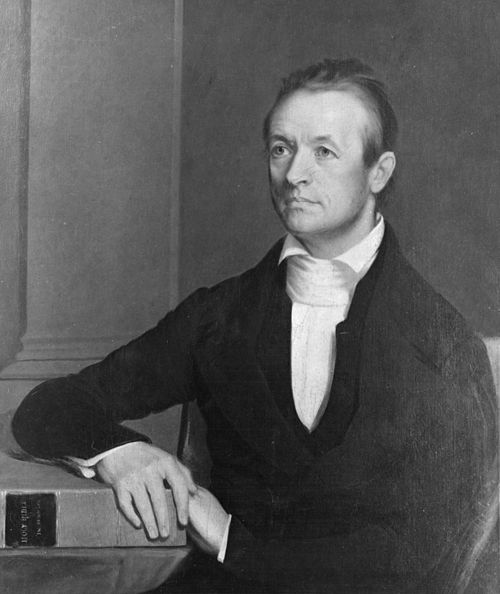
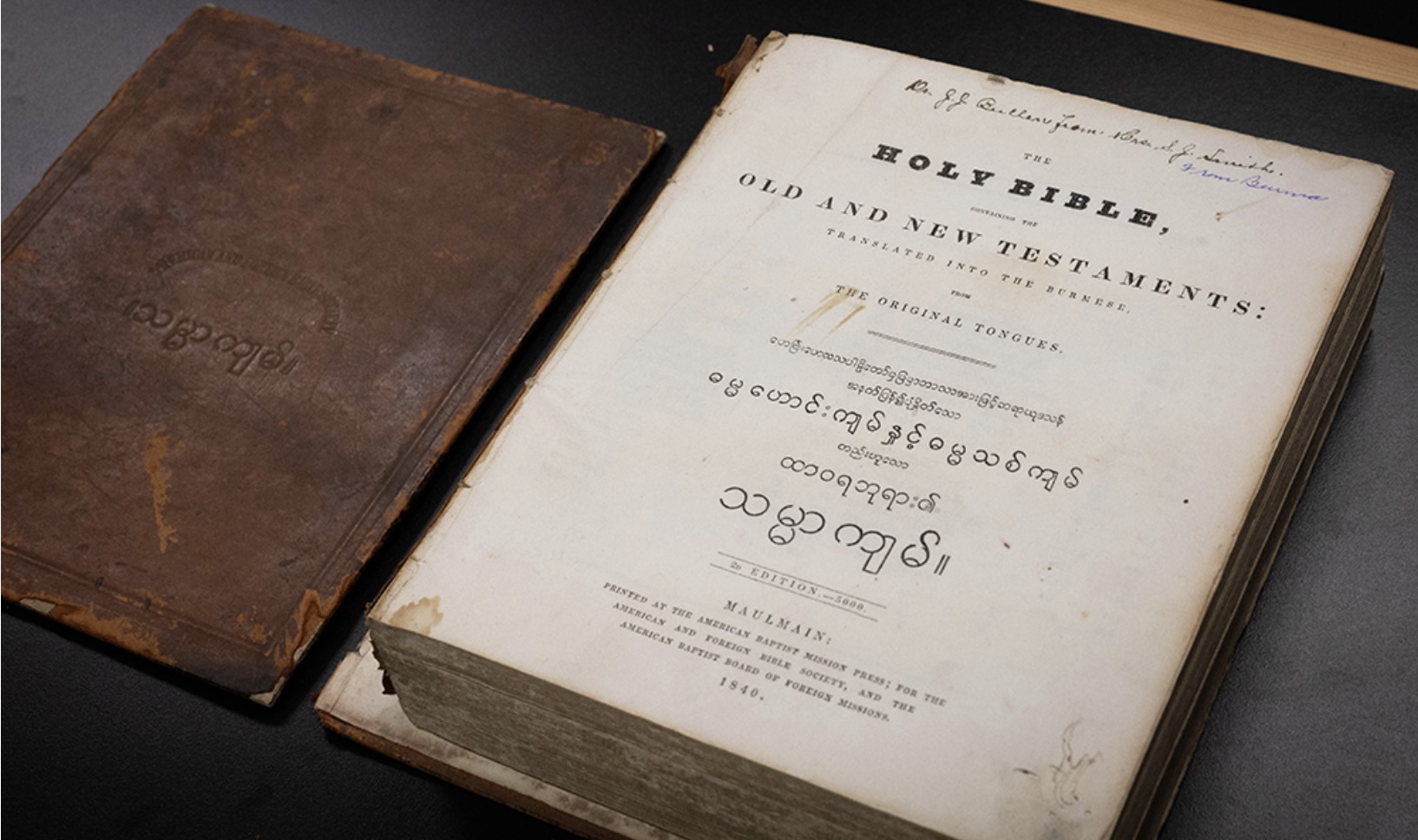
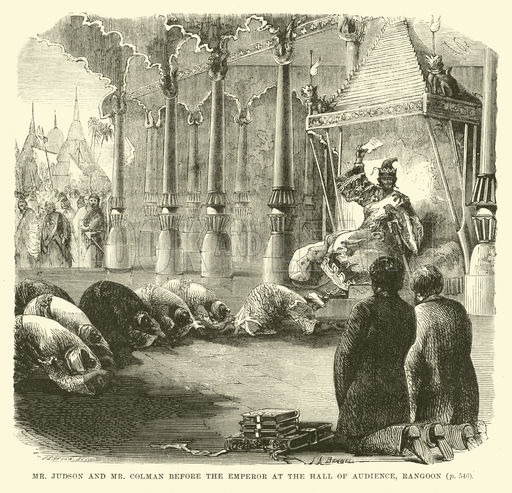
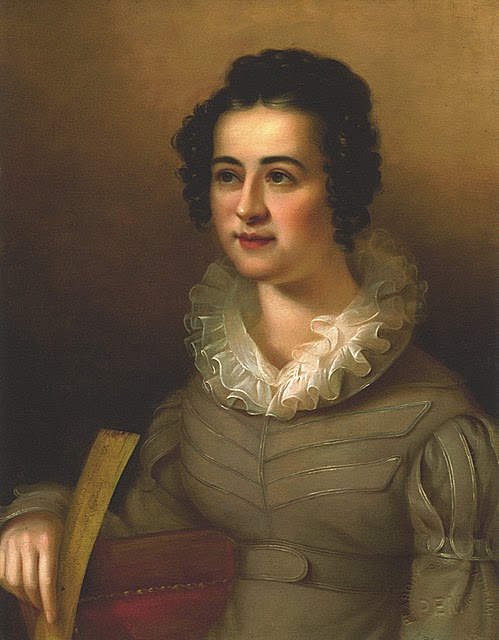
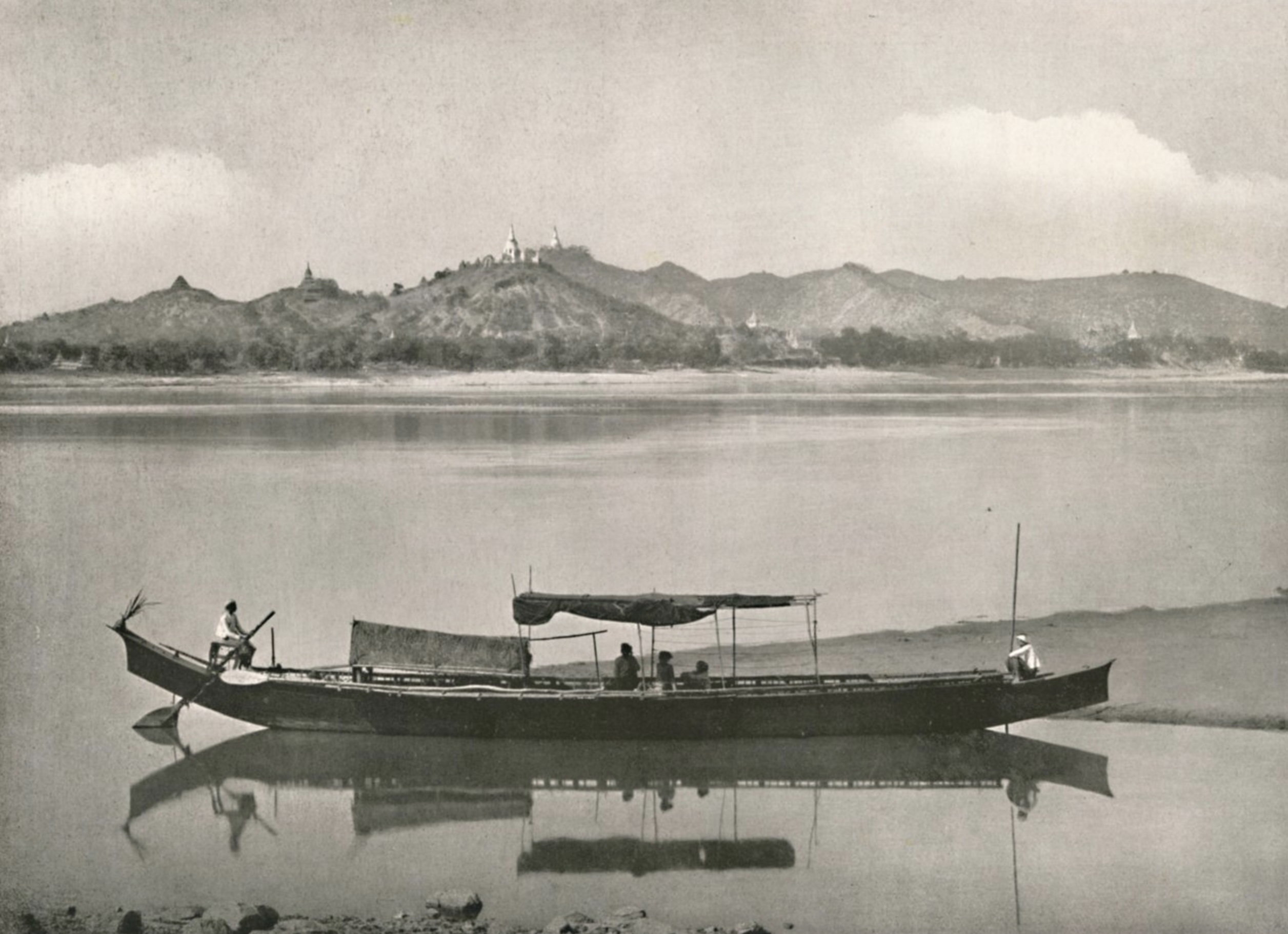 A view of Sagaing from Ava side of the river, taken in 1900 but akin to that which Gouger would have enjoyed from Mr. Lanciego’s house.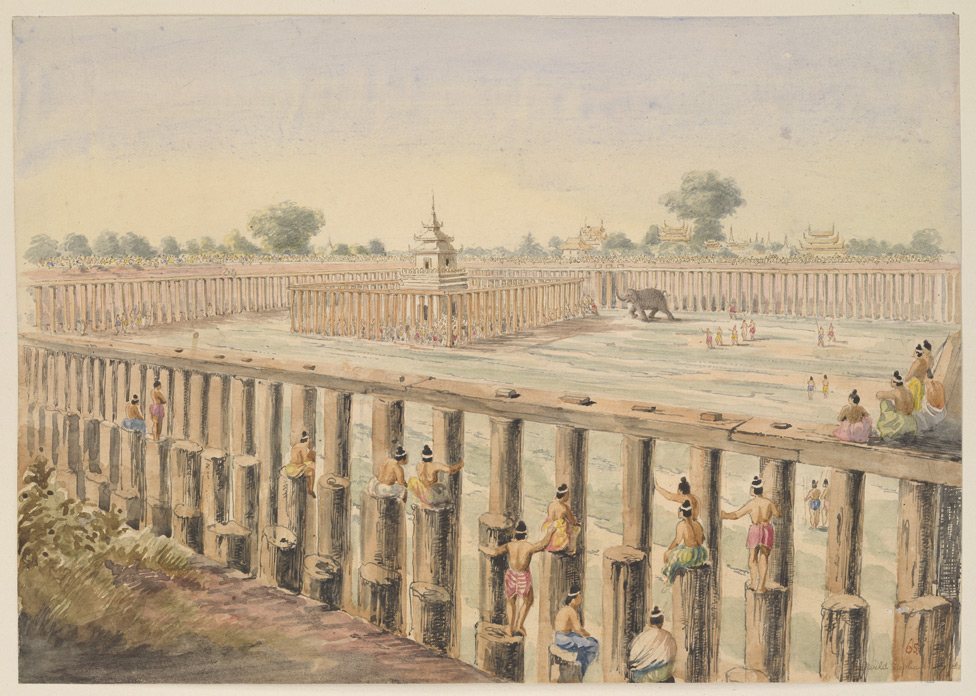
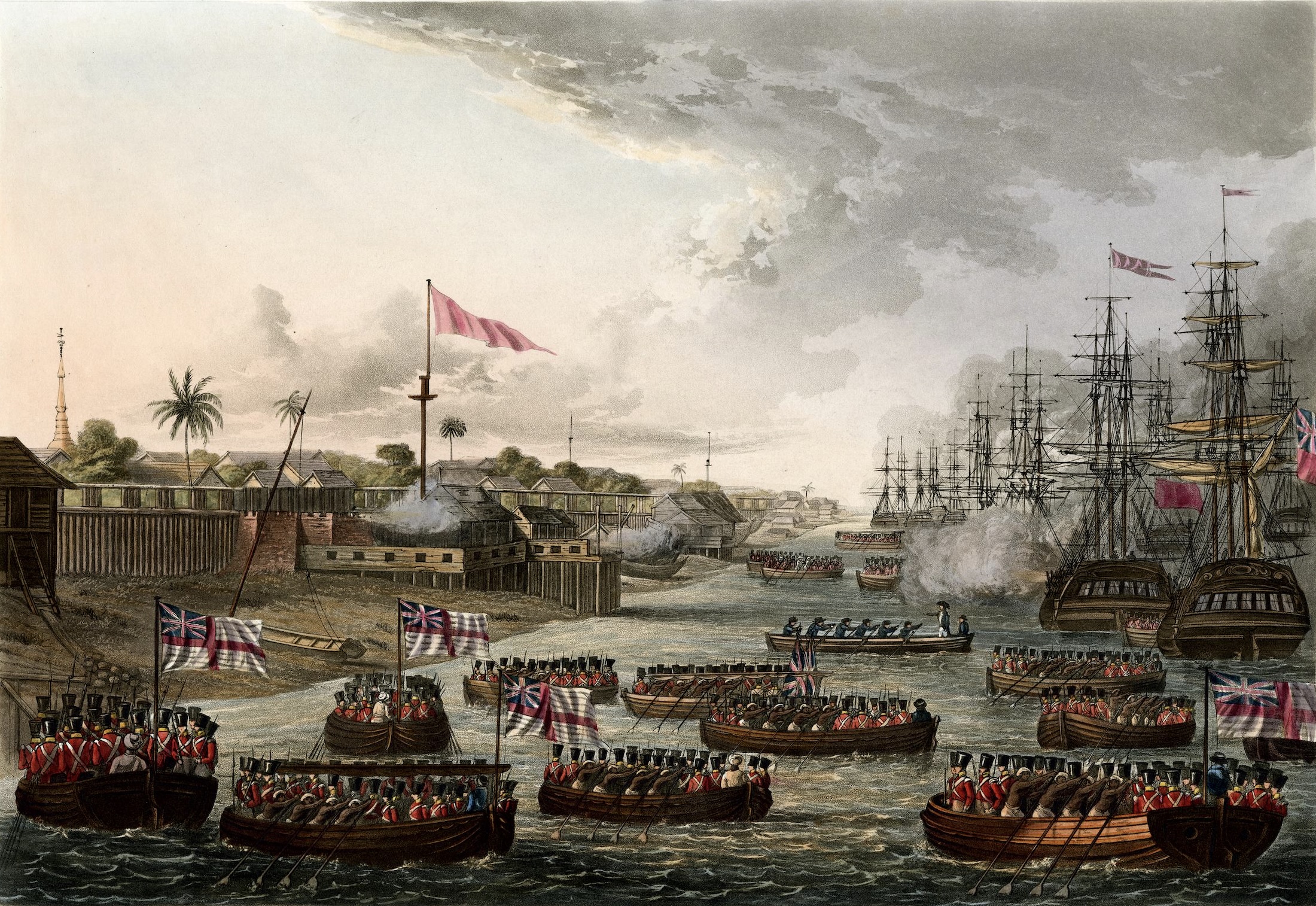

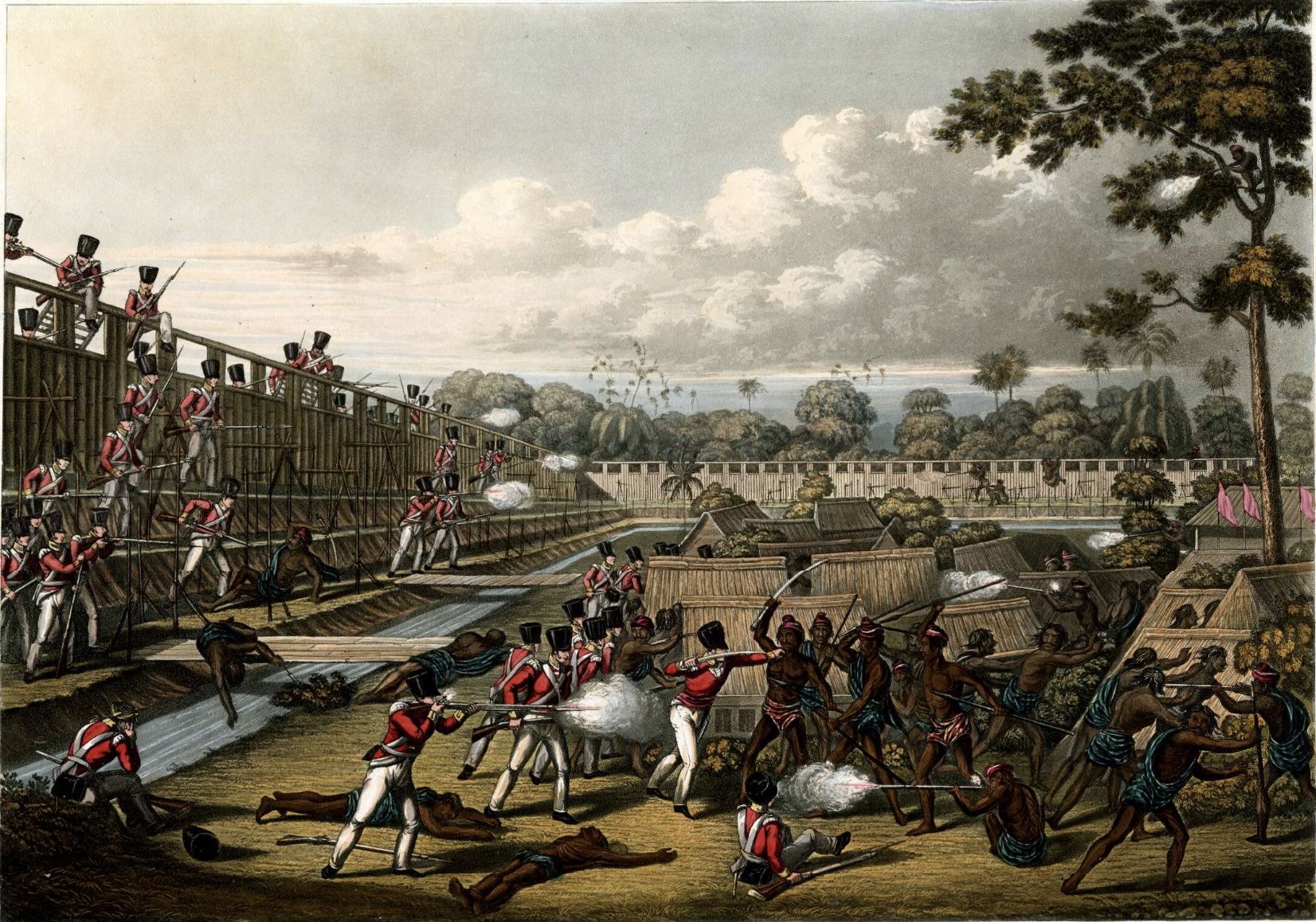
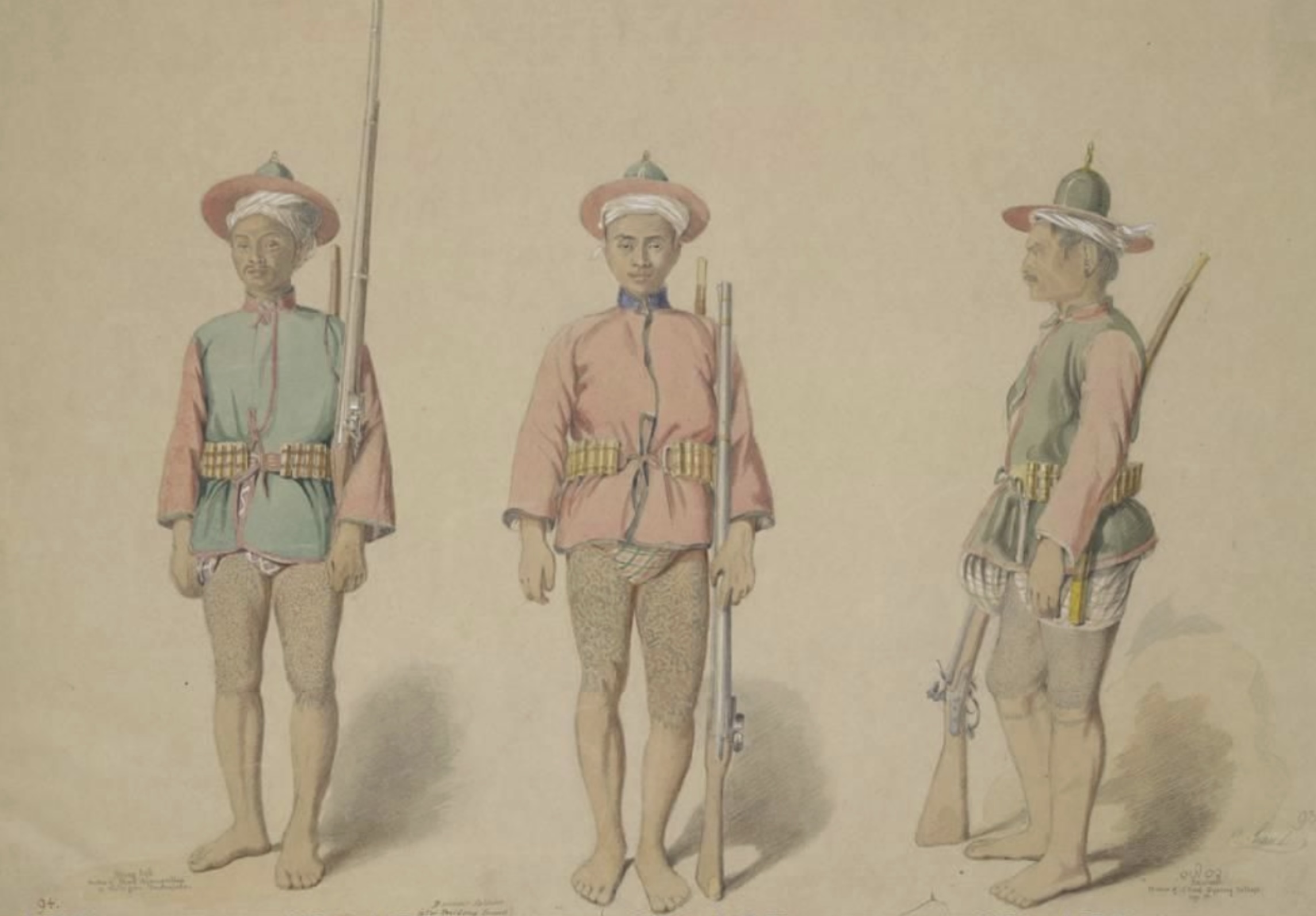
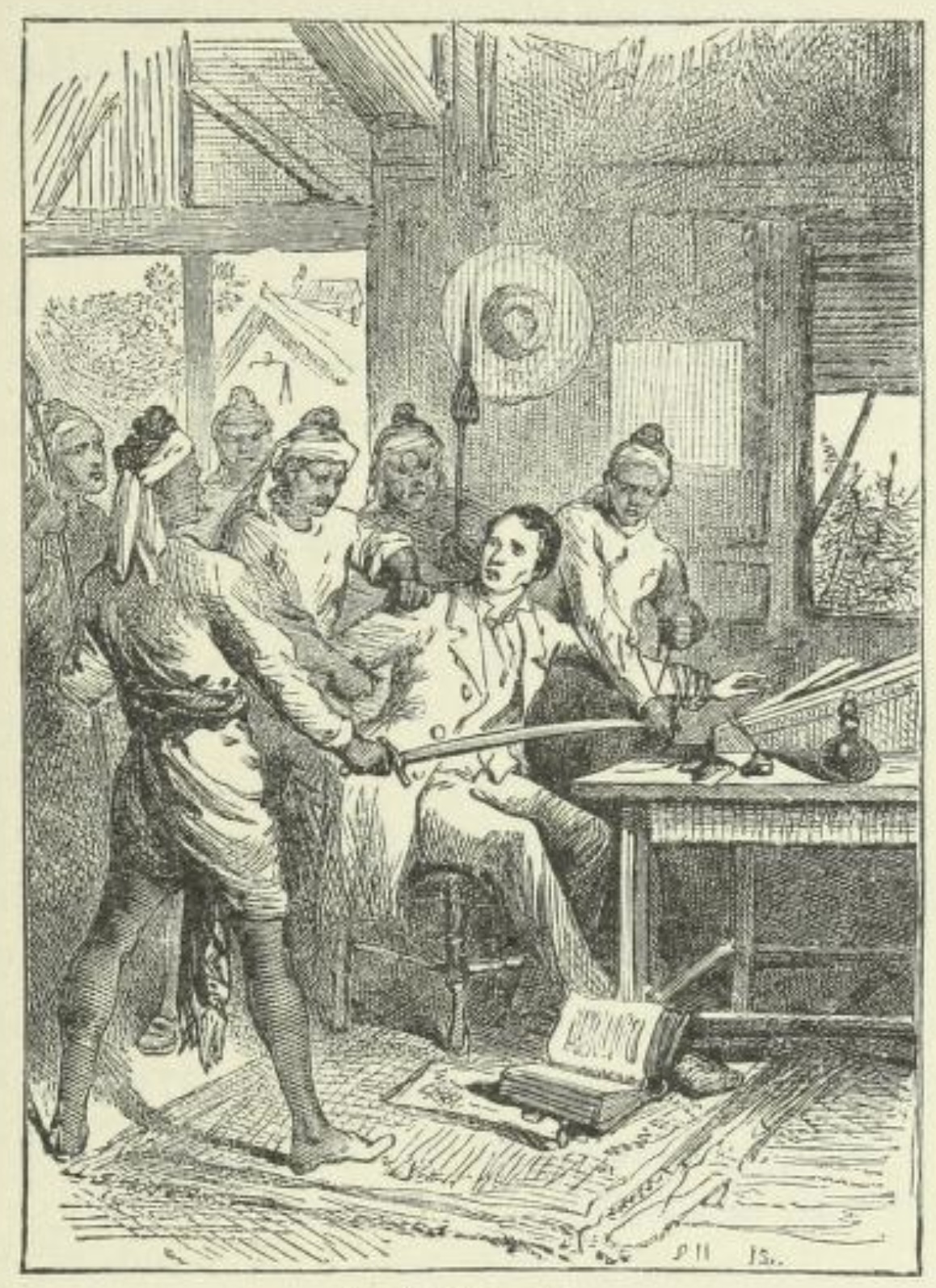
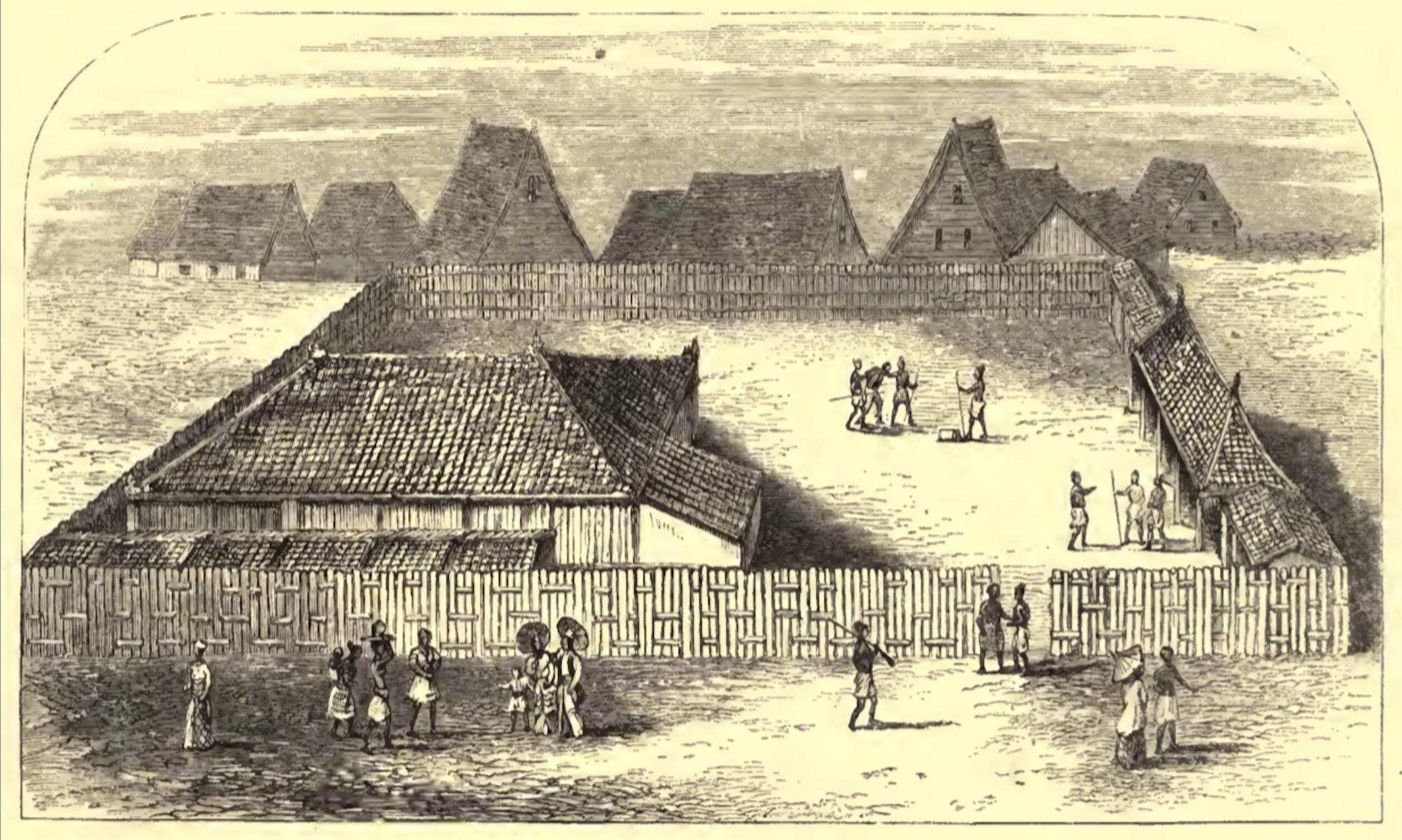
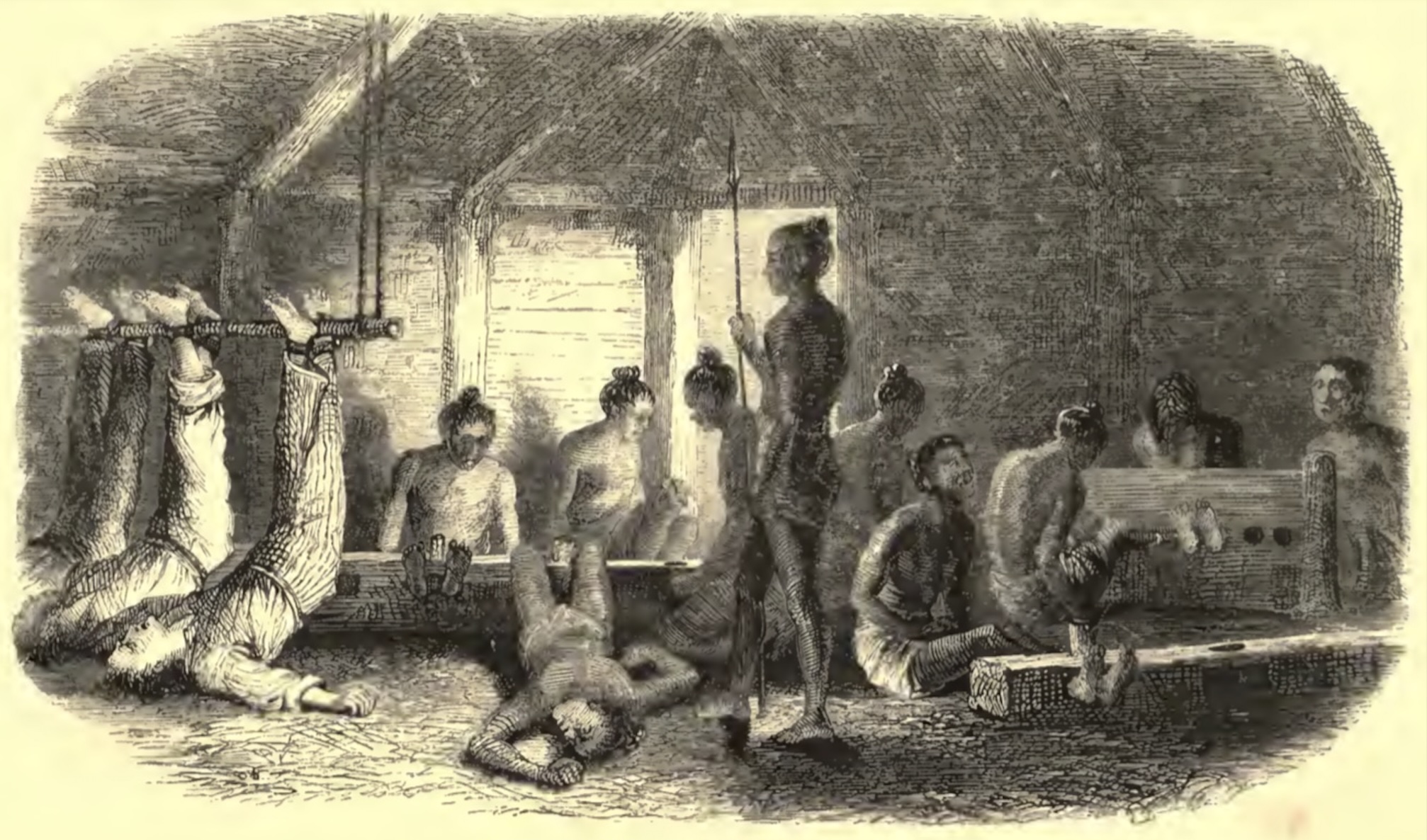
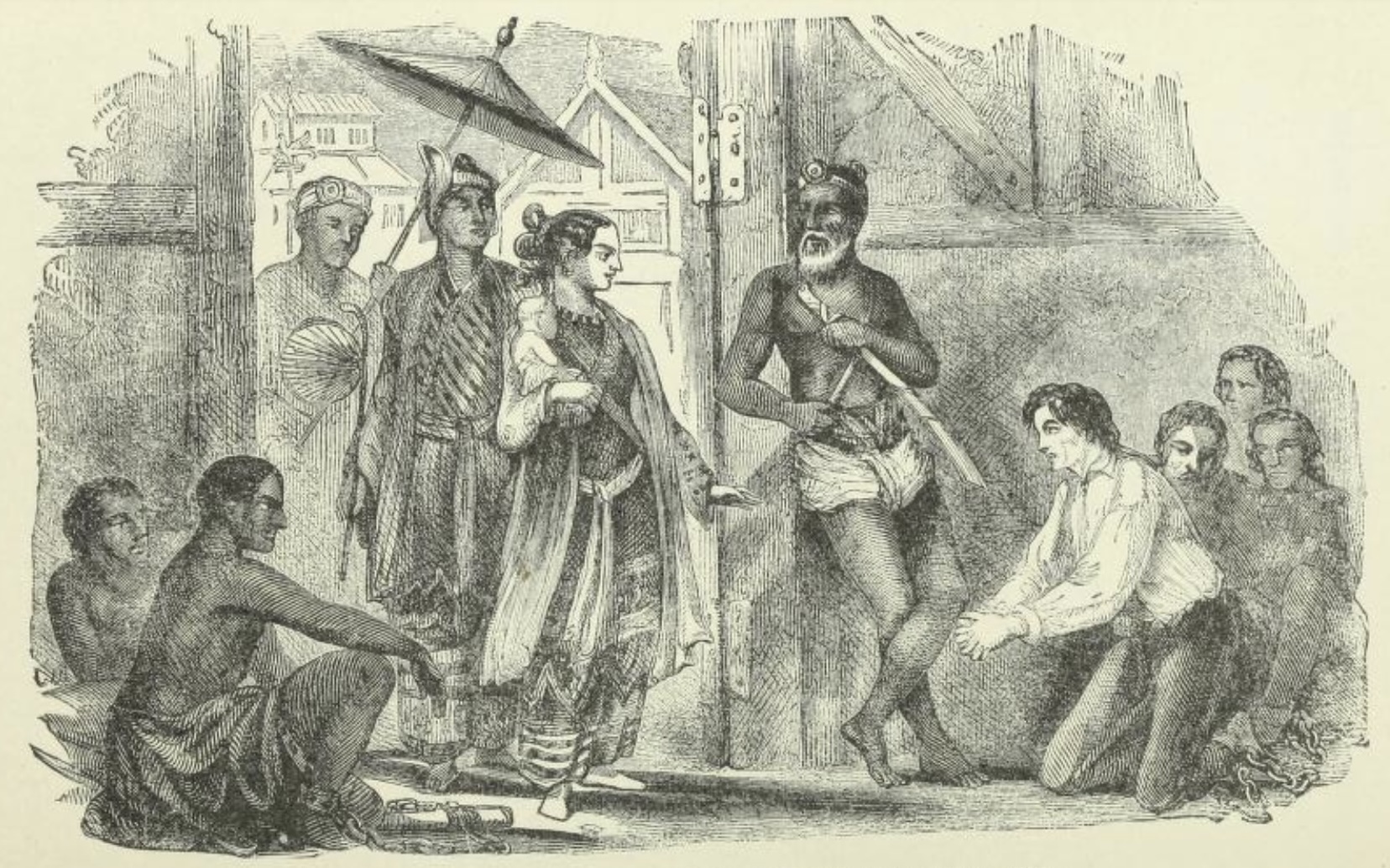 Mrs. Judson’s Visit to her Husband in Prison, with Little Maria, from Hervey’s