The economy is suffering from a lack of liquidity, although some of the bank branches that had been closed have now reopened. The banks have imposed limits on withdrawals and there are still long queues at branches and ATMs. Trust in the system has diminished and informal markets are emerging to give customers access to cash and to allow them to make payments.
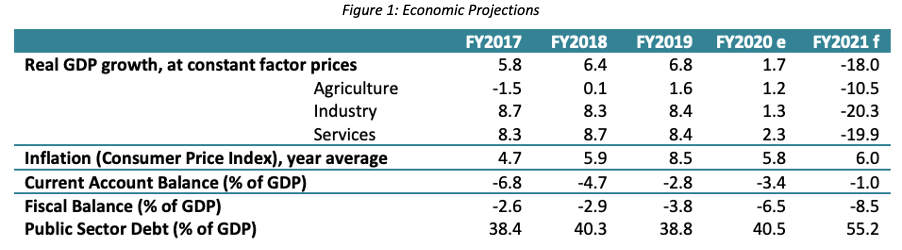
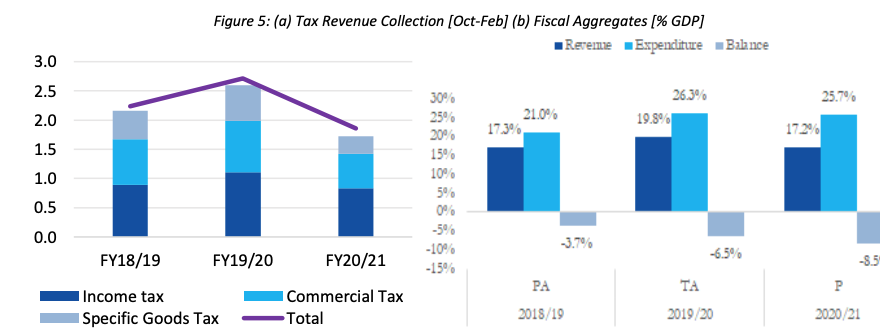
Inevitably, all of these factors are creating pressures on the fiscal position. Revenue collection as a share of GDP in Myanmar was already one of the lowest in the world before the current crises hit. A further deterioration will now severely constrain the scope for spending on critical public services. Participation by the private sector banks in domestic debt issues has been very low. The authorities may be tempted to return to large-scale deficit financing by the Central Bank, but this could potentially have significant impacts on the exchange rate, inflation and the credibility of overall macroeconomic management. As it is, the World Bank expects the fiscal deficit in the current year to increase from 6.5% of GDP to 8.5%, and for public sector debt to rise from 40.5% GDP in September 2020 to 55.2% GDP.
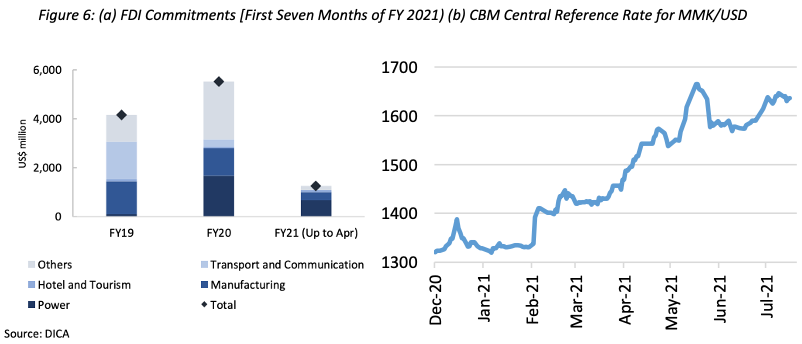
Finally, the World Bank has cautioned that the coup poses significant challenges for Myanmar’s longer term economic development. In the first seven months of the current fiscal year, FDI commitments fell by 63% YoY and there is potential for them to remain depressed. Already, companies such as Kirin Brewery, Amata Corporation, Woodside Petroleum, Petronas, Electricité de France, Sembcorp, Aeon, and Hongkong and Shanghai Hotels have either suspended their business in Myanmar or indicated they intend to leave. Telenor has announced it has reached an agreement to sell its mobile phone operations to the Lebanese M1 group for $105mn. All of this creates issues not just for the development of Myanmar’s capital stock, but also for the development of skills, and for advances in technology and productivity.
Lost months of education at school and university are a critical concern. Public schools were closed for the whole of the 2020-2021 year and, although most reopened in June, they have since closed again because of the third wave of COVID. 125,000 teachers have been suspended.
More generally, there is a risk that Myanmar will return to the inward-looking policies of the past, and the World Bank says there are already signs of an increased dependence on extractive industries and illicit activities.
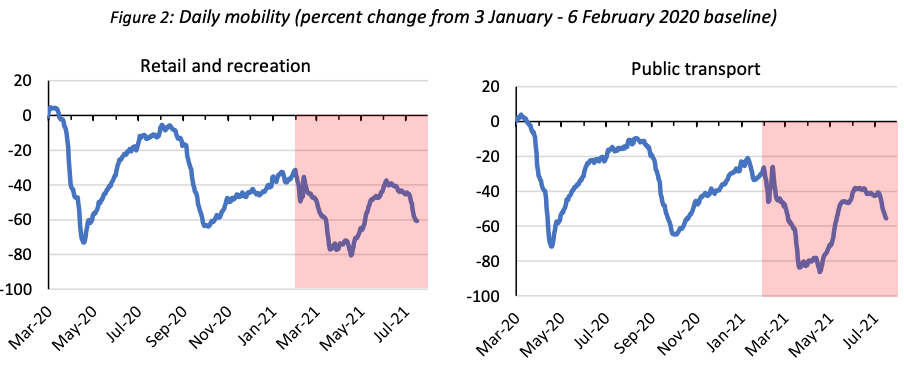
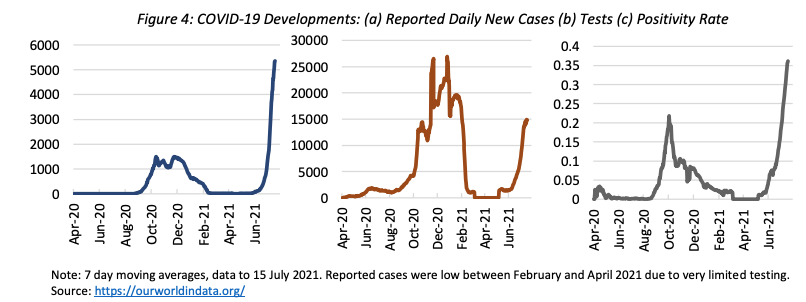
In the shorter term, the economic uncertainty is unusually high. Much will depend on the public health response to the current COVID wave, the actions of the military authorities, the persistence of the civil disobedience movement, the overall security situation and the responses to the situation of the private sector, and international investors and trading partners.
To read the full report by the World Bank, please use the following link to its website:
https://pubdocs.worldbank.org/en/525471627057268984/Myanmar-Economic-Monitor-July-2021.pdf
The following link to business pages of The Irrawaddy newspaper will give readers some additional colour on the current situation in Myanmar.
https://www.irrawaddy.com/category/business